
When it comes to product packaging, the first impression it creates can make or break a product’s perceived value. To highlight your products—whether on shelves or during unboxing—their outer look matters. This is where printing techniques come in.
Printing packaging boxes is not just about pouring in the ink; it also involves creating a unique appeal, depending on the finishing touch you choose. One of the popular finishing options for custom packaging is matte lamination. This technique is considered a special touch that delivers an elegant look. What is matte lamination, how does it work, and what are the benefits of choosing this finish? Let’s dive in.
What Is Matte Lamination?
Matte lamination is a finishing process that applies a thin, non-glossy plastic film to packaging materials using heat, pressure, or adhesive. This results in a smooth, non-reflective surface.
Simply put, matte laminating transforms ordinary printed materials into elegant, tactile experiences that appeal to both visual and tactile senses.
Matte Finish and Matte Lamination: What’s the Difference?
As it’s a finishing technique, you might have a question: Is matte finish the same as matte lamination?
Well, they are not the same.
Matte lamination is a process of applying a thin plastic film to a printed material. Meanwhile, a matte finish is the non-glossy, soft-textured result of that process.
Moreover, matte lamination protects the printed surface, enhances durability, and gives it a glare-free look. On the other hand, a matte finish can also be achieved by combining it with other coatings.
For a better understanding of the difference between the two, here’s a comparison table to help you out.
| Feature | Matte Lamination | Matte Finish |
| Main Function | Protects & enhances packaging durability | Creates a non-reflective, high-end look |
| Purposes |
|
|
| Results | A protective, non-reflective, and often soft-to-the-touch layer | A minor textured surface or a soft, velvety feel |
How Matte Lamination Works?
In addition to a unique, elegant look, matte lamination protects your printed packaging from moisture, scratches, and smudging. Plus, the technique offers a “soft-touch” quality that feels luxurious, especially when applied to premium rigid boxes.
So, how is the process of matte lamination?
Here’s the step-by-step of its complete process:
- Surface Prep: A printed box is prepared and cleaned to ensure it’s free from dust, dirt, or imperfections that may affect the lamination quality.
- Application: A sheet of matte laminate film (PET or EVA) is applied to the box’s surface.
- Binding: Heat and pressure are applied to bond the film to the box, creating a single, durable piece.
- Curing: The laminate is cured under UV light to ensure it’s long-lasting and provides a strong protective layer.
Ultimately, the entire matte lamination process provides an elegant, modern, non-glare surface, perfect for exclusive jewelry boxes, high-end retail packaging, to custom PR boxes.
Technical Specifications
Before the process starts, you should understand some technical specifications. To make it easier, have a look at the table below.
| Technical Specs | Details |
| Materials |
|
| Finish | Non-reflective, glare-free, smooth, soft/velvety texture |
| Thickness | 1.5 to 3 mil |
| Application Method |
|
| Adhesive |
|
What Does Matte Lamination Look Like on Custom Boxes?
On custom boxes, matte lamination reduces glare and provides a sleek, soft, and modern feel without a shiny surface.
Overall, this lamination is excellent for high-end or minimalist branding. The best part? You can pair it with other finishes, such as an aqueous coating, to make your brand’s logo or designs stand out.
Matte vs Gloss Lamination
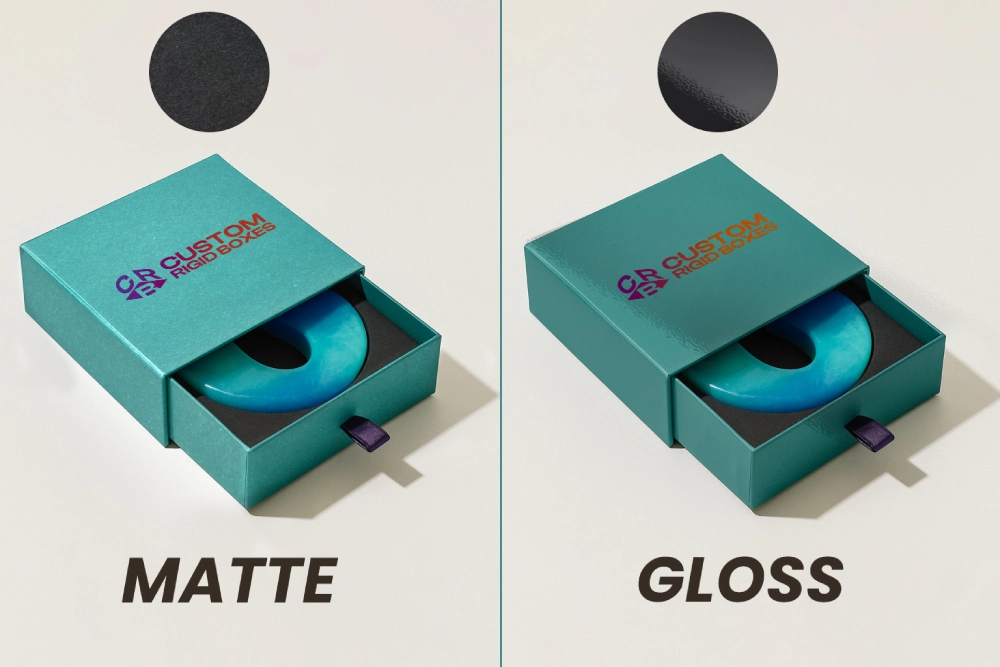
While you’re searching for matte lamination, you might come across gloss lamination. While both consist of plastic applied to paper products, they look different and create distinct looks and feels.
Matte lamination creates a subtle, smooth, clear finish to your boxes without adding lots of shine. The technique also adds a silky texture that feels smooth to the touch, increasing your products’ perceived quality.
Gloss lamination, on the other hand, consists of a smooth plastic that reflects a lot of light. This technique creates a shiny exterior layer on your products. It can also feel silky to the touch, similar to plastic.
Key Benefits of Matte Lamination
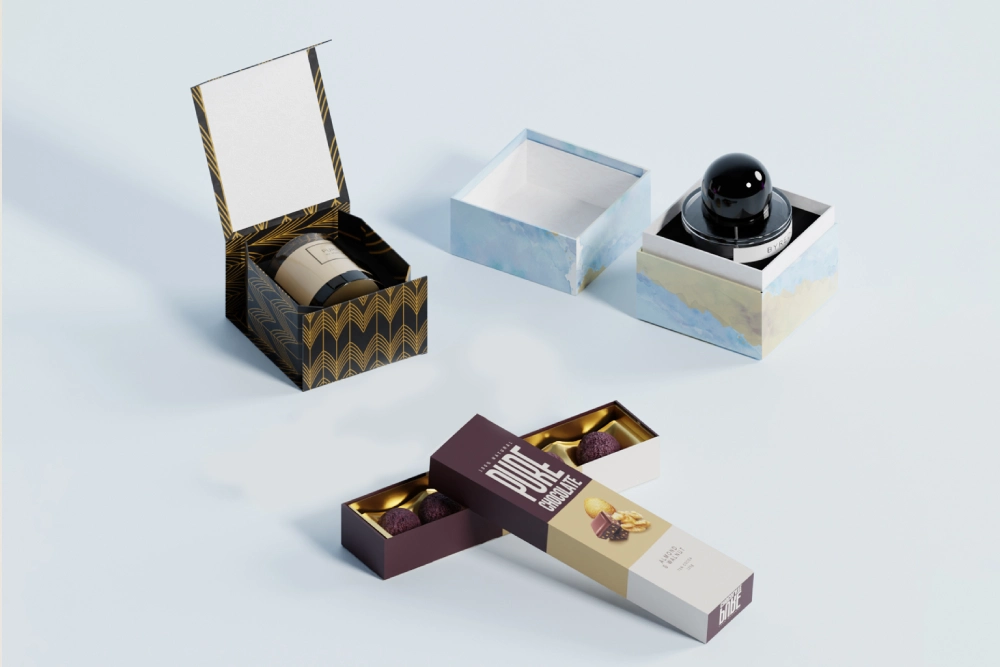
Choosing matte lamination as a finishing touch to product packaging benefits your business in many ways.
Here are the key benefits you can expect.
Glare-Free Display
The non-reflective surface makes your products easier to view under display lighting, as it will not have an intense glare. Plus, the reduced glare helps you catch customers’ attention. For example, think how calming, subtle candle boxes will be ideal for presenting your soothing candles.
A Sophisticated Feel
The velvety, smooth texture of matte lamination creates an elegant and exclusive product impression.
Imagine how customers will admire your perfumes when they receive them, packed properly in minimalist yet smooth-textured perfume boxes.
Better Product Protection
Matte lamination offers a durable, fingerprint-resistant finish that protects both the product and the box during storage and handling. Thus, it’s an ideal choice to pack sensitive electronic products and gadgets.
Scratch and Smudge-Resistance
The lamination is more resistant to fingerprints and scratches, making your packaging look clean and upscale. Eventually, this lamination can make food items like chocolates look more appealing and convincing in matte-laminated chocolate boxes.
Enhanced Readability
With less glare, the text you provide on the boxes is easier to read. This way, the lamination helps customers to view essential product information and branding.
Design Enhancement
It can create a stunning contrast when used with other finishes, such as foil stamping or spot UV, to highlight specific areas of your packaging design.
Sustainable Business Approach
PET (polyethylene terephthalate) and EVA (ethylene vinyl acetate) used for laminated film are made from plant-based materials that break down naturally. Moreover, the minimalist design helps reduce material use without compromising quality. In the end, choosing matte lamination can be a sustainable business approach.
Overall, whatever product you need to pack, applying matte lamination to its packaging makes it look more exquisite.
Worldwide Brands That Choose Matte Lamination
Matte lamination is a popular choice among premium and minimalist brands across various industries. The technique delivers a non-reflective aesthetic and pleasant tactile feel.
Here are the renowned worldwide brands that choose this finishing technique for their custom packaging boxes.
- Apple: Employs matte finishes for much of its minimalist Apple packaging to convey a sense of calm, quality, and understated elegance.
- Chanel: This luxury fashion and cosmetics brand consistently favors matte-laminated apparel boxes to reinforce its exclusive image.
- NARS Cosmetics: Known for its sleek, black, and soft-touch matte packaging, NARS uses this finish to achieve a modern look that helps hide fingerprints.
In Summary
Well then, we can confidently say that matte lamination is one of the popular finishing options for custom packaging. This finishing process involves applying a thin, non-glossy plastic film to the packaging materials using heat, pressure, or adhesive.
Choosing matte lamination as a finishing touch for product packaging benefits your business in many ways, including reducing glare, delivering a sophisticated feel, providing better product protection, being scratch- and smudge-resistant, and taking a sustainable approach.
Ultimately, opting for matte lamination demonstrates your business’s commitment to quality, elegance, and sustainability.
FAQs
What is matte lamination?
Matte lamination is a finishing process that applies a thin, non-glossy plastic film to packaging materials using heat, pressure, or adhesive.
What does matte lamination look like on custom boxes?
On custom boxes, matte lamination reduces glare, making text easier to read, and provides a luxurious, tactile feel without a shiny surface.
What’s the difference between matte and gloss lamination?
The difference is that matte lamination produces a soft, non-glare, and understated look, while gloss lamination creates a shiny, reflective, and vibrant finish.
What are the benefits of matte lamination?
Key benefits of matte lamination include reduced glare, a sophisticated feel, better product protection, scratch- and smudge-resistance, and a sustainable approach.