Packaging and shipping electronics isn’t just about getting a gadget from point A to point B. It is more about ensuring your high-value products are in perfect working condition while impressing your customers. If you’re looking for the gold standard in tech packaging, rigid boxes are the answer.
But how to package electronics with rigid boxes? What box style is ideal? Let’s discover all the details.
What is a Rigid Box?
Before we even discuss the steps to packaging electronics with rigid boxes, we should first understand the boxes.
So, what is a rigid box?
A rigid box, also known as a “set-up box,” is a premium packaging option made from high-density, thick chipboard (usually 2–3mm) wrapped in decorative paper. It provides a sturdy, non-collapsible structure, perfect for electronic boxes.
The rigid stock offers maximum durability, while the texture provides a premium unboxing experience—the kind of electronic packaging customers love.
Step-by-Step to Package Electronics with Rigid Boxes
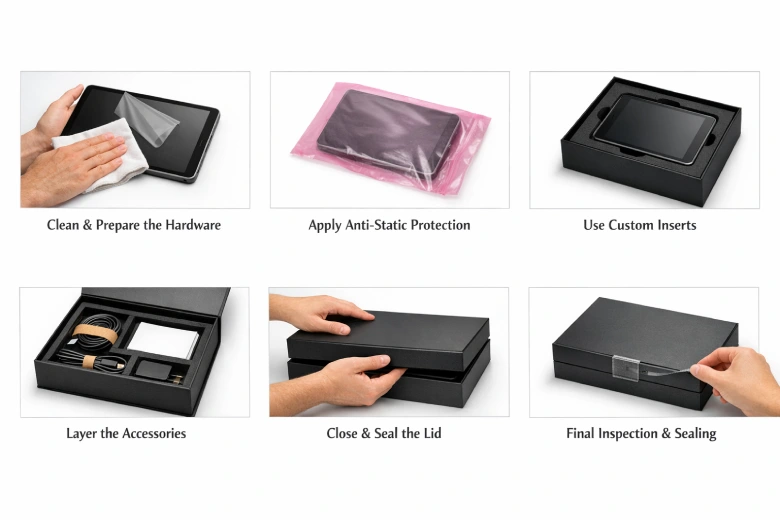
Packaging electronics requires a blend of technical precision and aesthetic care. Because rigid boxes don’t collapse, they provide a “skeleton” of protection. However, the internal arrangement is what truly keeps your delicate circuitry safe.
Here are the steps to ensure your tech arrives in showroom condition.
Step 1: Clean and Prepare the Hardware
Before your device ever touches the box, it must be retail-ready. Use a microfiber cloth to remove fingerprints, dust, or static-attracting particles.
For items with screens (like tablets or handheld consoles), apply a clear protective film or a thin foam sheet. This prevents “micro-scratches” that can occur if your device rubs against the packaging material during high-vibration transit.
Step 2: Apply Anti-Static Protection
Even a small discharge can fry a motherboard. Make sure you place the device inside an ESD (Electrostatic Discharge) bag—usually identifiable by its translucent pink or metallic silver color. This ESD bag ensures that any external static charges stay on the outside of the bag.
Step 3: Use Custom Inserts
Place your device into a die-cut EVA foam insert or molded pulp tray. Your device should fit firmly enough that it won’t fall out if the box is turned upside down, but loosely enough that the customer doesn’t have to struggle to remove it.
Also, consider including small “finger notches” on the sides of custom inserts so customers can easily lift the device out of its housing.
Step 4: Layer the Accessories
Beneath the main device tray, create a “hidden” compartment or subdivided section for accessories, including:
- Cables and Adapters: Coil cables neatly and secure them with eco-friendly paper ties rather than plastic ties.
- Manuals: Place documentation in a dedicated recessed slot or in an envelope glued to the inside of the lid to prevent paper from shifting and scuffing the device.
Step 5: Close and Seal the Lid
When placing the lid on a high-end rigid box, you should notice a slight resistance followed by a slow glide. This is the “vacuum effect,” a hallmark of luxury packaging. If you’re going with a magnetic closure, ensure the flap snaps shut with a tactile “click.” This physical feedback tells customers that your electronics are secure and high-quality.
Step 6: Final Inspection and Sealing
Before moving to the shipping stage, perform a “shake test.” If you hear anything moving inside the rigid box, you need more padding or a tighter insert. Once satisfied, you can apply a tamper-evident seal or a branded sticker across the seam of the box to guarantee your product hasn’t been opened since it left the factory.
Why Proper Product Packaging Matters for Electronics?
Electronics are among the most fragile items to pack and ship. Therefore, proper product packaging is essential for valid reasons.
Here’s why having the right packaging for your electronics matters.
Provides Shock Absorption
Tech components are easily jarred. Exclusively designed electronic packaging acts as a literal zone for your products.
Showcases Professionalism
A damaged box suggests a damaged product. On the other hand, high-quality packaging builds trust before your customer even turns the device on.
Reduces Product Returns
The cost of a “Dead on Arrival” (DOA) return (including shipping and refurbished parts) is far more than the cost of a sturdy box. Hence, getting proper packaging helps you reduce product returns and avoid disappointed customers.
Why Choose Custom Rigid Boxes for Electronics?
Custom rigid boxes offer a high level of protection and branding that standard packaging can’t afford. Thus, it is no wonder that businesses across industries choose rigid boxes.
Speaking of electronics, these boxes provide innovative key features your business can’t skip.
What are they?
Extreme Durability
Rigid packaging boxes don’t crush easily under the weight of other packages in a delivery truck.
Premium Branding
You are free to apply spot UV, foil stamping, or soft-touch lamination to perform premium branding. Eventually, the boxes’ customizable feature can help you make your brand a market leader.
Precision Fit
“Custom” means the box is built around your electronic products. In addition, having the box precisely measured eliminates the need for messy packing peanuts or oversized containers.
Overall, custom rigid boxes are the ultimate investment for electronic brands that value safety and style.
Which Rigid Box Styles are Ideal for Electronics?
Not all boxes are created equal. Depending on your product’s size and value, certain rigid box styles work better for tech.
Here are some popular, functional styles you can choose from.
Magnetic Closure Boxes
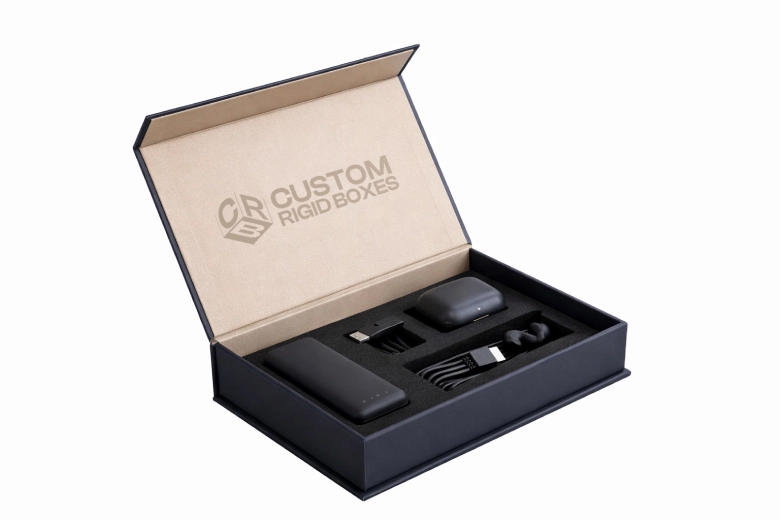
Magnetic closure boxes feature a flip-top lid with hidden magnets. They are incredibly popular for tablets and high-end headphones because they feel like a “keepsake” box.
Ideal for: Luxurious or fragile electronics, including high-end headphones, smartphones, and tablets.
Two Piece Boxes

The classic two-piece boxes come with 2 parts: a lid and a base, with the lid sliding over the base. This design is the industry standard for smartphones and offers incredible structural strength when stacked.
Ideal for: Smartphones, compact cameras, chargers, and high-volume electronics where brand consistency is key, such as Apple’s packaging.
Drawer Boxes

Drawer boxes feature an inner compartment that slides out like a drawer. This is a modern, sleek choice for smaller items like smartwatches or high-end earbuds. However, big brands also use this style to package their premium smartphones; look at Samsung’s packaging, for example.
Ideal for: Smartphones, smartwatches, flash drives, and fashion tech accessories.
Tray Sleeve Boxes
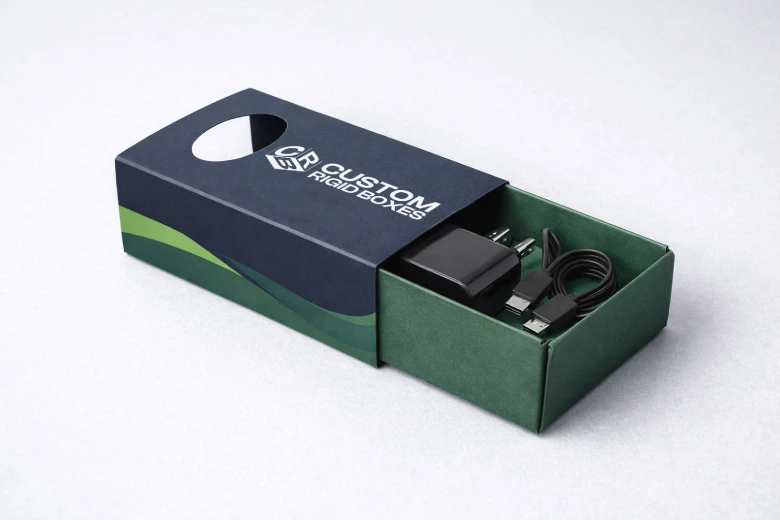
Tray sleeve boxes feature a simple slide-out display, with an inner, sturdy tray that holds the product and an outer sliding sleeve that covers it. This style provides superior product protection against damage. One of the well-known high-tech brands that uses tray sleeve boxes is Google, for its Google Pixel 10 packaging.
Ideal for: Earbuds, smartphones, Bluetooth speakers, and cables.
Let’s recap them to know which rigid box style you should choose for electronics!
| Rigid Box Styles | Feature | Ideal for |
| Magnetic Closure Boxes | A flip-top lid with hidden magnets |
|
| Two Piece Boxes | Feature 2 parts: a lid and a base, with the lid sliding over the base |
|
| Drawer Boxes | An inner compartment that slides out like a drawer |
|
| Tray Sleeve Boxes | A slide-out display, with an inner tray and an outer sliding sleeve |
|
Tips to Package Electronics for Shipping with Rigid Boxes
Now that you understand how to package electronics with rigid boxes, you still need to ship them safely.
Follow the tips below.
- Choose a Slightly Larger Box
Place your rigid box inside a slightly larger corrugated shipping box. This provides a “buffer zone” to protect the decorative finish of your custom electronic boxes from scuffs and dents.
- Focus on the Internal Packaging
Fill the gap between your rigid box and the outer shipping carton with bubble wrap or air pillows. Remember, there should be at least two inches of padding on all sides so the rigid box doesn’t move inside the shipping container.
- Label Your Box
Use clear, bright “Fragile” and “Handle with Care” stickers. If your device contains lithium batteries, remember that UN3481 labels are legally required for air and ground transport.
- Ship with a Trusted Carrier
Choose a carrier that offers sturdy tracking and insurance. For high-value electronics, a signature requirement upon delivery is a smart move to prevent “porch piracy.”
Wrapping Up
No doubt, custom rigid boxes are the ultimate investment for electronic brands that value safety and style. By following the steps outlined here, you can package your high-value electronics and ship them with confidence.
Have a safe shipping!
FAQs
How to package electronics with rigid boxes?
To package electronics with rigid boxes, you must clean & prepare the hardware, apply anti-static protection, use custom inserts, layer the accessories, close the lid, then do the final inspection and sealing.
Why choose custom rigid boxes for electronics?
Custom rigid boxes offer innovative features for packaging electronics, including extreme durability, premium branding, and a precise fit.
Which rigid box styles are ideal for electronics?
The functional rigid box styles ideal for electronics include magnetic closure boxes, two-piece boxes, drawer boxes, and tray sleeve boxes.
Why proper product packaging matters for electronics?
The right packaging for electronics matters because it provides shock absorption, showcases professionalism, and reduces product returns.