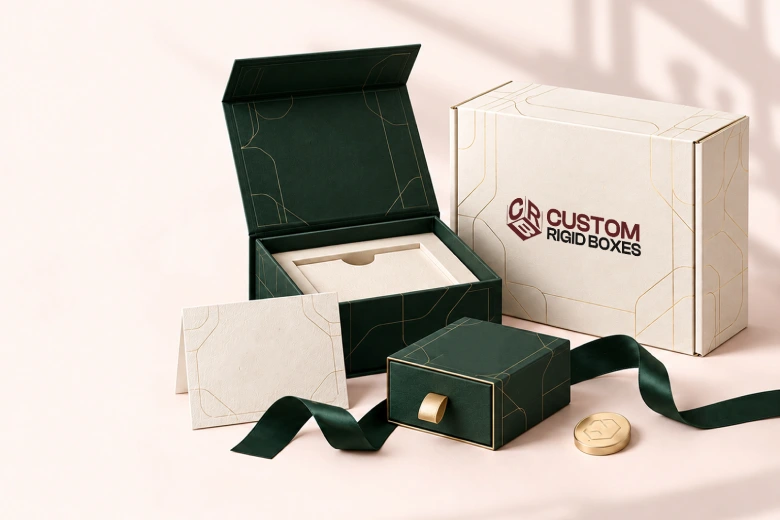
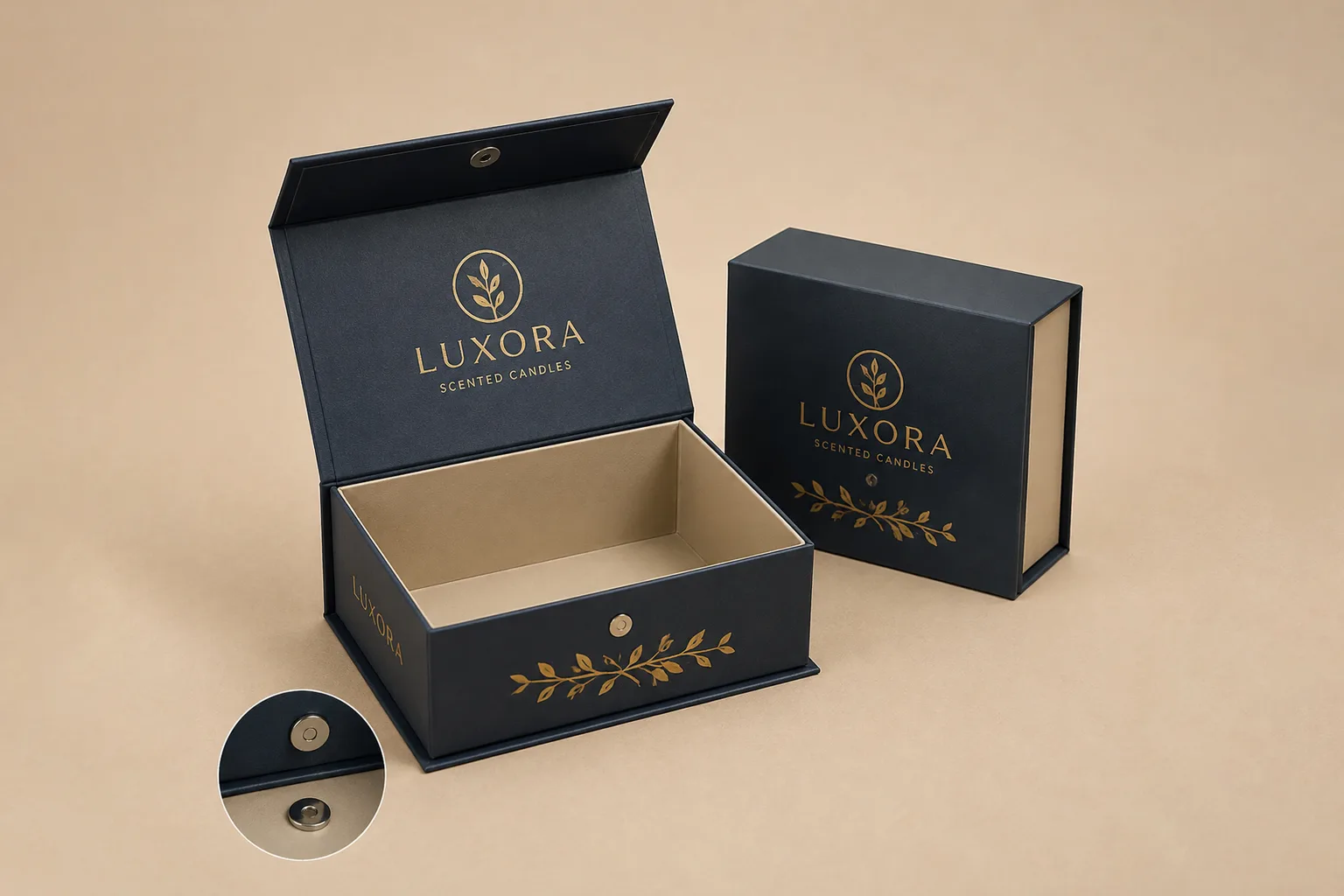
We have all heard and even seen how rigid boxes have become a symbol of high-end packaging.
The heavy, sturdy feel immediately tells that the product inside is excellent and expensive. Well, the premium experience is powered by rigid stock. Yes, rigid stock is the name that defines the overall performance. But what exactly is this material, and why is it the gold standard for luxury brands? Read this complete guide to learn more about rigid stock!
What is Rigid Stock?
Rigid stock (often called greyboard or chipboard) is a high-density, non-bending material sourced from recycled fibers. Unlike other packaging materials, rigid stock is thick, solid, and does not collapse.
Ranging from 1.2mm to 3.0mm (700 GSM to 1800+ GSM) in thickness, it provides a structural “skeleton” to create durable rigid boxes. Because it is too thick to be folded by traditional machines, it is scored and glued together. The result? A permanent, three-dimensional shape that represents exclusivity at first glance.
Key Features of Rigid Stock: The Outstanding Qualities
Why do luxury brands prefer rigid boxes? It’s all about the physical performance and the qualities rigid stock offers.
Let’s have a look at the key features of this exceptional board.
Unmatched Durability and Strength
Rigid stock is incredibly strong. It protects fragile items from being crushed during transit and ensures your box stays pristine on shelves or customers’ hands.
Structural Stability and Reliability
Rigid stock doesn’t warp or sag over time. This precision allows for “friction-fit” lids that slide off with that satisfying, slow-reveal pop.
A “Heft” Feel
This material makes your box feel heavy in the hand. And this type of “heft” is subconsciously linked to “value” and “luxury” in customers’ minds.
Design Flexibility
Despite its name (rigid), the material is highly flexible. It can be cut into unique shapes, layered with cardboard or EVA foam inserts, or fitted with hidden magnets for added functionality.
The Common Types of Rigid Stock
Not all rigid boards are created equal. Depending on your brand’s aesthetic and budget, there are three main types of rigid stock you can choose from.
Let’s know all of them.
Grey Chipboard
Grey chipboard is the workhorse of the industry. Made from 100% recycled paper fibers, it has a natural grey finish. It is rarely seen by customers because it is almost always “wrapped” in premium printed paper. Overall, it provides the heavy, durable core for rigid boxes.
Duplex Chipboard
The duplex chipboard features a grey recycled base with a thin, bleached white top layer. This white “liner” is ideal if you want the inside of the box to look clean and bright without needing an extra layer of expensive wrap-around paper.
Kraft Chipboard
If your brand is focusing on sustainability or a “natural” vibe, Kraft chipboard is the go-to. It uses unbleached wood fibers, resulting in a classic brown look. This board offers excellent strength and a rustic, organic feel that appeals to eco-conscious shoppers.
Rigid Box Manufacturing: From Rigid Stock to Luxury Packaging
Designing a rigid box is a multi-step craft that combines heavy machinery with fine detail.
In the easiest terms, here are the steps of transforming rigid stock to luxury packaging.
- Material Selection
Depending on the weight of your product, you should choose a suitable board thickness to ensure the box will be sturdy and durable.
- Cutting & Scoring
Large sheets of rigid stock are die-cut into the “flat” shape of the box you need. Then, it will be “scored” (lightly creased) where the sides will be turned up.
- Assembly
The sides are folded up and secured at the corners using “stay tape.” At this stage, your box will be formed in a rigid, grey 3D structure.
- Wrapping
A thin sheet of decorative, printed paper is glued and wrapped over the greyboard. Then, it will be tucked into the edges for a seamless look.
- Finishing
Final touches like foil stamping, embossing, or spot UV, or other types of laminations are applied, resulting in a branded rigid box.
What Type of Boxes Can Be Made from Rigid Stock?
As we mentioned above, rigid stock is highly flexible. It can be designed into various types of rigid boxes to create different unboxing experiences.
What are the popular box types you can get from rigid stock?
Rigid Drawer Boxes
As the name suggests, drawer boxes come with a sleeve and a sliding inner tray.
The drawer style works well for custom jewelry boxes or small high-tech packaging.
Shoulder Neck Boxes
Rigid shoulder boxes feature an inner “neck” so the lid and base meet flush.
The unique shoulder and neck layout creates a sophisticated layered look, perfect for high-quality perfume boxes or luxury candle boxes.
Magnetic Closure Boxes
Featuring hidden magnets in the lid, magnetic closure boxes snap shut with a premium “click.”
The style is your best option for durable PR boxes or cosmetic boxes for beauty sets.
Two Piece Boxes
Two piece boxes are famous as the classic “lid and base” style.
The “two-parts” design is the favorite for electronic boxes and exclusive stationery packaging.
Book Boxes
Designed to open like a hardcover book, book-style rigid boxes are ideal for high-end makeup boxes or monthly subscription boxes.
Slipcase Boxes
Slipcase boxes are a protective outer shell that holds a book or another box inside.
Round Boxes
Round boxes come with soft edges and a round shape.
If you’re searching for uniquely shaped chocolate boxes or exceptional gift boxes, a round box is all you need.
Collapsible Rigid Boxes
Collapsible rigid boxes are a modern innovation. They offer the same strength as other rigid box options, but can be folded and shipped flat to save on storage costs.
The collapsible layout is space-saving, making it suitable for efficient mailer boxes or cost-effective apparel boxes.
Benefits of Choosing Rigid Stock
Investing in rigid stock isn’t just about creating a pretty box. If you understand what a rigid box is, you know that it is a strategic business move.
Here are the benefits your brand can get from choosing rigid stock.
Offers Superior Product Protection
The density of rigid stock acts as a shield, reducing the cost of returns due to damaged goods.
Reflects High Product Value
If a customer spends a high amount on your timepiece, your customized watch boxes must justify that price point. And the key features of rigid stock perform exactly as you’re expecting.
Enhances Your Brand Image
The way rigid stock protects and presents your product shows how your brand cares about quality. Accordingly, customers will instantly perceive your brand as a “luxury” or “premium” one.
Optimizes Branding and Advertising
Printed rigid boxes with branded artwork and modern layouts (thanks to rigid stock) are rarely thrown away. They stay on customers’ dressers and desks, acting as a permanent advertisement for your brand.
Delivers Unforgettable Unboxing Experience
In the age of social media, unboxing a beautiful box made of high-grade rigid stock tells customers that your product inside is worth having, and worth sharing, too. In essence, choosing rigid stock ensures your box is “Instagrammable,” which drives organic reach.
Summing Up
Undoubtedly, rigid stock is the name that defines the overall performance of a rigid box. The board offers unmatched durability & strength, structural stability & reliability, a “heft” feel, and design flexibility.
Choosing rigid stock means you offer superior product protection, reflect high product value, enhance your brand image, optimize branding, and deliver an unforgettable unboxing experience. Overall, it’s worth the investment!
FAQs
What is rigid stock?
Rigid stock is a high-density, non-bending material sourced from recycled fibers. Unlike other packaging materials, rigid stock is thick, solid, and does not collapse.
What are the features of rigid stock?
Rigid stock offers unmatched durability & strength, structural stability & reliability, a “heft” feel, and design flexibility.
How many types of rigid stock are there?
The main types of rigid stock include grey chipboard, duplex chipboard, and kraft chipboard.
What type of boxes can be made from rigid stock?
Rigid stock is the ideal board to create rigid drawer boxes, shoulder neck boxes, magnetic closure boxes, collapsible rigid boxes, and more.