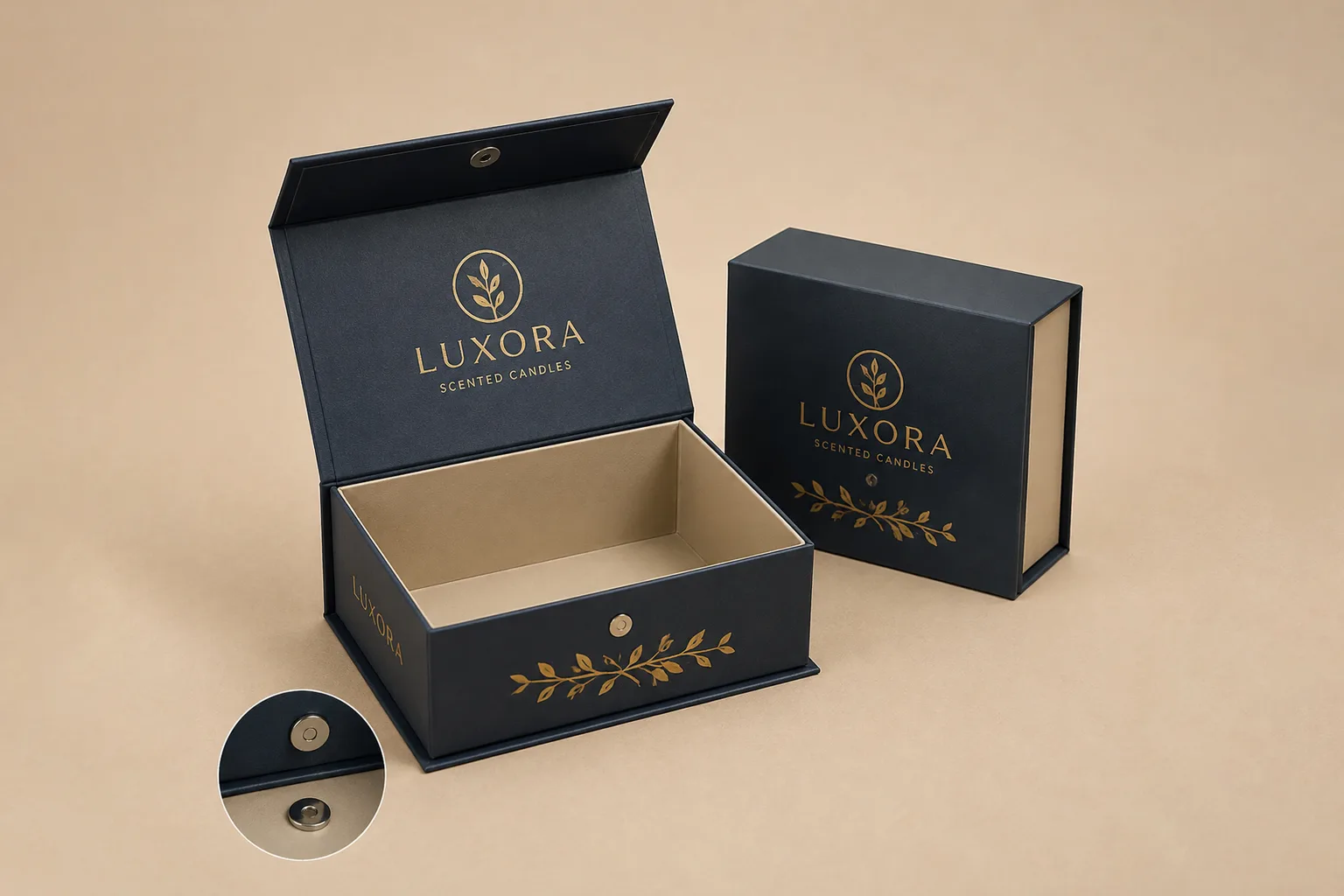
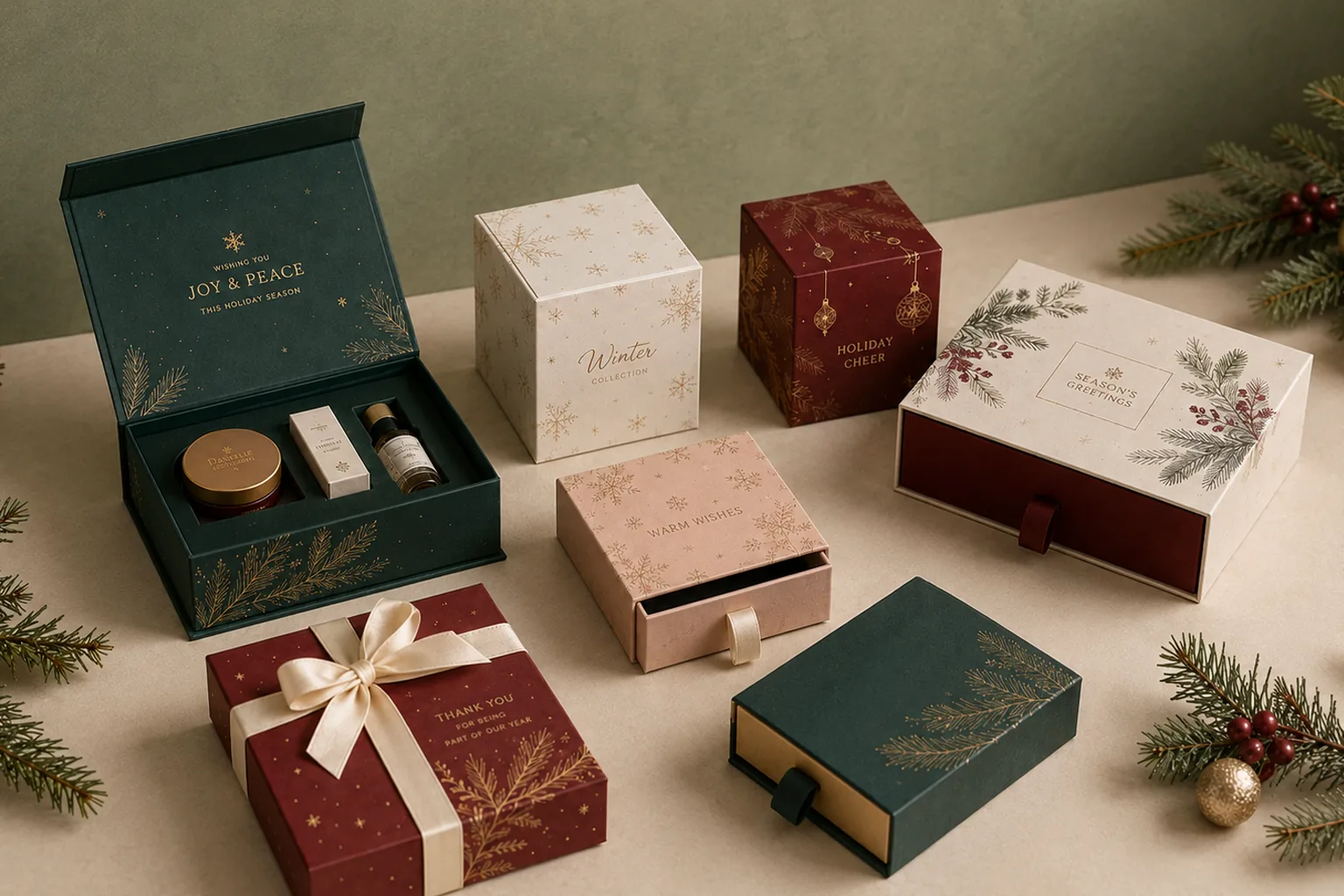
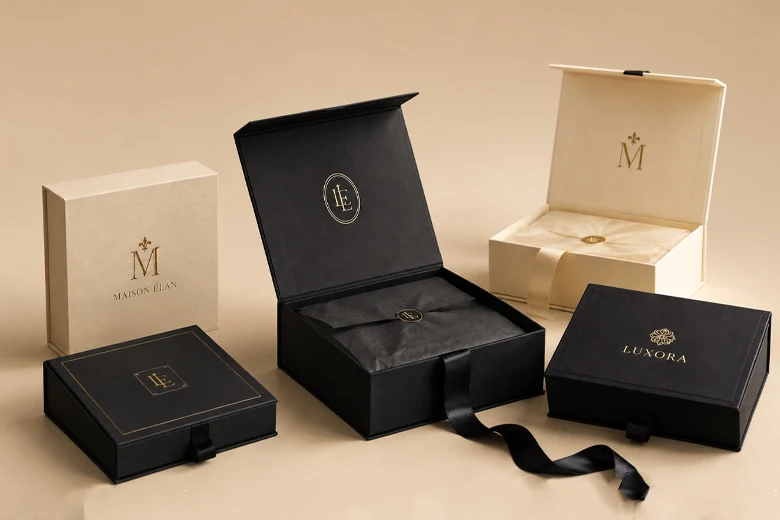
Every day, you handle dozens of packaged items without thinking twice about the material holding them. From your morning cereal box to the sleek packaging of your favorite smartphone, one material rules the retail world: paperboard.
But what exactly is this flexible material, and why is it the backbone of global packaging?
Let’s have a look at the details about paperboard.
What is Paperboard?
Paperboard is a thick, high-density, paper-based material designed to offer structural strength while remaining lightweight. It is significantly thicker, heavier, and denser than standard printing paper. Yet, paperboard retains excellent flexibility for folding and scoring.
What is the Difference Between Paper and Paperboard?
What paper and paperboard have in common is that they both consist mainly of cellulose fibers.
The main differences between paper and paperboard lie in the thickness, weight, and function.
Standard paper (like printer paper or newspaper) is thin, highly flexible, and weighs under 200 gsm. It easily tears and cannot support weight. Paperboard is manufactured to be much thicker, stiffer, and heavier.
While paper is used for displaying written information, paperboard is engineered to protect products, stack on shelves, and withstand the hassles of retail handling.
Is Paperboard the Same as Cardboard?

In casual conversation, people often use “paperboard” and “cardboard” interchangeably. However, in the packaging industry, they are completely different materials:
Paperboard is basically a broad term for paper-based materials. Meanwhile, cardboard is a type of paperboard; it is made from thick, multi-layered material with a wavy inner core for added strength. In simple words, all cardboard is paperboard, but not all paperboard types are cardboard.
History of Paperboard
The roots of paperboard trace back to ancient China. Yet modern commercial paperboard materials were introduced in the early 19th century. In 1817, the first commercial paperboard box was produced in England.
A few decades later, in 1879, an American printer named Robert Gair accidentally discovered that his press could cut and crease paperboard simultaneously. This mistake gave rise to the mass-produced, collapsible folding carton.
By the early 1900s, some companies, like the National Biscuit Company (Nabisco), had adopted paperboard packaging, revolutionizing food safety and product branding.
How is Paperboard Produced?
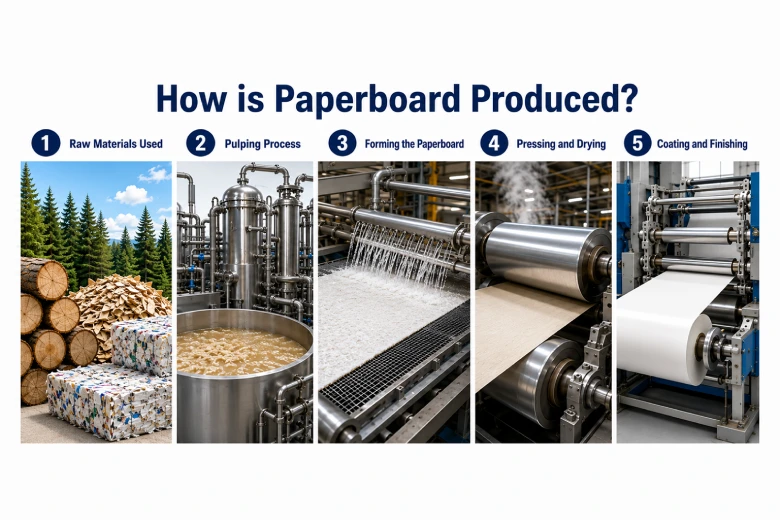
Transforming raw trees into a polished box is a highly sophisticated engineering process to achieve the perfect balance of strength and beauty.
Here’s the complete process of paperboard.
Raw Materials Used
- Softwood trees like pine (strong fibers): Softwoods have long, flexible cellulose fibers that interlock tightly, giving the paperboard its core structural strength and tear resistance.
- Hardwood trees like birch (smooth finish): Hardwoods feature shorter fibers that pack tightly together, filling gaps and creating a smooth, flat surface for printing.
- Recycled paper: Collected consumer and industrial waste paper is cleaned, de-inked, and shredded to form a sustainable alternative to virgin tree pulp.
Pulping Process
- Mechanical Pulping: Wood logs are ground down against giant stones or discs. This process retains a natural substance called lignin, resulting in a high-yield but weaker pulp used mainly for middle layers.
- Chemical Pulping: Wood chips are cooked in a chemical solution to dissolve the lignin and isolate pure cellulose fibers. This produces a much stronger, premium pulp that stays bright and white.
Forming the Paperboard
The prepared liquid pulp—about 99% water—is sprayed onto a rapidly moving mesh screen. As the water drains away, the fibers intertwine. Multiple layers of different pulp types are joined together while wet to form a single, multi-ply sheet.
Pressing and Drying
The wet sheet travels through heavy, heated steel rollers. These rollers squeeze out the remaining water and tightly compress the fibers. The result? The loose pulp is transformed into a solid sheet of paperboard.
Coating and Finishing
Once the paperboard sheet is dried, it undergoes specific finishing treatments. These steps modify the board’s surface properties to make it compatible with inks or liquids.
- Clay coating: A thin layer of natural clay (kaolin) is applied to one or both sides of the board.
- Polyethylene: A microscopic layer of polyethylene plastic for a waterproof and greaseproof barrier.
- Gloss or matte finish: A gloss finish makes colors pop under retail lights, while a matte finish provides a glare-free texture.
Types of Paperboard
Not all paperboard is created equal. The industry divides the material into different grades based on the specific fiber types and surface treatments used.
Solid Bleached Sulfate (SBS)

Made entirely from bleached virgin chemical pulp, SBS is the highest-grade premium. It is pure white throughout the entire sheet and features a clay-coated top side. It offers exceptional print clarity and stiffness; the top choice for luxury jewelry packaging, high-end watch boxes, medical packaging, and artisanal chocolate boxes.
Coated Unbleached Kraft (CUK)
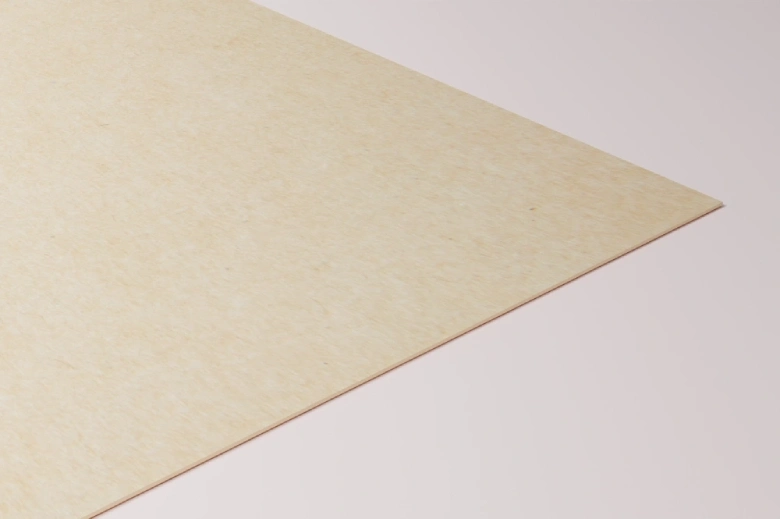
CUK is made from unbleached virgin chemical pulp, giving it a natural brown interior. The top side is coated white for clean printing on beverage six-packs and hardware tools.
Coated Recycled Board (CRB)
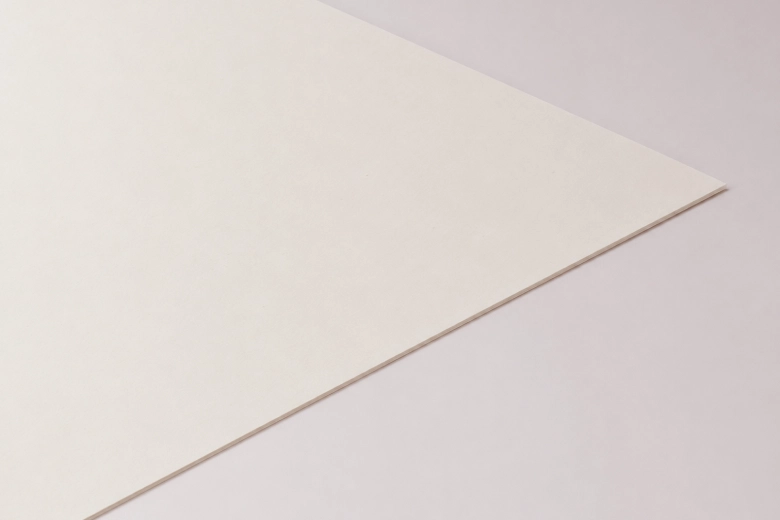
CRB is made from 100% recycled fibers, combining old newspapers, boxes, and paper scraps. It features a gray or light brown interior and a white-coated exterior. It is highly cost-effective and eco-friendly for cereal, cracker, and tissue boxes.
Folding Box Board (FBB)

A multi-ply board that consists of mechanical pulp sandwiched between layers of chemical pulp. It comes with a bright, smooth white outer surface and a slightly less refined (often white, cream, or light grey) reverse side. It is highly stiff and foldable, making it ideal for packaging frozen foods, medical products, and beverage cartons.
Non-Bending Chipboard
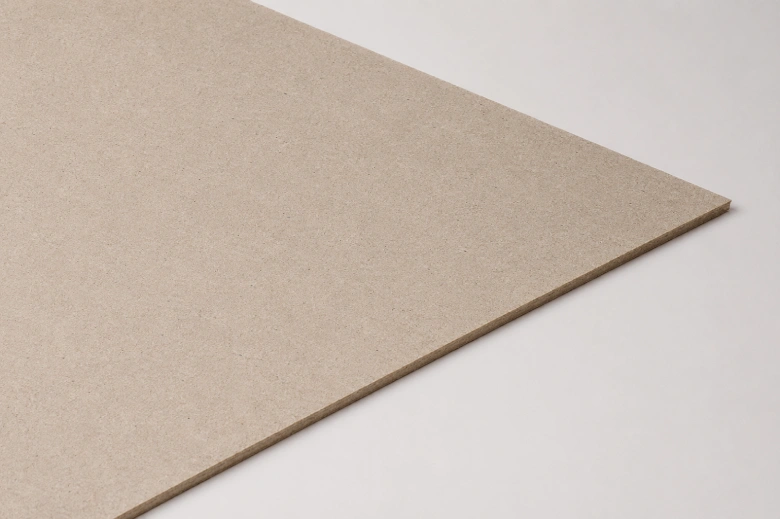
Chipboard is a dense, thick, uncoated board made entirely from recycled paper. It is grey throughout and engineered strictly for rigidity rather than folding or high-end printing; ideal for luxury rigid boxes and jigsaw puzzles.
| Type of Paperboard | Material | Feature | Grade |
| Coated Unbleached Kraft
| Bleached virgin chemical pulp | Pure white, clay-coated top side | Highest-grade premium |
| Coated Unbleached Kraft | Unbleached virgin chemical pulp | Natural brown interior, top side is coated white | Medium grade |
| Coated Recycled Board | 100% recycled fibers | Gray or light brown interior, white-coated exterior | High-grade |
| Folding Box Board | Mechanical pulp | Bright, smooth white outer surface | High-grade |
| Non-Bending Chipboard | Recycled paper | Grey throughout | Engineered strictly for rigidity |
Different Thicknesses of Paperboard
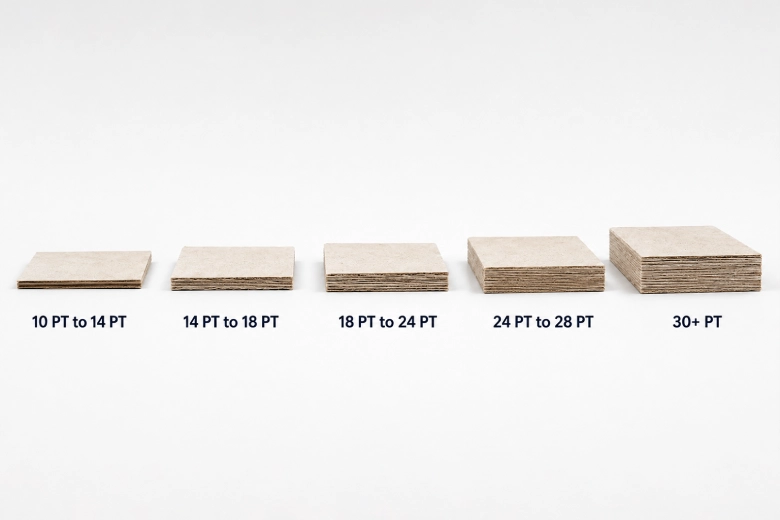
In the packaging world, thickness is measured in “Points” (PT), where 1 Point equals 0.001 inches. Choosing the right point size ensures your package looks premium and doesn’t collapse under the product’s weight.
- 10 PT to 14 PT (0.25 mm – 0.35 mm)
The thinnest grade; highly flexible and lightweight for folding cartons, flyers, and brochures.
- 14 PT to 18 PT (0.35 mm – 0.45 mm)
It offers a solid blend of structural rigidity and foldability, widely used for cereal boxes, toothpaste tubes, and software packaging.
- 18 PT to 24 PT (0.45 mm – 0.60 mm)
A heavy-duty grade that doesn’t bend under pressure; perfect for shoe boxes, toy packaging, and electronic boxes.
- 24 PT to 28 PT (0.60 mm – 0.70 mm)
This thickness is built for high structural integrity; mainly used for heavy retail goods, large gift boxes, and bulk food packaging.
- 30+ PT (0.75 mm and up)
The thickest grade available. It is incredibly rigid and unyielding, used for luxury packaging like smartphone boxes, heavy industrial parts, and book covers.
For a quick, better understanding, have a look at the comparison table below.
| Thickness (PT) | Metric (mm) | Durability | Best for |
| 10 – 14 | 0.25 – 0.35 | Highly flexible and lightweight |
|
| 14 – 18 | 0.35 – 0.45 | Structural rigidity and foldability |
|
| 18 – 24 | 0.45 – 0.60 | Heavy-duty, unbending |
|
| 24 – 28 | 0.60 – 0.70 | High structural integrity |
|
| 30+ | 0.75+ | Incredibly rigid and unyielding |
|
What is Paperboard Used for?
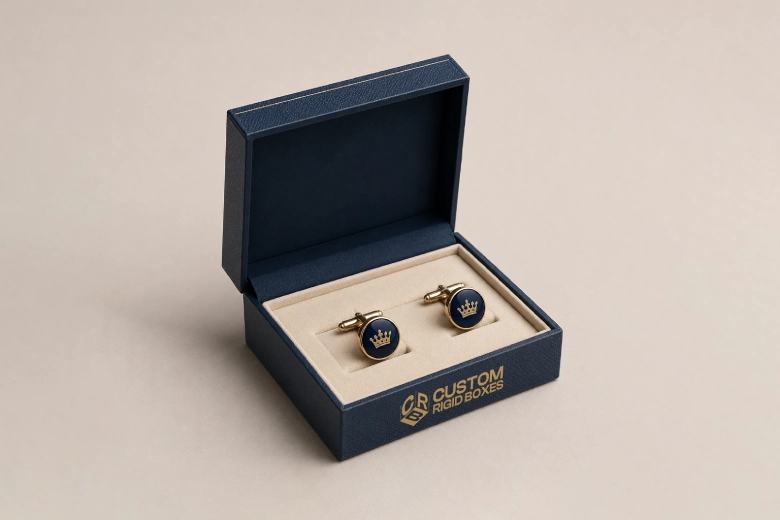
Thanks to its adaptability, paperboard can be engineered to meet the unique safety, structural, and aesthetic demands of almost every commercial industry.
Consumer Packaging
- Food & Beverages: Cartons for milk, juice, and food-safe barriers.
- Cosmetics & Personal Care: High-end embossed boxes, exclusive perfume boxes, cosmetics packaging.
- Pharmaceuticals & Healthcare: Secure, tamper-evident cartons for prescription pills and medical devices.
- Fashion: Apparel boxes, cufflink packaging, and exceptional accessory boxes.
- Electronics & Retail: Die-cut or custom shaped boxes to securely hold retail tech accessories.
Commercial Printing & Graphics: Book covers, pocket folders, high-end postcards, lottery tickets, and promotional store displays.
Industrial & Specialty Applications: Industrial tube winding (like paper towel cores), partitions inside shipping crates, and furniture manufacturing.
The Benefits of Paperboard
Paperboard packaging offers tremendous benefits, including:
- Flexible: It can be easily die-cut, folded, embossed, foil-stamped, and glued into almost any shape.
- Eye-catching: The smooth clay coating allows for high-resolution graphic printing that grabs attention.
- Strong: Its layered fiber structure serves as an impressive strength-to-weight ratio.
- Recyclable: Fully biodegradable and highly sought after by recycling mills.
- Cost-effective: It is lightweight to ship, easy to store flat, and highly economical to manufacture at a massive scale.
How to Choose the Right Paperboard for Packaging?
Paperboard is reliable for any product packaging. But choosing the wrong paperboard can result in crushed boxes that damage your brand’s image.
Here’s the checklist to select the right paperboard for your product packaging.
Choose the Right Paperboard Grade
Determine your product’s nature.
- If you are packaging a high-end luxury item that requires pristine white edges, opt for SBS.
- If your product is heavy and needs raw tearing resistance, choose CUK
- For standard, high-volume retail goods where budget is a priority, CRB is the best option.
Match Thickness to Product Weight
Ensure the “Point” size matches the physical weight of your item. A lightweight bottle of essential oils will hold up fine in a 12 PT box. However, a heavy electronic device or a pair of shoes will require at least an 18 PT to 24 PT board to prevent bulging.
Consider Surface Coatings & Treatments
If your product will be stored in a damp grocery freezer or holds greasy food items, you must specify a polyethylene (PE) coating or water-resistant barrier. If your brand relies on a tactile, premium feel, request a soft-touch coating or spot UV finish.
The Takeaway
No doubt, paperboard is a masterpiece of packaging engineering. It amazingly bridges the gap between raw physical protection and high-end marketing appeal. By understanding the different types, thicknesses, and coatings available, you can design product packaging that keeps your products safe while making them irresistible to customers.
FAQs
What is paperboard?
Paperboard is a thick, high-density, paper-based material designed to offer structural strength while remaining lightweight.
What is the difference between paper and paperboard?
Standard paper (like printer paper or newspaper) is thin, highly flexible, easily tears, and cannot support weight. Meanwhile, paperboard is manufactured to be much thicker, stiffer, and heavier.
Is paperboard the same as cardboard?
Paperboard is basically a broad term for paper-based materials. Meanwhile, cardboard is a type of paperboard; it is made from thick, multi-layered material with a wavy inner core for added strength.
What are the benefits of paperboard?
The benefits of using paperboard include its flexibility, eye-catching appearance, strength, recyclability, and cost-effectiveness.