Ever wonder what that thick, sturdy board is that product packaging is often made of? Chances are, you are holding a duplex board.
Speaking of packaging material, it can make or break your product. It affects your brand’s look, your budget, and the environment. And duplex board? It is a secret weapon for modern businesses. It balances premium aesthetics with cost-effective durability. How?
Let’s explore all the details about duplex board!
What is Duplex Board?
In short, duplex board is a heavy-duty, thick paperboard. It is created by pressing two layers of paper pulp together. And yes, this dual-layer design is where it gets its name.
The two layers of this board serve different purposes:
- The top layer is usually smooth and bleached white. It is designed specifically to showcase sharp, vibrant printing.
- The bottom layer provides structural strength. It is often made from recycled fibers. This smart design makes the board both highly durable and affordable.
Types of Duplex Board
Not all duplex boards are created equal. Different composition and manufacturing methods result in distinct varieties.
Here are the five main types you will encounter in the market.
Coated Duplex Board (CCNB)
CCNB stands for Clay Coated News Back. This board features a glossy clay coating on the top. The back layer consists of recycled newsprint fibers. It is highly popular for retail packaging. The coating ensures your brand graphics pop with color.
Uncoated Duplex Board
This type lacks a glossy top coating. It offers a more natural, matte white texture. It is ideal for minimalist designs. Brands often choose it to convey a rustic feel. Uncoated duplex board absorbs ink deeply for a muted look.
White-Back Duplex Board
This premium option features white pulp on both sides. The back is clean and bright, not grey. White-back duplex board looks highly professional inside and out. It is ideal for improving the unboxing experience when interior presentation matters.
Grey-Back Duplex Board
This is the most common and budget-friendly type. The top is a smooth, printable white. The back is a rougher, distinct grey color. Grey-back duplex board relies heavily on recycled materials. It is the workhorse of industrial and consumer goods packaging.
Kraft Duplex Board
This board swaps the recycled back for strong kraft pulp. Kraft duplex board features a white top and a brown kraft back. This one offers exceptional tear resistance and is eco-friendly. It is the best choice to produce kraft rigid boxes for heavy items that need extra protection.
Types of Duplex Board: A Quick Comparison
| Type | Top Surface | Back Surface | Feature |
| CCNB | Clay Coated | Grey (Recycled) | The coating ensures graphics pop |
| Uncoated Duplex Board | Matte White | Grey or Off-White | Minimalist, rustic feel |
| White-Back Duplex Board | Smooth White | Clean White | Clean, bright, professional |
| Grey-Back Duplex Board | Smooth White | Industrial Grey | The top is a smooth, printable white; the back is a rougher, distinct grey color. |
| Kraft Duplex Board | Smooth White | Natural Brown | Exceptional tear resistance, eco-friendly |
Key Characteristics of Duplex Board
What makes this material so special? A unique mix of physical traits drives the global popularity of duplex board. Let’s look closer at its core characteristics.
Thickness (GSM Range)
GSM stands for Grams per Square Meter. Duplex board typically ranges from 180 to 550 GSM.
Lower GSM options are flexible and fold easily. Higher GSM options are incredibly rigid and tough. This wide range fits almost any structural need.
Printability
The smooth white top layer of duplex board loves ink. This board supports offset, flexographic, and digital printing. It easily handles sharp text, complex logos, and rich images. Your branding will always look sharp and professional.
Even better, duplex board readily accommodates premium finishes, including:
Cost-Effective
Duplex board uses a high percentage of recycled content. This keeps production costs remarkably low. This means you’ll get a premium look without a premium price tag. It helps you scale your packaging costs efficiently.
Eco-Friendly
Most types of duplex boards are highly recyclable and biodegradable. They break down naturally over time. It is an excellent choice for green-conscious brands that want sustainable rigid packaging options.
Is Duplex Board Expensive?
No, it is highly affordable. In fact, duplex board costs significantly less than solid bleached sulfate (SBS) board.
The use of recycled backing drives down the price. It offers the best value-to-performance ratio in luxury packaging.
Duplex Board in Custom Packaging
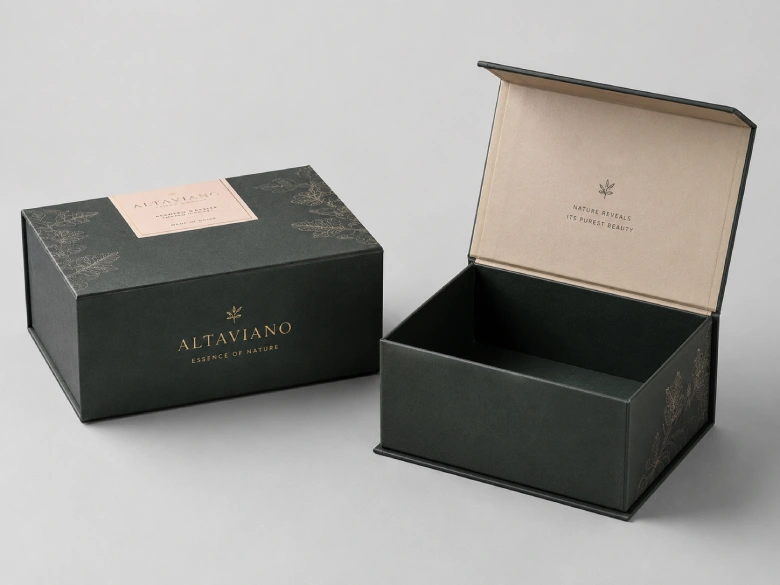
Custom packaging relies heavily on this adaptable material. It shapes beautifully into clean, precise folding cartons. Plus, duplex board is also used as an interior structural component or as an exterior decorative wrap for luxury rigid boxes.
Let’s look at the applications of this excellent board in product packaging.
Food & Beverage Packaging
Walk down any grocery store aisle to see it. This board holds dry foods, cereals, tea boxes, and snacks. Food-grade coatings keep the items safe and fresh. It protects food from light and dust during transit.
Duplex board is also widely used for “sturdy” bakery boxes, such as macaron boxes or gourmet chocolate boxes.
Pharmaceutical Packaging
Medicine boxes require crisp, legible text for safety instructions. Duplex board provides the perfect canvas for tiny fonts. It creates lightweight boxes that stack neatly on pharmacy shelves.
Cosmetic and Personal Care Packaging
Beauty brands love white-back and coated duplex boards. They use them for perfume box packaging and custom cosmetic boxes. The glossy surface accepts premium finishes beautifully. It creates an instant shelf appeal.
Electronics Packaging
Phones, chargers, and headphones need sturdy protection. Electronic boxes made from higher-GSM duplex board offer excellent crush resistance, helping keep the delicate electronic components secure.
Luxury Goods Packaging
Thick, laminated duplex board is preferred for producing luxury packaging. It forms the structure for high-end jewelry boxes and premium watch boxes. Most importantly, this board delivers a heavy, high-end feel during unboxing.
Retail Displays
Point-of-purchase (POP) display boxes rely on heavy duplex board. This board holds multiple products securely at checkout counters. Bright graphics attract shoppers and drive impulse sales.
E-Commerce Shipping
For extremely lightweight, non-fragile items, a slightly thicker duplex board can be used directly as a durable mailer box or as an exclusive subscription box.
Other Applications
The application of this material extends far beyond custom packaging. You can find it hiding in plain sight in many everyday items.
- Commercial Printing
Publishers use it for book and magazine covers. This board stands up well to frequent handling without creasing. It also creates durable folders, postcards, and greeting cards.
- Furniture
Some lightweight, ready-to-assemble furniture uses dense duplex board cores. It adds structure to back panels and drawer bottoms. It makes the furniture affordable and easy to ship.
What are the Advantages of Duplex Board?
Why should your business choose duplex board over plastic or other material alternatives? The tremendous advantages speak for themselves.
High Strength and Durability
The multi-layer structure of duplex board creates a stiff, rigid panel. It resists punctures and box deformation during shipping. As a result, your products stay safe from factory to customers’ doorsteps.
Excellent Printability
You do not have to compromise on branding. The uniform surface of this board allows for high-speed, flawless printing. And again, it is compatible with a variety of varnishes and finishes for added flair.
Versatility in Applications
Duplex board folds, scores, cuts, and embosses with ease. Die-cutting machines can shape it into complex custom designs, even for popular rigid box types. Overall, it adapts seamlessly to any product shape.
Environmentally Friendly
This thick yet recyclable board helps lower your company’s carbon footprint. As we know, customers appreciate brands that use recyclable materials. Hence, it surely enhances your reputation as an eco-friendly business.
Cost-Effectiveness
Lower material costs to produce this board mean higher profit margins for you. Most importantly, the shipping costs drop because it is lightweight. Overall, duplex board maximizes efficiency at every stage of the supply chain.
Duplex Board vs Greyboard vs Chipboard

Duplex board, greyboard, and chipboard are all specialized paperboards typically made from recycled waste paper. However, they differ significantly in their coating, layer structure, rigidity, and primary uses.
Here are the main differences between the three.
| Feature | Duplex Board | Greyboard | Chipboard |
| Coating | White clay coating on one side for printing | Completely uncoated | Uncoated, raw paperboard |
| Color | White on the front; Grey/White on the back | Solid Grey throughout | Grey or brownish |
| Thickness | Medium thickness | Thick and highly rigid | Thin and relatively flexible |
| Printability | Excellent | Requires wrapping or lamination for color printing | Moderate; absorbs ink, simple designs |
| Cost | Cost-Effective | Moderate-High | Moderate-High |
How to Choose the Right Type of Duplex Board for Your Business?
Alright, now you know that duplex board offers amazing benefits, and it’s widely used in custom packaging. But choosing the wrong board grade can lead to damaged products or poor print quality. The result won’t be good for your business’s reputation.
Follow these simple guidelines to make the right choice.
- Weight and Thickness Considerations
Match the GSM to your product’s weight. Use 200–300 GSM for lightweight packaging, such as apparel boxes or small gift boxes. Upgrade to 400–550 GSM if you need premium, luxury candle boxes or are delivering multiple items in a sturdy PR box.
- Printability and Ink Absorption
If your design features bright colors, choose coated CCNB. On the other hand, if you prefer a vintage or eco-friendly vibe, select uncoated. Remember to test your ink compatibility before running a large print batch.
- Performance and Cost-Effectiveness
Balance your packaging needs with your budget constraints. Compare whether you need collapsible boxes or setup boxes. Make sure you save money without sacrificing the exterior look.
- Order Volume Considerations
Search for the best manufacturers to order rigid boxes. Don’t forget to request samples. This way, you can compare the price of white-back versus grey-back options. Also, consider buying in bulk; it will drastically lower your per-unit packaging cost.
In Summary
No doubt, duplex board is a secret weapon for modern businesses. It is affordable, highly customizable, and kind to our planet. This board offers tremendous advantages for businesses, including high strength, excellent printability, versatility, environmental friendliness, and cost-effectiveness.
When choosing the right duplex board type, make sure you consider the weight & thickness, printability, performance & cost-effectiveness, and order volume.
FAQs
What is duplex board?
Duplex board is a heavy-duty, thick paperboard. It is created by pressing two layers of paper pulp together. It balances premium aesthetics with cost-effective durability.
What are the types of duplex board?
Duplex board types include coated, uncoated, white-back, grey-back, and kraft.
What are the advantages of duplex board?
Duplex board offers tremendous advantages for businesses, including high strength, excellent printability, versatility, environmental friendliness, and cost-effectiveness.
How to choose the right type of duplex board?
To choose the right duplex board type, consider the weight & thickness, printability, performance & cost-effectiveness, and order volume.