
Finding the right mailer boxes to ship your products? Choosing the right mailer box size isn’t just about ensuring your product arrives safely. It’s more about a smart strategy to cut down on shipping costs.
A box that’s too large results in wasted space, requires excessive void fill, and often leads to higher shipping fees due to dimensional weight pricing. On the other hand, a well-fitted mailer box provides optimal protection, saves you money, and enhances your customer’s unboxing experience.
This guide will walk you through standard sizes, why size is essential in logistics, and how to measure your mailer boxes accurately. Plus, we provide tips for selecting the perfect fit for your products.
Standard Mailer Box Sizes
Mailer boxes are designed to accommodate and ship a vast range of products, from delicate jewelry to bulky apparel. They are grouped into small, medium, and large categories, with different sizes available to meet specific needs. Understanding standard mailer box sizes makes it easier to find a ready-to-ship solution.
So, let’s check them out!
Small Mailer Boxes
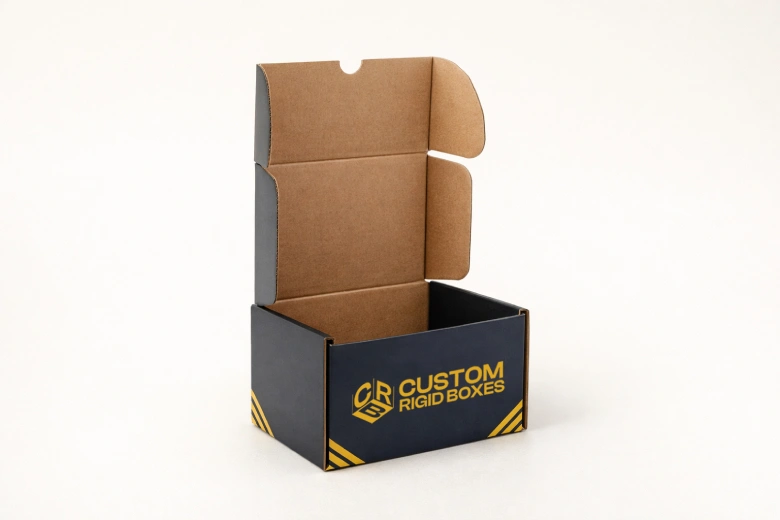
Small mailer boxes are compact and ideal for products that require a snug, secure fit.
Typical dimensions:
- 3” x 3” x 1.01”
- 3” x 3” x 2”
- 6″ × 6″ × 2″
- 7″ × 5″ × 2″
- 8″ × 6″ × 2″
Their minimal size helps reduce shipping costs for lightweight products like jewelry, small electronics, cosmetics, and accessories.
Medium Mailer Boxes
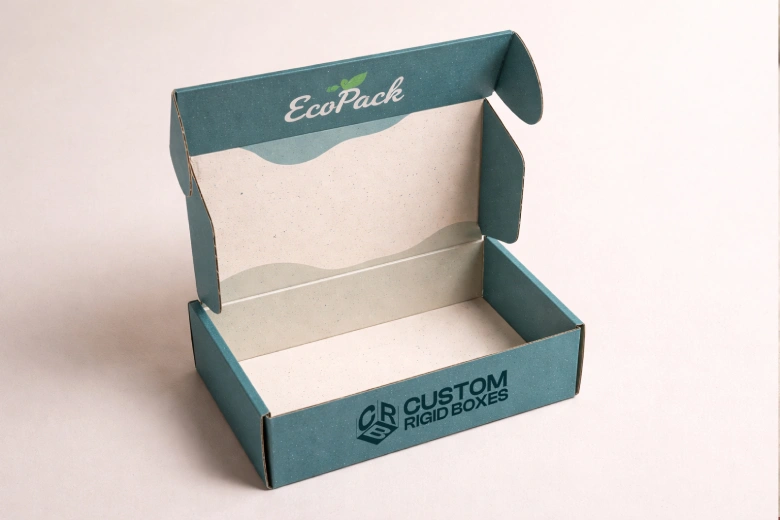
Medium mailer boxes offer versatility and are ideal for a wide range of popular e-commerce products.
Typical dimensions:
- 9″ × 6″ × 3″
- 10″ × 7″ × 4″
- 12″ × 9″× 3″
- 14″× 10″ × 4″
- 16″ × 12″ × 4″
Medium-sized mailer boxes are ideal for shipping t-shirts, books, shoes, or curated subscription items.
Large Mailer Boxes
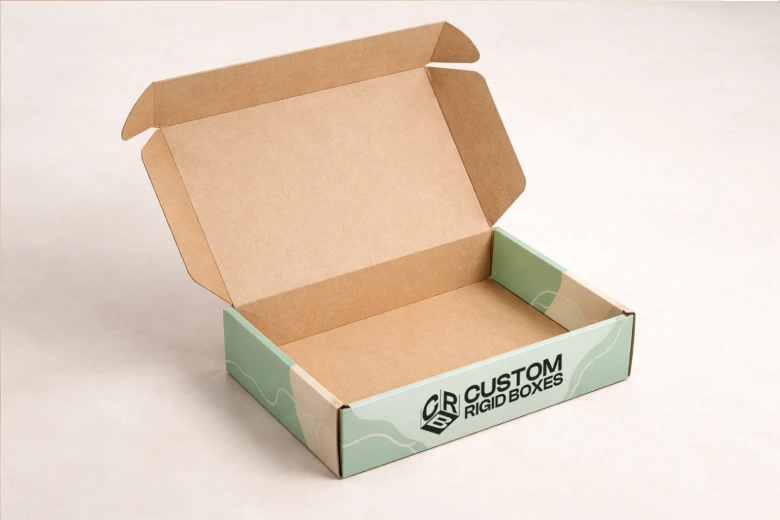
Large mailer boxes are designed for bigger and multi-product orders. They are also ideal for products that need extra space for protective packaging.
Typical dimensions:
- 20″ × 15″ × 6″
- 24″ × 18″ × 10″
- 30″ × 24″ × 12″
- 36″ × 24″ × 12″
For shipping bulkier clothing items, bundled products, or small home goods, large mailer boxes are all you need.
Let’s recap the mailer box sizes for an easy understanding!
| Types | Sizes/Dimensions | Best for |
| Small Mailer Boxes |
|
|
| Medium Mailer Boxes |
|
|
| Large Mailer Boxes |
|
|
Why Mailer Box Size Matters?
When it comes to shipping, having accurately measured packaging boxes is compulsory. Whether you choose cardboard or premium rigid boxes to ship your products, they need to fit snugly. Most importantly, the size of your box also impacts your operational costs.
Overall, here’s why mailer box size matters.
Product Protection
A box that fits snugly with minimal void fill prevents items from shifting during transit. Less movement equals fewer breakages. The result? A lower rate of returns due to damaged goods.
Shipping Costs
Shipping carriers like USPS, FedEx, and UPS use dimensional weight (DIM weight) to calculate charges. This means you are charged based on the box’s size, not just its actual weight, unless the actual weight exceeds the size-based rate. Hence, a larger box with the same weight as a smaller one will cost more to ship.
Customer Experience
An oversized box full of packing peanuts can feel wasteful and cheapen the presentation. Meanwhile, a right-sized, branded box presents a more professional and thoughtful appearance. This type of mailer box will surely enhance customers’ unboxing experience.
Nevertheless, mailer box size matters as it impacts product safety, shipping costs, and your brand’s ability to enhance customers’ unboxing experience.
How to Measure Mailer Box Sizes? Length, Width, Height Explained
Is it difficult to measure mailer box sizes? Not really!
Measuring a mailer box is simple once you understand the standard sequence: Length, Width, and Height (L × W × H). These dimensions refer to the box’s internal space to ensure your product fits.
Here’s the scoop.
- Length (L): The longest dimension of the box opening (left to right).
- Width (W): The shorter dimension of the box opening (front to back).
- Height (H): The vertical dimension when the box is assembled and closed (top to bottom).
Remember, always measure from the inside of the box for the most accurate fit.
How to Choose the Right Mailer Box Size?
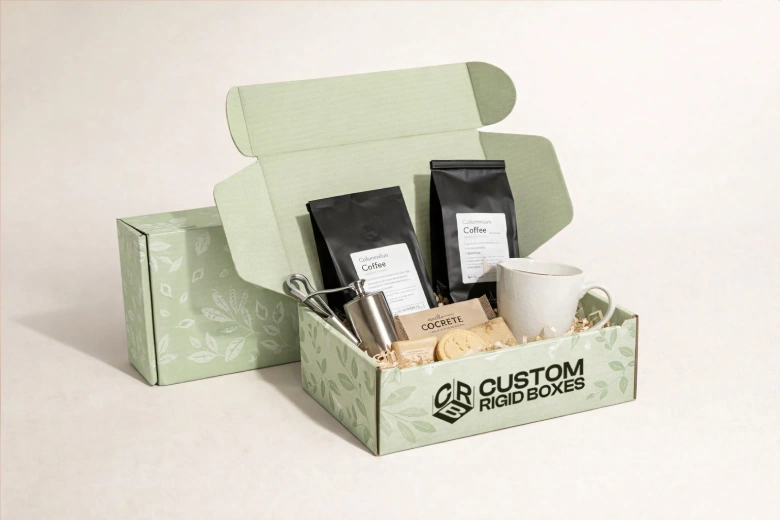
A mailer box features a flat, unfolded “dieline” with panels, flaps, and cut lines that fold into a sturdy, self-locking box. It comes with a tuck-top closure for easy assembly and a great unboxing experience. The base, lid, and side panels have specific flap designs (tuck flaps or dust flaps) that lock together, creating a secure, glue-free package.
Sounds great for maximum product safety, right? Yet, as we mentioned above, getting the accurate mailer box size is highly important. In this context, how to choose the right one?
Choosing the right size is a balance between protection and cost efficiency.
Here’s what you should do.
Properly Measure Your Product
The first step is to gather accurate data. Use a ruler or tape measure to find the Length, Width, and Height.
If your product is in a specific shape (with handles or extended edges), measure it as well to get the maximum footprint.
Add Some Space
To ensure safe arrival, add 1-2 inches to each dimension to accommodate cushioning like bubble wrap, foam inserts, or eco-friendly crinkle paper. This extra space acts as a shock absorber, protecting fragile items from rough handling during transit.
Estimate Your Ideal Mailer Box Size
Once you have your product measurements plus the cushioning, you’ve found your target size. Remember, the goal is a snug fit to reduce the risk of damage.
Measure the Box Interior, Not the Exterior
When ordering mailers, always focus on the internal dimensions. External dimensions are only used by carriers to calculate shipping costs or for warehouse pallet planning.
Focus on the Box Shape and Geometry
Not all products fit standard squares. Account for the “geometry” of your product.
For example, an auto-lock bottom box is ideal for slightly heavier items as the self-locking base provides strength; popular for cosmetics, small electronics, and subscription boxes. Meanwhile, a non-collapsible rigid box is perfect for premium electronics, luxury goods, and high-end cosmetics. Ultimately, if you’re shipping multiple products, plan your box layout to enable easy stacking.
Check Carrier Requirements
Shipping fees are heavily influenced by a package’s “footprint.”
Here’s a brief explanation.
- Girth Calculation: Most carriers use the formula: Length + 2 × (Width + Height).
- Cubic Limits: FedEx and UPS have introduced surcharges for packages exceeding 10,368 cubic inches.
Always verify your carrier’s current size limits to avoid “Additional Handling” or “Oversize” fees that can skyrocket your shipping budget.
Test Your Mailer Box
Before placing a bulk order, request a sample. A test fit allows you to see how the product, padding, and box work together in real life. If the unboxing experience feels premium and the product stays secure, you’ve found the perfect fit for your brand.
Final Thoughts
No doubt, choosing the right mailer box size is a smart strategy to cut down the shipping costs. Whether you choose cardboard or premium rigid boxes to ship your products, they need to fit snugly.
Yes, mailer box size matters, as it impacts product safety, shipping costs, and your brand’s ability to enhance customers’ unboxing experience.
By following the guide above, you can ship your products safely and conveniently.
Get ready to ship smarter, not harder!
FAQs
What are the standard mailer box sizes?
The standard mailer box sizes range from small (3” x 3” x 1.01” to 8″ × 6″ × 2″), medium (9″ × 6″ × 3″ to 16″ × 12″ × 4″), and large ones (20″ × 15″ × 6″ to 36″ × 24″ × 12″).
Why mailer box size matters?
Mailer box size matters as it impacts product safety, shipping cost, and your brand’s ability to enhance customers’ unboxing experience.
How to measure mailer box sizes?
Measure the mailer box size by calculating the inside length, width, and height.
How to choose the right mailer box size?
To choose the right mailer box size, measure your product, add some space, estimate the ideal size, measure the box interior, consider the box shape and geometry, check carrier requirements, and test the box.