
Would you choose a product in a standard box or one packed in well-designed packaging?
Answer the question above, then you’ll know what customers would answer, too.
Ideal product packaging should excel in product protection, brand perception, and the unboxing experience. Simply put, choosing the right packaging is more than simply selecting the material.
In the extensive world of packaging, rigid boxes and folding cartons end up being popular options. What are they, and which one to choose? Read the comparison guide below completely.
What Are Rigid Boxes?
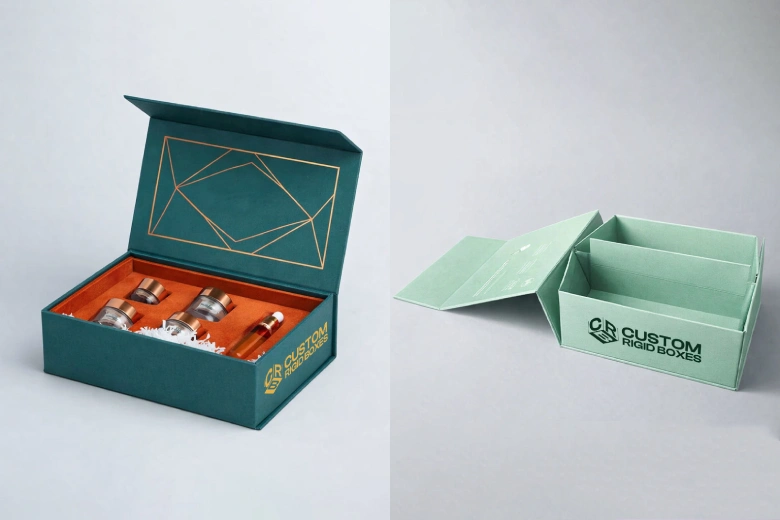
Let’s start with rigid boxes. Also known as setup boxes, they are non-collapsible packaging made from thick chipboard, kraft, or cardstock. The thickness ranges from 1.5 to 3 millimeters. The board stays fixed. Yes, rigid packaging boxes don’t fold flat like cartons.
The sturdy, solid construction gives the boxes structural strength to resist bending and compression. Once assembled, rigid boxes keep their shape and strength thanks to thick boards.
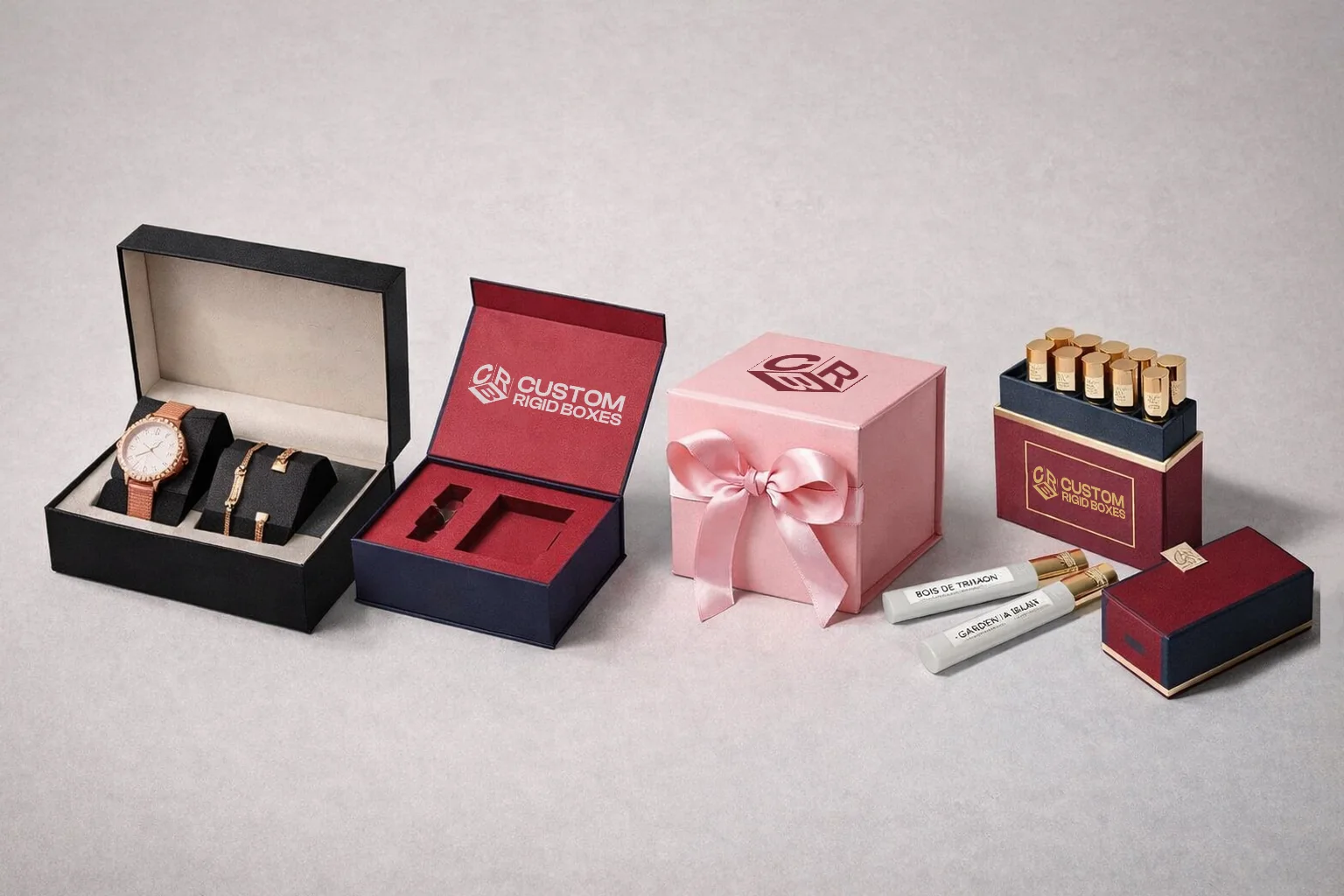
These premium boxes protect products such as electronics, jewelry, cosmetics, and high-end items. Ideal for handling and storage; no additional reinforcement is needed.
When wrapped in decorative or printed material, personalized rigid boxes convey a sense of value during unboxing.
The overall features of these boxes make them perfect for premium presentation and protection. Hence, if your brand image and durability are non-negotiable, rigid box packaging is your best option.
What Are Folding Cartons?
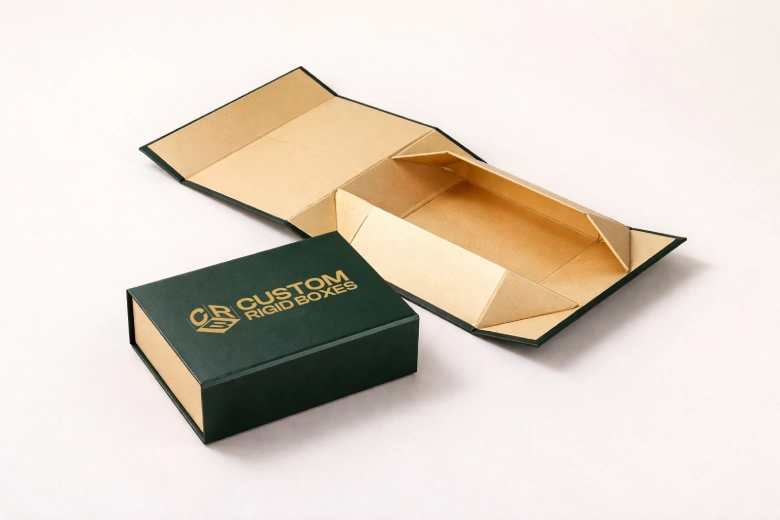
Next, folding cartons. Think of paperboard boxes that ship flat. These cartons take shape when you fold them along pre-scored lines.
The thickness range for folding cartons is usually 250-600 grams per square meter (GSM). Store flat; they don’t require big warehouse space or fill up shipping containers. Overall, these cartons are lightweight yet durable enough to protect products such as cosmetics, food, and electronic accessories.
Rigid Boxes vs Folding Cartons: Which One is More Durable?
Speaking of durability, rigid packaging boxes are significantly more durable and protective than folding cartons. As they’re made from thick, dense chipboard that doesn’t fold, they resist crushing and impact, making them ideal for high-end and fragile products.
In fact, many luxury brands choose rigid boxes to preserve their products and shape a reliable brand image.
Folding cartons, on the other hand, are made from a thin paperboard. Hence, they are more vulnerable to damage. However, these cartons are cost-effective and efficient for lightweight goods.
Overall, for absolute durability and product safety, rigid boxes win. Meanwhile, for budget-friendly packaging of lighter items, folding cartons are a great choice.
Various Styles of Rigid Boxes vs Folding Cartons
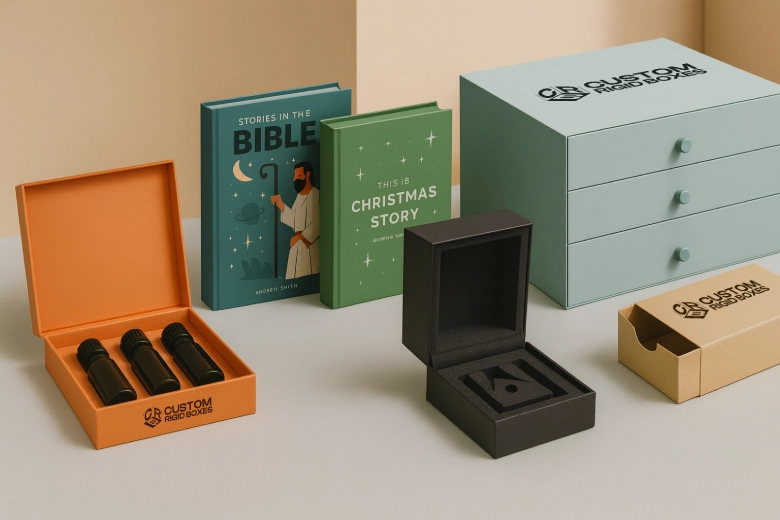
Both rigid boxes and folding cartons can be shaped in unique styles. But then again, rigid boxes ship assembled for high-end presentation. On the other hand, folding cartons ship flat to save on logistics.
So, which styles can you shape them into?
Rigid Box Styles
For a premium look and maximum protection, shape your rigid box into unique styles, such as:
- Two piece packaging box: The classic style with a separate top and bottom.
- Hinged lid rigid box: A box with a lid attached to the base, often with magnetic closures or ribbons.
- Drawer rigid box: A box with an inner tray that slides out from a sleeve.
- Shoulder neck box style: Features a unique inner tray (shoulder) that lifts out.
- Clamshell box: A box where the lid folds back to reveal the product.
- Book-style box: Opens like a book with a magnetic or ribbon closure.
- Mailer box: Comes with self-locking flaps, perfect for e-commerce shipping.
Folding Carton Styles
If you need ideal packaging for everyday items, folding cartons offer functional styles, including;
- Reverse tuck end: Tops and bottoms fold in opposite directions.
- Straight tuck end: Tops and bottoms fold in the same direction.
- Tuck top auto bottom: Top tucks in, while the bottom locks automatically.
- Auto-lock bottom: Bottom flaps automatically fold into place.
Best Uses of Rigid Boxes and Folding Cartons

Speaking of the best uses of rigid boxes and folding cartons, it depends on your products and packaging purposes. Product value, budget, and brand image; we should consider all factors.
Pro tip: Custom rigid boxes excel at the “wow” factor, while folding cartons are more efficient.
But let’s list the best uses for each option.
Rigid Boxes (Set-Up Boxes)
Rigid boxes are best for luxury goods, high-end electronics, fine jewelry, beautiful cosmetics, exclusive gifts, and subscription items. These boxes are excellent where presentation matters most.
Key Uses:
- Unboxing Experience: Their smooth texture created a memorable unboxing experience for high-value products, making them ideal for jewelry packaging boxes or apparel boxes.
- Superior Protection: Strong, solid walls protect fragile products from crushing and impact.
- Retail Display: Sturdy structure helps your products stand out on shelves.
- Branding: Convey prestige and quality through excellent finishes and custom features like magnetic closures or pull ribbons.
Folding Cartons
Folding cartons are ideal for everyday items, mass-market retail products, food & beverages, cosmetics, and pharmaceuticals.
Key Uses:
- Space Efficiency: Shipped flat, saving space and reducing logistics costs.
- Printing: Suitable for detailed branding, graphics, and promotions.
- Cost-Effectiveness: Lower cost for high-volume products.
Brand Perceptions of Rigid Boxes vs Folding Cartons
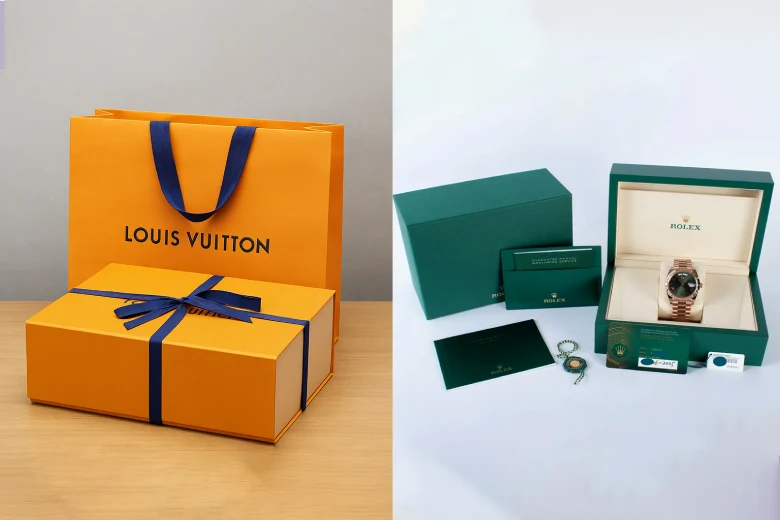
Now, it’s come to the essential point: brand perceptions.
Have you ever wondered how Louis Vuitton packaging delivers luxury unboxing moments for customers? Or why Rolex packaging feels premium? The answer: those famous brands use luxury packaging (aka rigid boxes).
A rigid box reinforces a luxury, high-value image. Thanks to its rigidity, whatever graphics you apply to the box remain smooth with minimal surface deformation.
Plus, you can add many types of laminations without worrying about color inconsistency. Some popular finishes to apply are included:
A huge plus point when you’re aiming for that “luxurious” factor.
Meanwhile, a folding carton is suitable for high-volume, fast-moving products. They keep costs down more than a perfect tactile finish.
However, this flexibility can limit the depth of embossing and the amount of foil stamping you can use. For everyday consumer goods, that trade-off is pretty practical. In other words, folding cartons reduce costs and storage requirements while maintaining high print quality.
How to Choose Between the Two?
Alright, the big question: How to choose between rigid boxes and folding cartons?
Choose Rigid Boxes When:
- You need premium branding: They offer superior elegance, smooth finishes, and feel premium for luxury goods.
- Protection is paramount: Their thick, non-collapsible structure guards heavy or delicate items.
- The unboxing experience matters: Premium rigid packaging boxes make every unboxing memorable and effective for marketing.
Choose Folding Cartons When:
- Space and shipping are priorities: They fold flat, saving storage and transportation costs.
- Functionality and versatility are essential: Folding cartons are ideal for retail displays with vibrant printing and easy setup.
- Cost-effectiveness is key: They are economical for large runs and everyday goods.
Let’s make it easier with the comparison table below.
| Feature | Rigid Boxes | Folding Cartons |
| Material | Thick chipboard, kraft, or cardstock | Thin paperboard |
| Visuals | Luxury, elegant, smooth | Practical, vibrant |
| Durability | Highly durable | Light durable |
| Functionality | Unboxing experience, high-end presentation | Functional |
| Best for |
|
|
Final Thoughts
Undoubtedly, rigid boxes and folding cartons end up being popular options in the extensive world of packaging.
Rigid boxes are non-collapsible packaging made from thick chipboard, kraft, or cardstock. The overall features of these boxes make them perfect for premium presentation and protection. Meanwhile, folding cartons take shape when you fold them along pre-scored lines.
Considering durability, styles, best uses, and brand perception, you can choose the option that is best for your brand. However, if your brand image and product safety are non-negotiable, rigid box packaging is your best option.
FAQs
What are rigid boxes?
Also known as setup boxes, they are non-collapsible packaging made from thick chipboard, kraft, or cardstock. Rigid boxes protect products such as electronics, jewelry, cosmetics, and high-end items.
What are folding cartons?
Folding cartons take shape when you fold them along pre-scored lines. They are lightweight yet durable enough to protect products such as cosmetics, food, and electronic accessories.
Which is more durable, rigid boxes or folding cartons?
Rigid boxes are significantly more durable and protective than folding cartons. As they’re made from thick, dense chipboard that doesn’t fold, they resist crushing and impact, making them ideal for high-end and fragile products.
How to choose between rigid boxes and folding cartons?
You can choose between the two by considering durability, styles, best uses, and brand perception.