Printing isn’t just about putting ink on paper—it’s about creating impact. From glossy magazines to luxury packaging, the method behind the print defines the quality you see and feel. That’s where offset printing comes in. Known as the benchmark of commercial printing, it delivers sharp detail, vibrant colors, and unmatched consistency across thousands of copies.
Whether you’re producing luxury rigid boxes or premium labels, offset printing ensures every piece looks flawless. It’s the trusted choice for brands that want their packaging to stand out, their colors to stay true, and their message to shine.
What is offset printing, how it works, and why it remains the most popular choice for high‑volume, high‑quality projects?
Let’s find out.
What is Offset Printing?
Offset printing is a process in which ink is transferred from a plate to a rubber blanket, then onto the printing surface. This indirect transfer ensures smooth coverage and crisp detail. Unlike direct printing methods, offset uses the principle that oil and water do not mix. This means the ink sticks only to the image areas, while water keeps the non‑image areas clean.
This technique is widely used for commercial printing. It is especially popular in premium packaging, like custom rigid boxes, where quality and consistency matter most.
How Does Offset Printing Work?
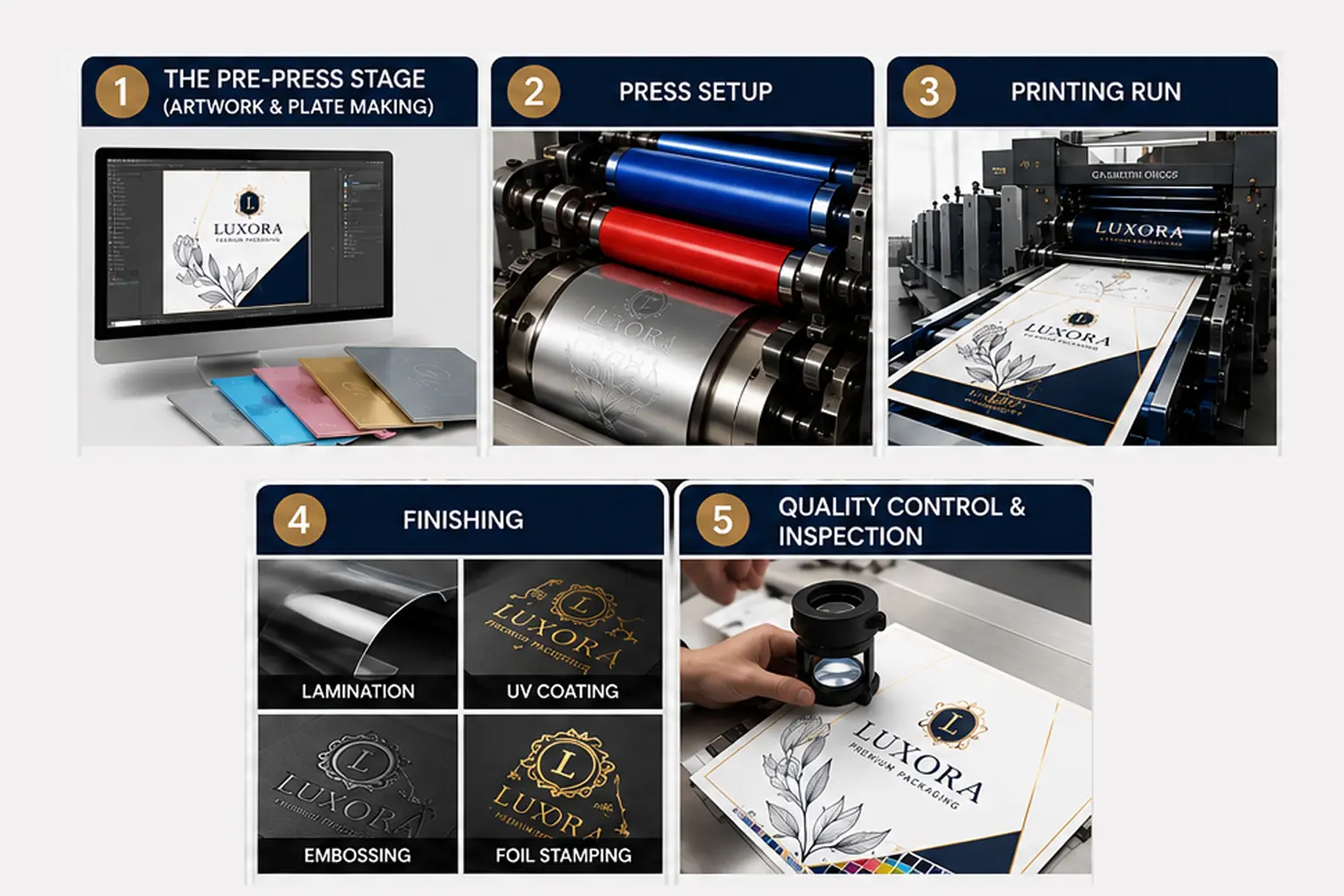
Behind every flawless print lies a fascinating dance of plates, blankets, ink, and precision. Offset printing isn’t magic—it’s a carefully orchestrated process where technology and craftsmanship meet.
Let’s explore how this process works.
The Pre‑Press Stage (Artwork & Plate Making)
The process begins with artwork preparation. Designers create high‑resolution files with proper bleed and crop marks. These files are separated into color channels—usually CMYK or Pantone spot colors.
Each color requires its own plate. Plates are made from aluminum or similar materials. They are chemically treated so that image areas attract ink while blank areas repel it.
Press Setup
Once plates are ready, they are mounted on the press. Rollers apply water to non‑image areas and ink to image areas. The balance between ink and water is essential here. Skilled operators adjust the press to ensure perfect registration, meaning all colors align correctly.
Printing Run
Next, the paper or board passes through the press. The image transfers from the plate to the rubber blanket, then onto the substrate. This indirect transfer allows printing on rough or textured surfaces. Offset presses can run thousands of sheets per hour, making them ideal for large orders.
Finishing
After printing, finishing processes add durability and appeal. Finishes such as lamination, varnish, UV coating, embossing, and foil stamping are applied at this stage. These finishes protect the print and enhance the final look.
Quality Control & Inspection
Then, samples are checked throughout the run. Operators inspect color density, alignment, and sharpness. Any deviation is corrected immediately. This ensures that all printed materials look identical.
How Long Does the Offset Printing Process Take?
Offset printing requires preparation. Plate making and press setup take time. Depending on complexity, its setup may take several hours. However, once running, the press produces thousands of sheets quickly.
The Advantages of Offset Printing
When brands demand packaging that dazzles, offset printing delivers. It’s the method that transforms ordinary designs into crisp, vibrant visuals with flawless consistency.
Let’s have a look at the advantages that make offset printing the standard in commercial printing.
High Quality and Resolution
Offset produces sharp images with smooth tones. Fine typography and detailed graphics print perfectly.
A Wide Range of Color Options
This printing technique supports CMYK and Pantone spot colors. Metallic inks and custom shades are possible with offset.
Flexibility in Printing on Different Materials
Offset works on paper, cardboard, and textured boards. The rubber blanket adapts to uneven surfaces.
Ability to Handle Large Printing Runs
Offset presses can produce thousands of sheets per hour. This makes them ideal for magazines, catalogs, and custom packaging.
It Supports Premium Finishes
Premium finishes such as embossing, foil stamping, and UV coatings can be easily integrated to create a sense of luxury.
Cost‑Effectiveness for Larger Orders
Although the setup costs are higher, per‑unit costs drop significantly in bulk runs. Thus, offset printing becomes the most economical choice for large projects.
Offset, Digital, and Screen Printing: A Quick Comparison
| Feature / Aspect | Offset Printing | Digital Printing | Screen Printing |
| Print Quality | Extremely sharp, consistent, professional | High quality but slightly less sharp for fine details | Bold, vibrant colors with strong saturation |
| Cost Efficiency | Economical for high volumes | Cost‑effective for small runs, no plate setup | Moderate cost, depends on design complexity |
| Flexibility | Limited flexibility once plates are made | Highly flexible, easy to change designs | Flexible for specialty inks and textures |
| Durability | Very durable, consistent across thousands of boxes | Good durability, but less resistant than offset | Excellent durability, especially with thick inks |
| Special Effects | Works well with coatings, embossing, foil stamping | Supports variable data printing (names, QR codes) | Allows metallic inks, raised textures, tactile finishes |
| Best For | Large production runs, detailed graphics, brand colors | Short runs, prototypes, personalized designs | Logos, solid graphics, specialty finishes |
Why Choose Offset Printing for Custom Rigid Boxes?
Rigid boxes are a statement of luxury, durability, and brand prestige. These boxes are unique because they’re not printed directly on the board. Instead, designs are applied to the wraps covering the box. This requires precision and specialized methods. To achieve that flawless look and feel, there are widely used rigid box printing methods available. So, why choose offset printing?
Here’s why your brand should also consider offset printing for custom rigid boxes.
Superior Print Quality
Rigid boxes are popular for luxury packaging, and offset delivers sharp detail and vibrant colors that elevate the luxury image.
Consistency Across Large Volumes
Every rigid box must look identical; offset printing ensures uniformity across thousands of units.
Cost Efficiency for Bulk Orders
Rigid boxes cost more than standard packaging. That’s why they are often produced in large quantities. Offset technique reduces per‑unit cost, making it economical.
Material Compatibility
Offset printing works well on chipboard and greyboard wraps. The rubber blanket ensures smooth coverage.
Customization & Special Effects
Various rigid box finishes, such as foil stamping, embossing, and UV coatings, can be easily added.
Durability & Premium Feel
Offset inks bond strongly, resisting fading. Combined with premium coatings, they enhance tactile and visual quality.
Technical Considerations & Best Practices for Using Offset Printing
Considering how offset printing works and the advantages it offers, it’s undeniable why many luxury brands choose this technique. Are you interested, too?
Note down some technical considerations and best practices for using offset printing.
- Artwork & Prepress Together
Your design file must be high resolution. Bleed margins and crop marks are essential.
- Board Selection
Choose chipboard or greyboard at the right thickness for strength and printability.
- Ink & Coatings Choice
Match inks with coatings for durability. For example, UV coatings add gloss and protection.
- Plate Quality & Registration
The plate must be precise, as misalignment causes blurred images.
- Ink Density & Color Management
Ensure you calibrate ink density for consistent colors. Choose Pantone for brand accuracy.
- Handling & Drying / Curing
Allow proper curing time for inks. Remember that UV inks cure instantly, while water‑based inks need drying time.
- Finishing & Folding / Creasing
Plan your rigid box design with folding and creasing in mind. This ensures your boxes assemble correctly.
- Proofing & Sample Runs
Always ask for samples before mass production to avoid costly errors.
In Summary
No doubt, offset printing is the benchmark for high‑volume, luxury packaging. It combines sharp detail, consistent color, and cost efficiency.
Speaking of custom rigid boxes, offset printing delivers luxury appeal, durability, and brand consistency. Hence, if you want to impress buyers and maintain quality across large runs, choose offset printing.
FAQs
What is offset printing?
Offset printing is a process in which ink is transferred from a plate to a rubber blanket, then onto the printing surface.
How does offset printing work?
The process of offset printing includes the pre‑press stage, press setup, printing run, finishing, and quality control & inspection.
What are the advantages of offset printing?
The advantages of offset printing include high quality & resolution, a wide range of color options, flexibility in printing on different materials, the ability to handle large printing runs, ot supports premium finishes, and cost‑effectiveness for larger orders.
Why choose offset printing for custom rigid boxes?
Offset printing is ideal for custom rigid boxes because it delivers luxury appeal, durability, and brand consistency.