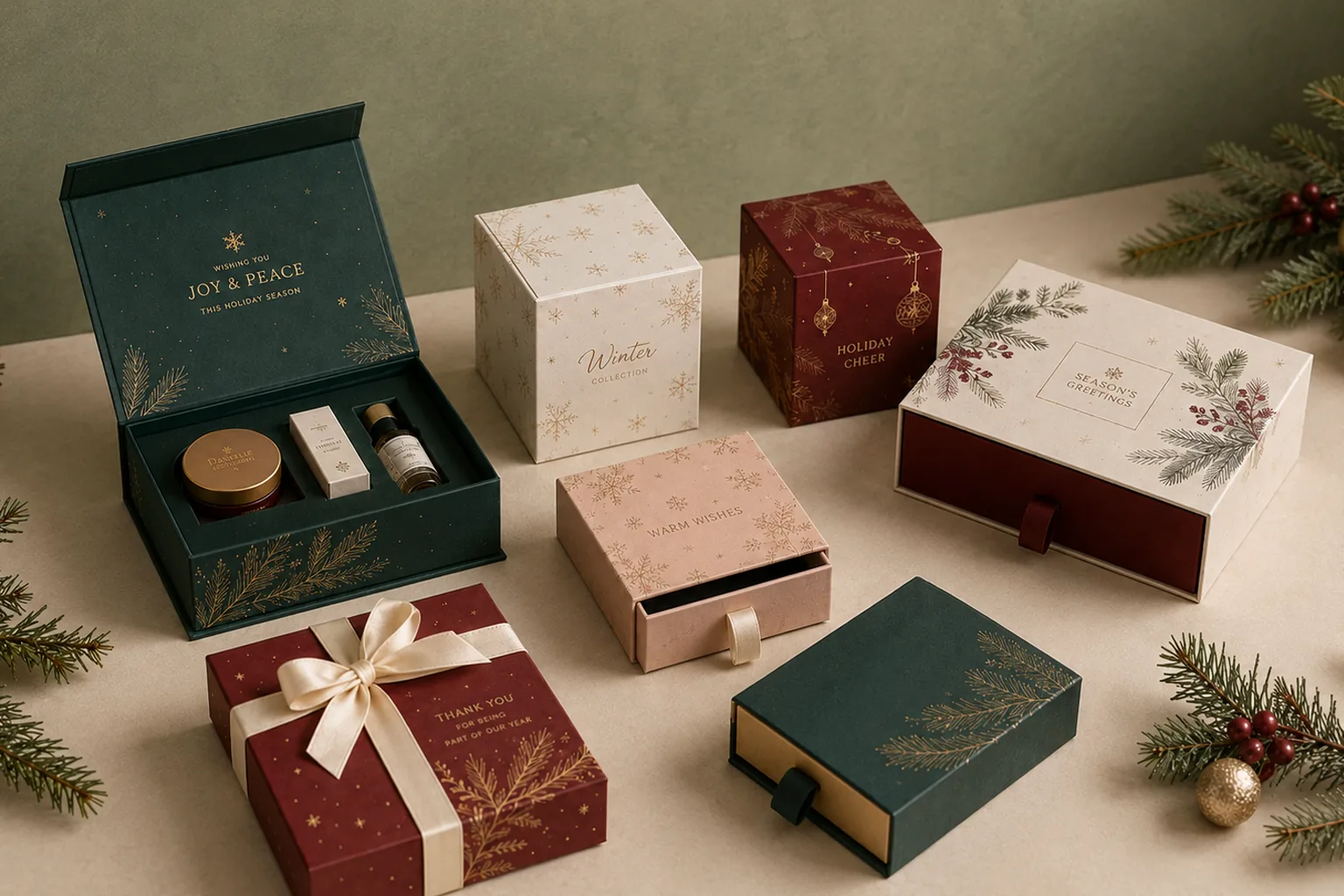
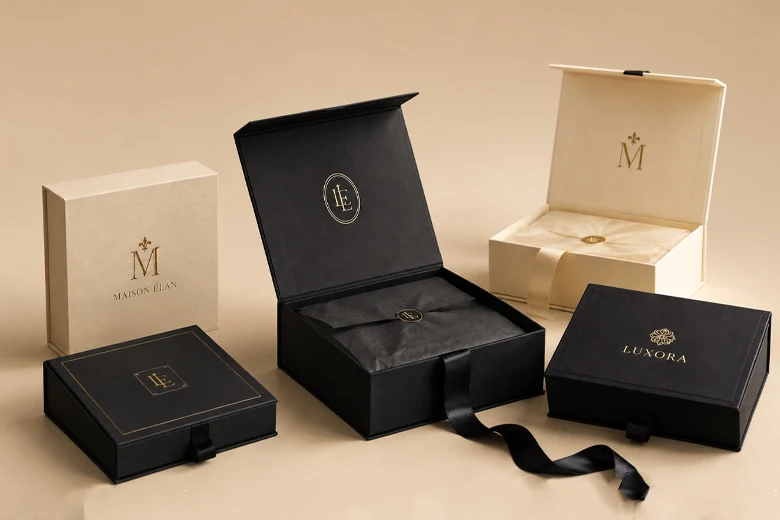
When you hold a high-end product packaged in an exclusive box, you feel its quality before even opening it. That weight, that texture, that slow-vacuum of the lid, that perfect fit—the wonderful luxury of a rigid box.
Well, here’s the secret: it isn’t only about the material and texture; it’s about the size, too. A rigid box that’s too big feels cheap and wasteful. On the other hand, one that’s too small risks damaging your valuable goods. Whether you’re launching a luxury skincare line or shipping high-tech gadgets, getting the right box size is the difference between “premium” and “passable.”
In this complete guide, we’ll explore rigid box sizes, both standard and custom options.
Standard Rigid Box Sizes
“Custom” is always king in luxury packaging. However, understanding standard rigid box sizes can save you a fortune on tooling and die-cutting costs.
Here are the standard sizes to note when choosing a rigid box:
- Small: Around 3″ x 3″ x 1.5”, ideal for small trinkets
- Medium: Roughly 8″ x 6″ x 3″, the go-to size for electronics and stationery.
- Large: Often 12″ x 10″ x 4″ or larger, designed for apparel, footwear, or curated gift hampers.
| Standard Rigid Boxes | Sizes | Ideal for |
| Small Rigid Boxes | 3″ x 3″ x 1.5” | Small trinkets |
| Medium Rigid Boxes | 8″ x 6″ x 3″ | Electronics and stationery |
| Large Rigid Boxes | 12″ x 10″ x 4″ | Apparel, footwear, curated gifts |
Standard Rigid Box Sizes for Different Industries
Every product has its own characteristics and specifications. Speaking of different industries, each has its standard when it comes to packaging. Surely, you cannot use large makeup boxes with compartments for small jewelry.
As many industries choose rigid boxes for their products, let’s look at the standard box sizes you need.
Jewelry & Watches
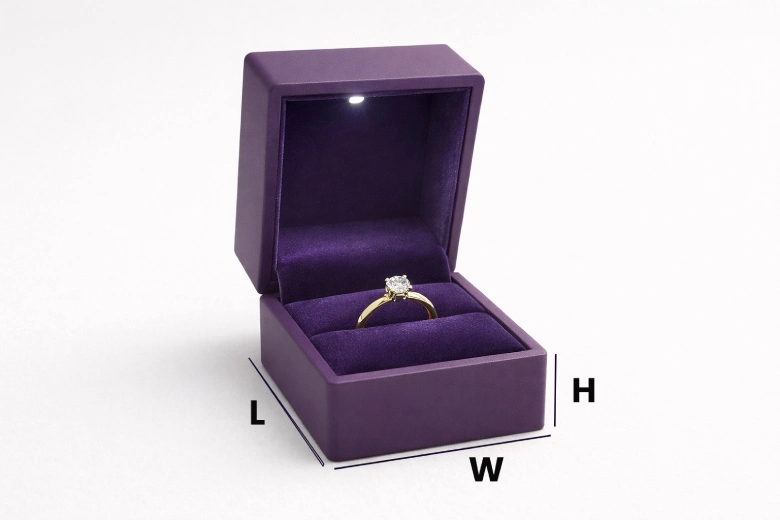
When it comes to luxury jewelry packaging and watch boxes, precision is everything.
Standard rigid box size for jewelry:
- Small: 2″ x 2″ for rings.
- Medium: 8″ x 2″ for necklaces.
Common rigid box size for watches:
- 4″ x 4″ x 3″ to fit the watch, cushion, and security padding.
- 5.25″ x 5.25″ x 4″ for compact size.
- 3″ x 3″ x 2.25″ for small or kids’ watches.
All standard jewelry and watch box sizes share the same goal: to minimize movement, keeping your masterpiece centered on its velvet insert.
Cosmetics
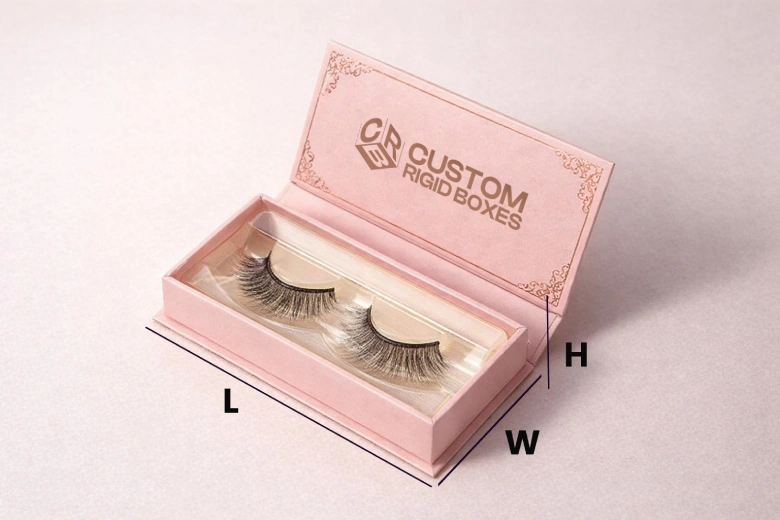
Cosmetic packaging boxes should be compact and chic.
Check out the standard rigid box sizes for cosmetics below:
- Slim boxes: 1” x 1” x 4” or 1.5” x 1.5” x 1.5” for lipstick/lipbalm.
- Small boxes: 5″ x 4″ x 2″ for small cosmetic sets.
- Medium boxes: 9″ x 6″ x 3″ for medium sets.
- Large boxes: 12″ x 9″ x 4″ for subscription cosmetic sets.
Note: For lipsticks or single shadows, boxes are often slim and tall. Meanwhile, makeup palettes demand a very shallow depth to prevent the powders from cracking during transit.
Perfumes
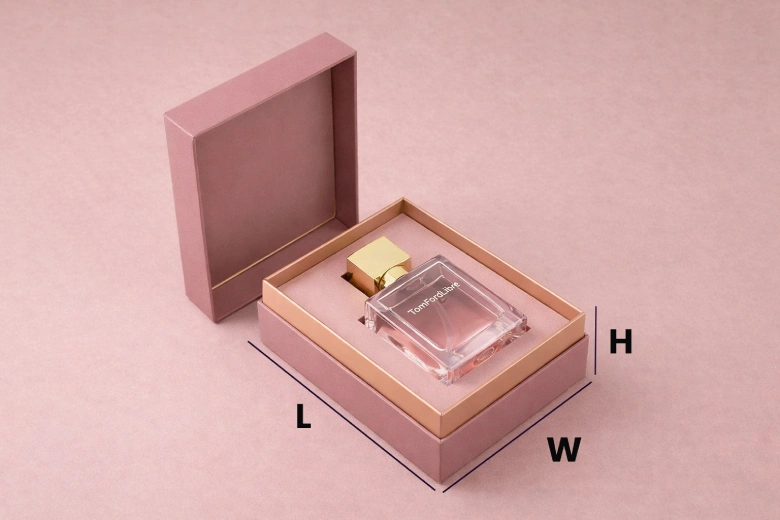
Custom perfume boxes are all about height and weight.
Most luxury perfumes come in a shoulder-and-neck box style. Thus, they need enough height (usually 5″ to 7″) to accommodate the bottle’s spray cap. At the same time, the boxes should have a wide enough base to prevent tipping on a retail shelf.
Electronics
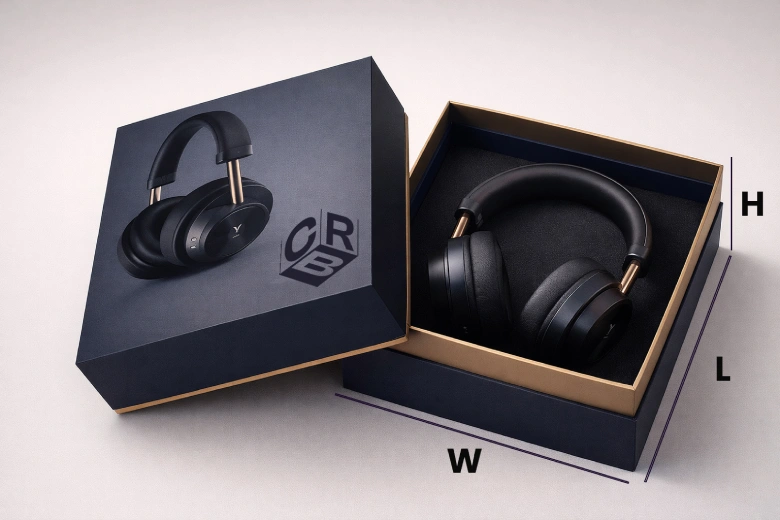
Whenever we think about electronic boxes, we will think about the “unboxing” standard.
Here are the standard sizes to note:
- Small: 3.5″ x 3.5″ x 4″ to 7″ x 4″ x 1.5″ for accessories/wearables.
- Medium: 6″ x 4″ x 2″ to 11″ x 6″ x 6″ for smartphones or tablets.
- Large: 12″ x 12″ x 6″ to 13″ x 13″ x 13” for consoles or computers.
For sensitive electronics, your boxes should be tight and sleek, leaving almost no air gap. Even the boxes for laptops or tablets should stay remarkably slim to maintain that high-tech aesthetic.
Apparel
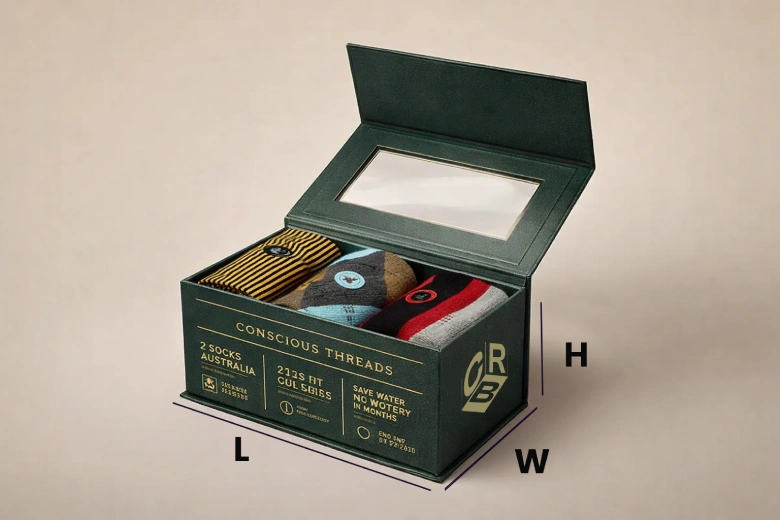
Apparel boxes should give some space for the clothing items to “breathe.”
Here’s the standard size list:
- Small: 10″ x 7″ x 2″ to 12″ x 8″ x 2.5″ for scarves or small t-shirts.
- Standard: 15.5″ x 9.25″ x 2″ or 15″ x 9.5″ x 2″ for standard shirt boxes.
- Larger Apparel: 14″ x 10″ x 6″ to 18″ x 18″ x 16″ for hoodies, dresses, or apparel sets.
Note: The extra width allows the clothing fabric to be folded neatly without heavy creasing.
Food & Confectionery
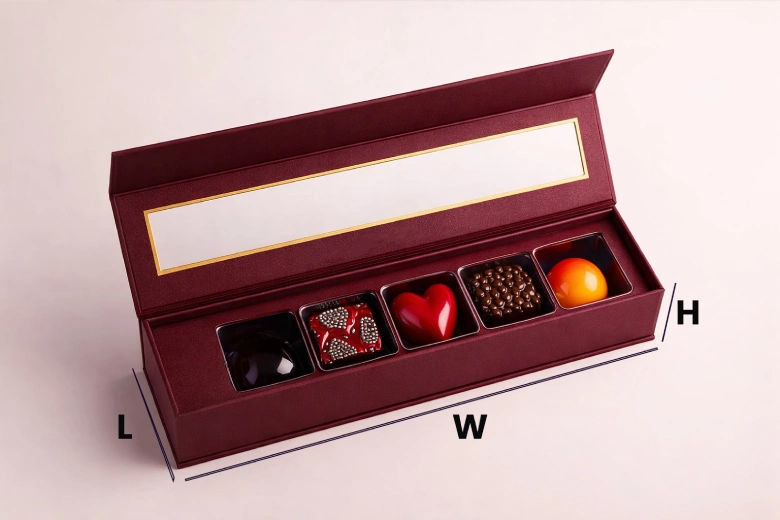
Food and confectionery items should look delightfully organized.
Rigid box sizes for food & bakery:
- Bakery Boxes: 10″ x 7″ x 2″ or 12″ x 12″ x 6″ for cakes.
- Snack/Gourmet Kits: 6″ x 4″ x 2″ or custom sizes for premium food items.
Common rigid box sizes for confectionery (chocolates & candy):
- Small: 3″ x 3″ x 1″ .
- Medium/Large Sets: Around 11″ x 8″ x 1.5″ for multiple chocolates.
- Square Sets: 8″ x 8″ x 5″ for larger gift sets.
Chocolate boxes are almost always horizontal and shallow. This allows for dividers that keep each truffle in its own “space,” preventing a messy jumble of sweets.
E-Commerce
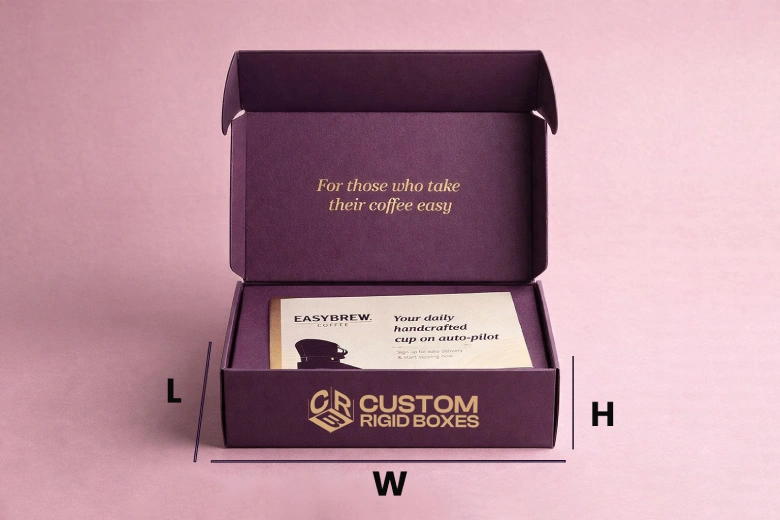
E-commerce boxes are about durability meets dimensions. For example, mailer boxes and standard subscription packaging often use a 9″ x 7″ x 3″ format. This format is large enough to hold a variety of items but small enough to fit into most standard shipping mailers.
Promotional & Corporate Gifting
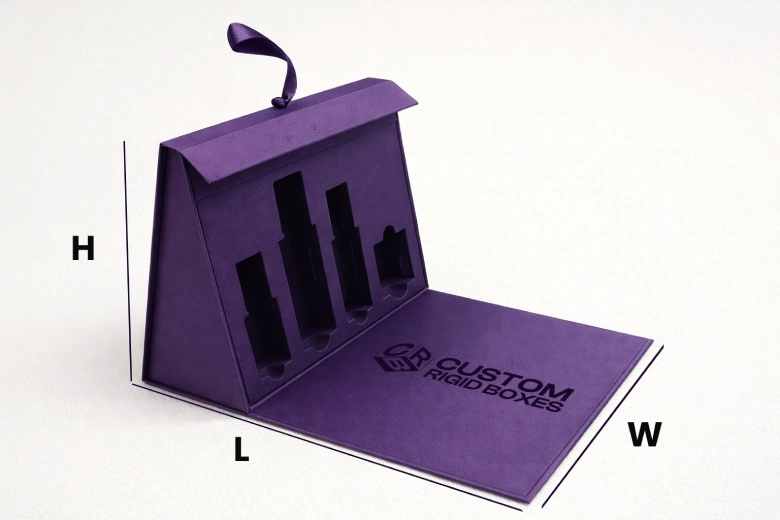
Promotional items and corporate gifts need large gift boxes, often measuring 12″ x 12″ or more. The boxes need to be deep enough to house a mix of items—like a tumbler, a notebook, and a branded hoodie—all nestled in custom EVA foam inserts.
Getting confused?
Let’s make it easier with the rigid box size chart below.
| Industries | Rigid Box Sizes | Ideal for |
| Jewelry & Watches | Small: 2″ x 2″ | Rings |
| Medium: 8″ x 2″ | Necklaces | |
| 4″ x 4″ x 3″ | The watch, cushion, and security padding | |
| 5.25″ x 5.25″ x 4″ | A compact size | |
| 3″ x 3″ x 2.25″ | Small or kids’ watches | |
| Cosmetics | Slim: 1” x 1” x 4” or 1.5” x 1.5” x 1.5” | Lipstick/lip balm |
| Small: 5″ x 4″ x 2″ | Small cosmetic sets | |
| Medium: 9″ x 6″ x 3″ | Medium cosmetic sets | |
| Large: 12″ x 9″ x 4″ | Subscription cosmetic sets | |
| Perfumes | 5″ to 7″ | A shoulder-and-neck box style |
| Electronics | Small: 3.5″ x 3.5″ x 4″ to 7″ x 4″ x 1.5″ | Accessories/wearables |
| Medium: 6″ x 4″ x 2″ to 11″ x 6″ x 6″ | Smartphones or tablets | |
| Large: 12″ x 12″ x 6″ to 13″ x 13″ x 13” | Consoles or computers | |
| Apparel | Small: 10″ x 7″ x 2″ to 12″ x 8″ x 2.5″ | Scarves or small t-shirts |
| Standard: 15.5″ x 9.25″ x 2″ or 15″ x 9.5″ x 2″ | Standard shirt boxes | |
| Larger: 14″ x 10″ x 6″ to 18″ x 18″ x 16″ | Hoodies, dresses, or apparel sets | |
| Food & Confectionery | Small: 3″ x 3″ x 1″ | Individual chocolates |
| Medium/Large Sets: 11″ x 8″ x 1.5″ | Multiple chocolates or candies | |
| Square Sets: 8″ x 8″ x 5″ | Larger gift sets | |
| 10″ x 7″ x 2″ or 12″ x 12″ x 6″ | Bakery boxes | |
| 6″ x 4″ x 2″ or custom sizes | Snack/gourmet kits | |
| E-Commerce | 9″ x 7″ x 3″ | Mailer boxes or subscription packaging |
Tips for Customizing Rigid Box Sizes
Alright, now that you know the standard rigid box sizes, what’s the right way to get it right? Don’t guess. Measure. Follow these steps to customize your rigid box size and ensure it fits like a glove.
Understand the Language of Dimensions
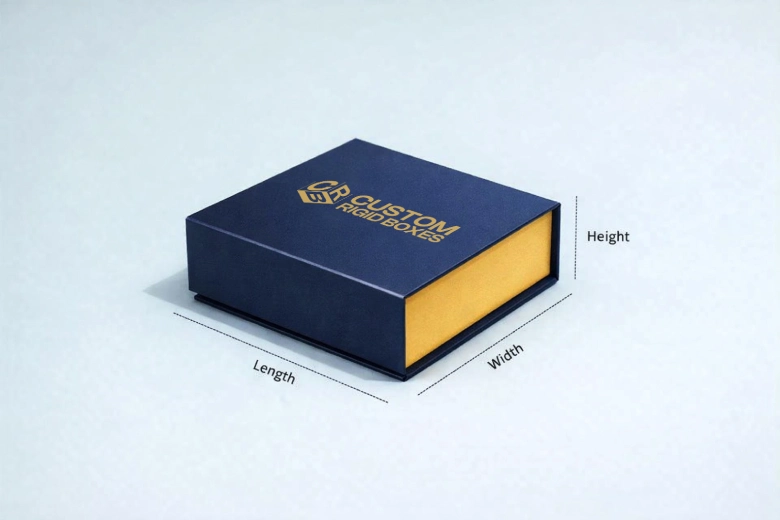
In the packaging world, we always talk in Internal Dimensions.
- Length: The longest side of the opening.
- Width: The shorter side of the opening.
- Depth (Height): How deep the box goes from top to bottom.
Measure Your Product Precisely
Use a digital caliper or a steady ruler. Measure the height, width, and depth of your product at its widest points. If your product is irregular (such as a bottle), measure its diameter.
Don’t Forget the “Buffer Space”
You will never want a “zero-clearance” fit. Ensure you add a buffer of 1/8″ to 1/4″ (3mm to 6mm) to your product’s dimensions. This way, you ensure that customers can actually get the product out of the box without any hassle.
Consider Inserts & Padding
If you need EVA foam, molded pulp, or fabric liners, include their thickness in your final calculations, especially for height.
Think About Your Product Movement
For fragile items, make sure the box has enough space for cushioning material to prevent damage.
Match the Structure to the Size
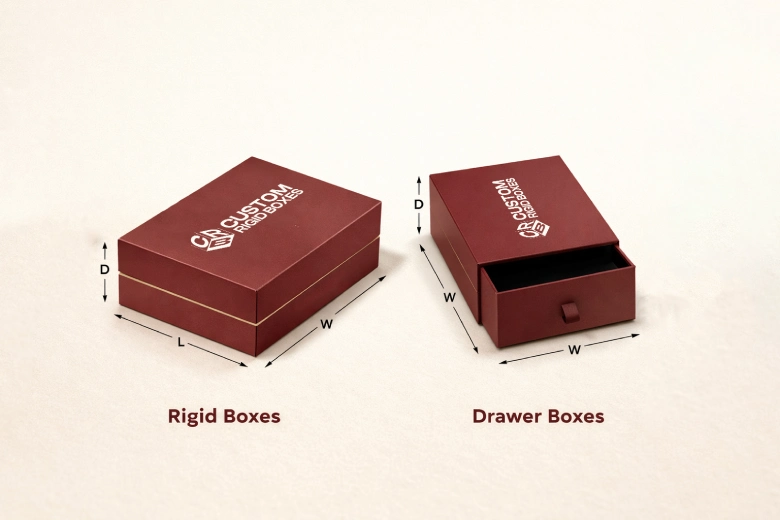
No one-size-fits-all, nor is the structure.
Need to pack small products? Go for a drawer box style.
Want to present heavy products? Use two-piece boxes for extra wall strength.
Or perhaps you need to ship high-tech items? A magnetic flip-top box style provides the best “snap” for medium-sized goods.
Think About the Shipping Journey
A box that is 1 inch too tall might move you into a higher shipping “DIM weight” bracket. So, always check if your rigid box size fits comfortably inside a standard shipping box to avoid “over-packaging” fees.
Prototype First
Always request a sample box from your manufacturer with your specific dimensions before placing a full order to verify the fit.
Why Rigid Box Sizes Matter?
Rigid box sizes matter a lot because they directly impact your product protection, shipping costs, and luxury branding—all significant factors.
Here is why choosing the right rigid box size is essential for every business.
Product Protection
A precise fit prevents products from shifting, which is highly important for fragile or high-end products.
Cost Efficiency
Properly sized boxes reduce material waste and lower dimensional weight fees during shipping.
An Enhanced Unboxing Experience
A “snug fit” feels intentional, signaling quality to customers and strengthening brand image.
Sustainability
Minimizing void space reduces environmental impact by using less raw material and optimizing freight space.
Storage and Production Efficiency
Accurate sizes allow for better warehouse storage optimization and cheaper, more efficient production runs.
Brand Perception
There is a fine line between “luxurious space” and “wasteful emptiness.” A perfectly sized rigid box tells your customers that you care about your product’s quality while delivering a luxurious unboxing experience. Eventually, an accurately sized box creates an immediate sense of value.
When to Use Standard vs. Custom Rigid Box Sizes
Finally, how to choose between standard and custom sizes for rigid boxes?
Use a standard size if:
- You are on a tight timeline.
- You have a limited budget.
- Your product is a common shape (like a book or a candle).
Use a custom size if:
- You have a unique product shape.
- You want a specific “unboxing” sequence.
- You are positioning yourself as a top-tier luxury brand.
The Takeaway
Undoubtedly, understanding standard rigid box sizes can save you a fortune on tooling and die-cutting costs.
The standard rigid box sizes include small (3″ x 3″ x 1.5), medium (8″ x 6″ x 3″), and large (12″ x 10″ x 4″).
Nevertheless, rigid box sizes matter a lot because they directly impact your product protection, shipping costs, and luxury branding.
FAQs
What are standard rigid box sizes?
The standard rigid box sizes include small (3″ x 3″ x 1.5), medium (8″ x 6″ x 3″), and large (12″ x 10″ x 4″).
Why is choosing the right rigid box size important?
Choosing the right rigid box size is important for product protection, cost efficiency, an enhanced unboxing experience, sustainability, storage & production efficiency, and brand perception.
How to measure a product for the right rigid box size?
Measure the height, width, and depth of your product at its widest points. If your product is irregular (such as a bottle), measure its diameter.
How does the right rigid box size impact brand perception?
A perfectly sized rigid box tells customers that a brand cares about its product’s quality while delivering a luxurious unboxing experience.