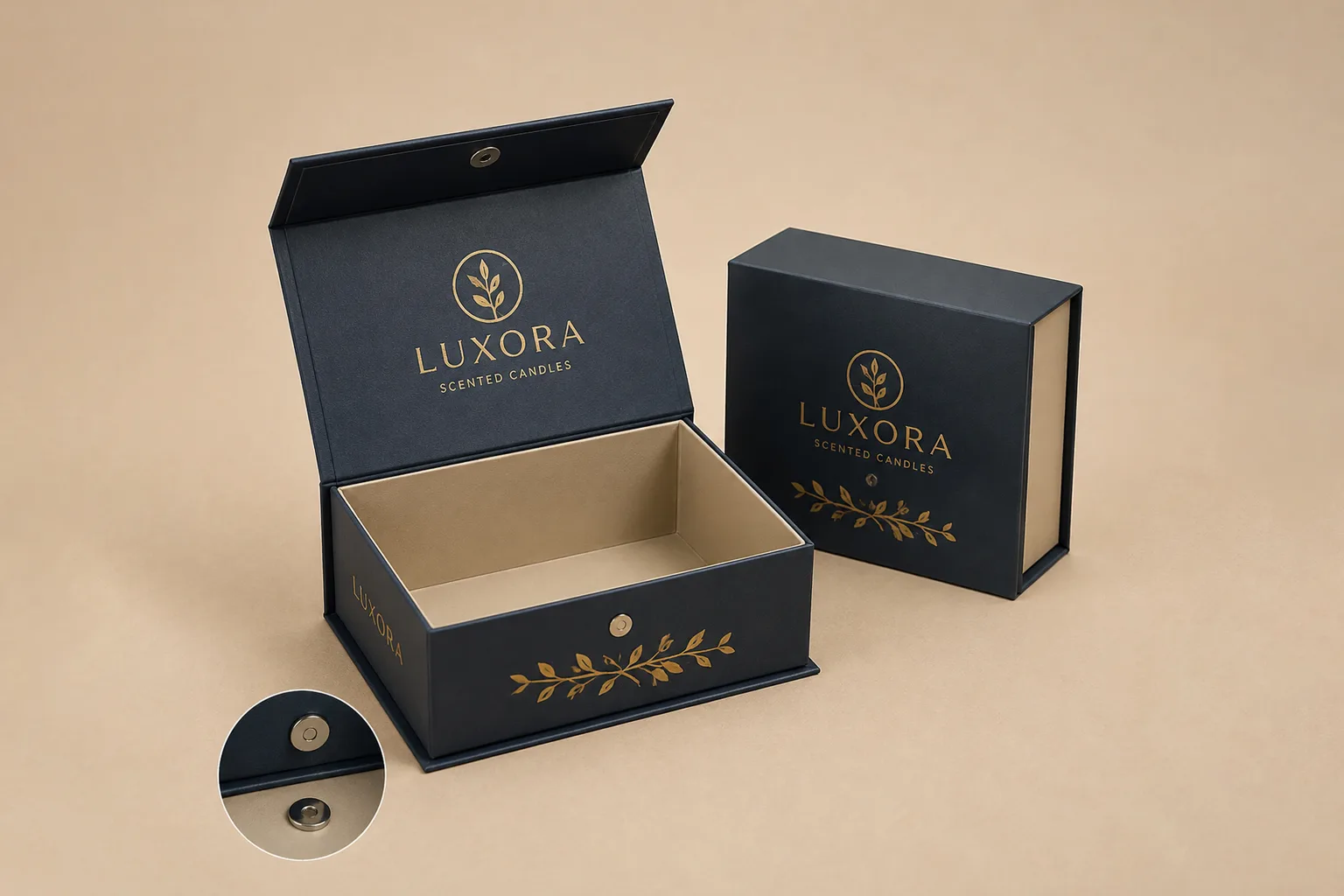
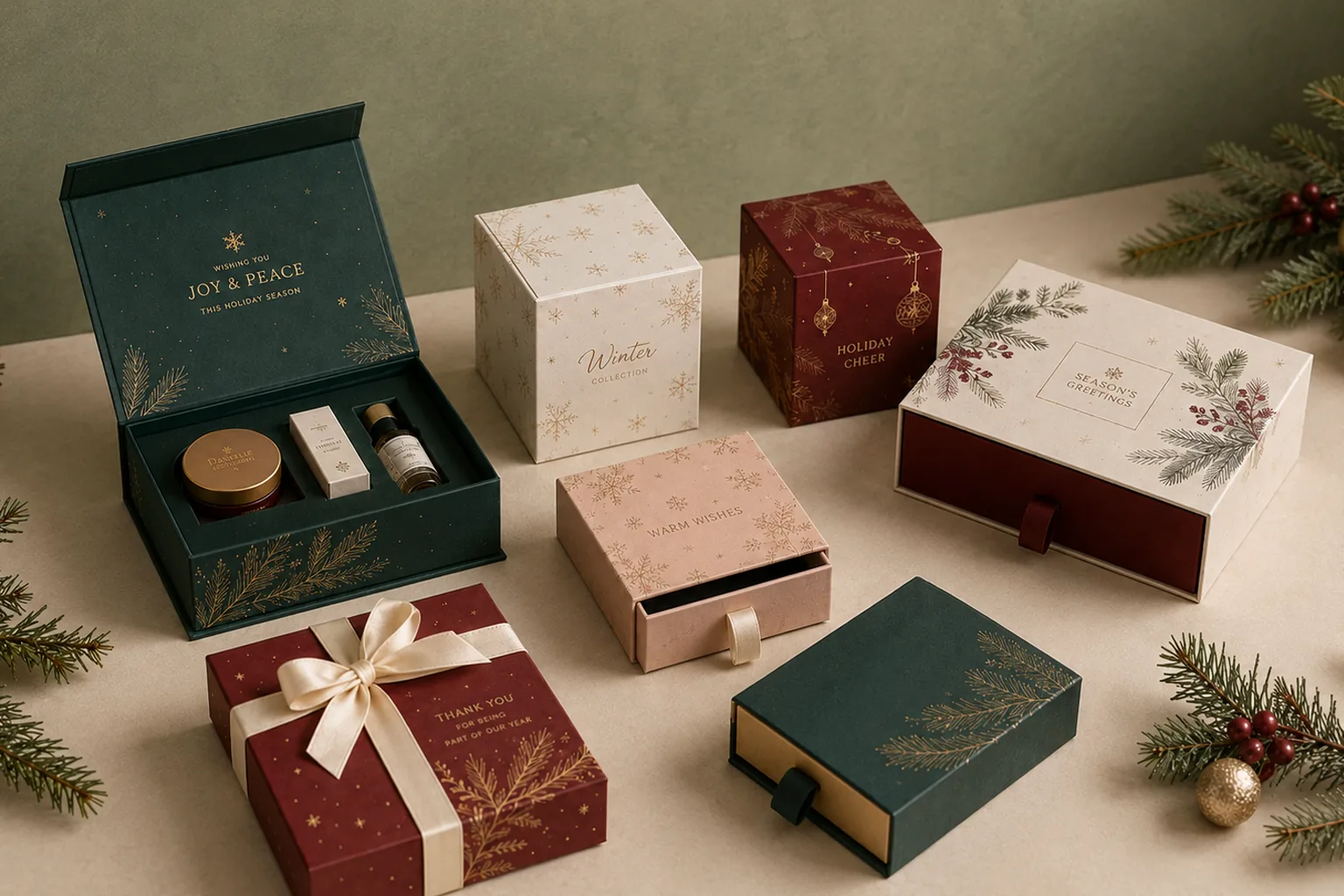
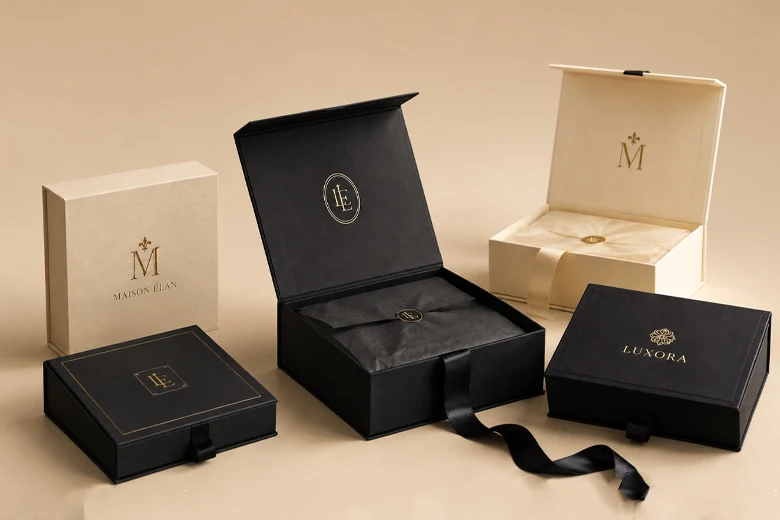
Remember the last time you purchased a high-end watch or a designer perfume? The experience didn’t start with the product—it started with the box, right? That “whoosh” of air as the lid slides off and the heft feel of the materials aren’t accidents—everything feels premium and luxurious. Well, they were not presented by accident. They were the result of a complex, craftsmanship-driven process for luxury packaging.
As a brand owner, you surely want your product to look and feel exceptional when reaching customers’ hands. And luxury packaging is the best way to achieve that. But how is luxury packaging made? Is the process complicated? Why should you invest in this packaging? How to create luxury packaging for your business? Let’s answer all these questions.
What Actually Defines Luxury Packaging?
Before we explore the journey of making luxury packaging, let’s know more about this sensational trend.
What makes a packaging “luxury”?
As the name suggests, expect nothing simple or standard about luxury packaging. This packaging is defined by sensory storytelling. While standard packaging focuses on functionality and utility, luxury packaging focuses more on customers’ emotional journey.
Luxury packaging combines weight, texture, sound, and visual appeal to tell customers that they have purchased an extraordinary product. The benchmark example? Think of the high-end rigid boxes.
How is Luxury Packaging Made?

Creating a box that looks and feels luxurious is a process of combining art and engineering.
Here are the steps in making luxury packaging.
Planning and Design (The Blueprint)
Everything starts with a vision. In the first stage, your packaging partner has to map out how your brand’s identity translates into physical product packaging. This stage involves the board textures, colors, and the overall “vibe”—whether your brand’s identity is minimalist chic or elegant.
Choosing the Right Material
Next, choosing the foundation of your luxury box. Luxury isn’t just standard paper. It’s a heavy-duty greyboard or chipboard. And you also need to choose the wrapping papers, such as kraft paper or a decorative one. Overall, the choice of material affects your box’s weight and durability.
Structural Design and Die Cutting
Once you have chosen the material, it’s time to create the dieline (a template to specify exactly where a machine should cut, crease, or glue the material).
From the dieline, precision die-cutting machines will slice the material into the exact shape with precise accuracy. This ensures that every box corner is sharp and every flap clicks into place perfectly.
Printing Process
For high-resolution printing, offset or digital printing can deliver deep, rich colors that won’t fade. And for the vibrant look, Pantone Matching Systems (PMS) is the best option to ensure color consistency across all your packaging boxes.
Adding Special Finishes
This is the stage where your luxury packaging comes to life.
Adding special finishes can make the already luxurious-looking packaging more exceptional.
Depending on how you want your box to look, you can choose from:
- Foil Stamping: Adds metallic gold, silver, or copper accents.
- Embossing/Debossing: A raising or sinking brand’s logo into the paper for a 3D feel.
- Soft-Touch Lamination: Provides a soft, velvety texture to the surface.
Including Inserts and Internal Supports
The inside of your box matters as much as the outside. Custom EVA foam inserts, satin-lined cushions, or molded pulp trays can be included to securely cradle your product. Ultimately, these internal supports can make your product like a treasure when the box is opened.
Quality Control and Testing
In this phase, every single box is inspected for alignment, glue spots, and structural integrity. Drop tests and humidity tests are performed to ensure your luxury packaging remains perfect from the warehouse to customers’ doorsteps.
Essential Elements of Luxury Packaging
To achieve a true premium look and feel, there are several essential elements of luxury packaging you should never ignore.
High-Quality Materials
As we mentioned above, greyboard and chipboard are the favorite when it comes to designing rigid boxes.
But wait, when choosing the types of boards you need, you also have to think about the thickness. We are talking about using high-GSM (grams per square meter) board to create a sense of permanence. For example, if you are designing heavy-duty electronic boxes, choose a 1500gsm greyboard.
Attention to Detail
Luxury packaging is popular for its aligned patterns, hidden magnetic closures, and ribbon pulls. All these features show how brands pay attention to every detail and tell customers that no corners were cut.
Unique Shapes
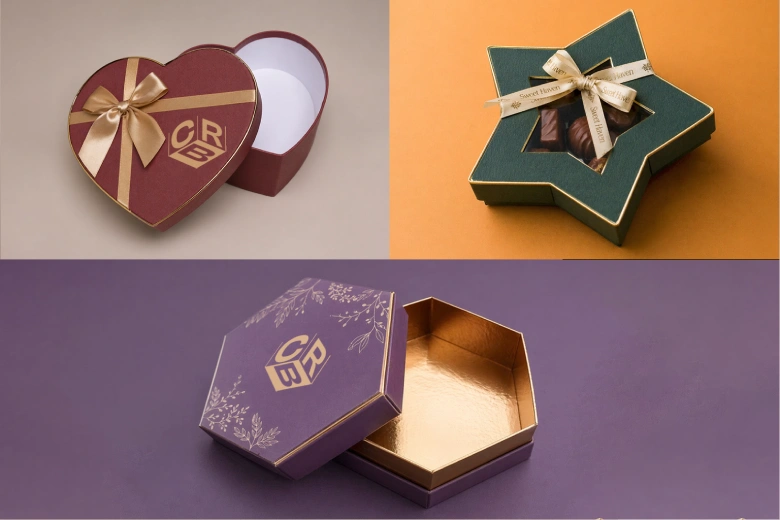
High-end also means being creative in the shape.
Packaging can be considered luxurious when it’s designed with unique shapes that set it apart from standard options.
What are the examples?
- Hexagon boxes: A six-sided layout that offers a modern, eye-catching alternative to a square shape.
- Round shape boxes: Soft edges in a cylindrical layout provide a more appealing look.
- Drawer-shaped boxes: Imagine a sliding inner tray that pulls out of a sturdy outer shell, revealing a high-end product inside.
- Book-style boxes: This box style opens like a hardbound book, featuring a hinge on one side and a magnetic closure on the other.
- Heart shaped boxes: A heart layout will surely highlight any product on shelves full of rectangular packaging.
- Star Shaped Boxes: Getting a box in a star shape will surely highlight a product in the sea of similar “square” shaped boxes.
Personalization
Packaging that includes a customer’s name or a limited-edition serial number makes customers love to keep it as a keepsake.
The Benefits of Luxury Packaging
Is luxury packaging worth the investment? Well, yes. Luxury packaging is mentioned to boost perceived product value, justify higher price points, and increase customer loyalty. In fact, it acts as a marketing tool that drives a 3–5X return on investment in lifetime value.
Here are the benefits this packaging offers that make it a worthy investment for many businesses.
Higher Value Perception
Customers perceive products in high-quality, exclusive packaging as more valuable, which directly boosts businesses’ profit margins.
Builds Brand Loyalty
A beautiful box is rarely thrown away. It stays on vanity tables or shelves. This means customers will remember your brand even after using the product.
The Ultimate Product Protection
Beyond their looks, luxury rigid boxes are built as protective product shields. They reduce return rates by ensuring every product arrives in its perfect, luxury condition.
Memorable Unboxing Experience
In the age of TikTok and Instagram, a “shareable” unboxing experience is free marketing that reaches millions. And when you deliver your product packaged in luxury packaging, those customers will surely love to record their unboxing moment.
Sustainability Integration
The reusability of luxury packaging helps to reduce packaging waste. Thus, showcasing how your business pays attention to contribute to the sustainability movement.
Tips to Design Luxury Packaging for Your Brand
Now that you know the designing process, elements, and benefits of luxury packaging, aren’t you excited to create one?
Here are some practical tips to help you out.
Tell Your Brand’s Story
Approach customers with a narrative design. Use the packaging to tell your brand’s history. You can include a “hidden” message under the lid or a QR code that shares the product’s origin.
Leverage the Digital Age
Don’t forget to include NFC tags or Augmented Reality (AR) triggers on the box to give customers an exclusive digital experience.
Modern Structural Designs

Move away from the standard structures, opt for:
- Two piece box design: Consists of a separate base and lid, providing high dimensional stability and a memorable unboxing experience.
- Shoulder neck box style: Featuring a base tray, a lid, and a middle neck piece that’s partially exposed, creating a two-tone layered effect.
- Slipcase box layout: Open-ended sleeve designed to hold one or more products that slide into it.
Make It Minimalist
The “less is more” is now trending in “quiet luxury.” Instead of cluttering the box with bold colors and crowded patterns, simply use a single color rigid box and polish it with matte/gloss lamination, along with your embossed logo.
In Summary
No doubt, nothing in luxury packaging is simple or standard. This packaging combines weight, texture, sound, and visual appeal to tell customers that they have purchased an extraordinary product.
The process of making luxury packaging involves several steps, including planning & design, choosing the right material, structural design & die cutting, printing, adding special finishes, including inserts, and quality control.
Considering its tremendous benefits, luxury packaging is a worthy investment for every business.
FAQs
How is luxury packaging made?
The process of making luxury packaging involves several steps, including planning & design, choosing the right material, structural design & die cutting, printing, adding special finishes, including inserts, and quality control.
What makes a packaging luxury?
Luxury packaging combines weight, texture, sound, and visual appeal to tell customers that they have purchased an extraordinary product.
What are the elements of luxury packaging?
The elements of luxury packaging include high-quality materials, attention to detail, unique shapes, and personalization.
What are the benefits of luxury packaging?
Luxury packaging offers tremendous benefits, such as higher perceived value, builds brand loyalty, provides ultimate product protection, delivers a memorable unboxing experience, and integrates sustainability.