First impressions matter in the luxury market. If you want your products to look and feel luxurious, standard boxes simply won’t cut it. You need rigid packaging boxes.
Two of the most popular options come up as book style boxes and magnetic boxes. While they look similar at a glance, they offer different structural designs, opening experiences, and price points.
Want to know more about the two? Let’s explore all the differences between book style boxes vs magnetic boxes in detail.
What are Book Style Rigid Boxes?
A book-style rigid box is exactly what it sounds like: a box designed to replicate the look and feel of a hardcover book.
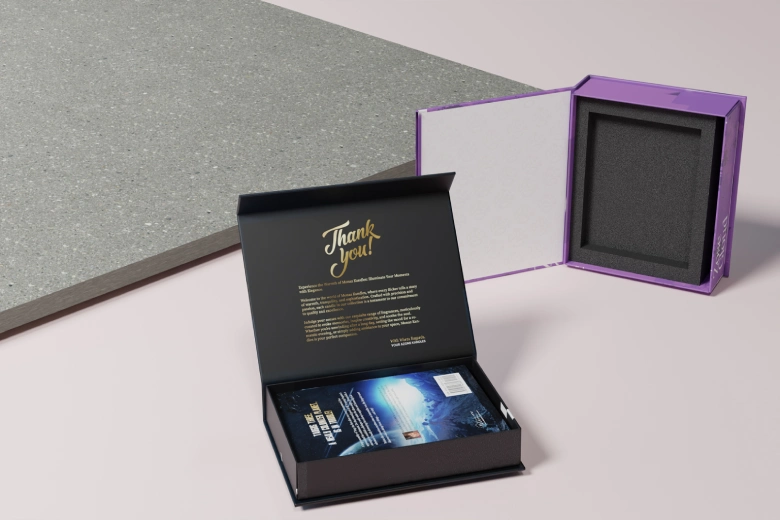
Book style boxes feature a three-sided or four-sided rigid outer cover attached to an inner tray. When you open the cover, it flips open along a creased spine, just like turning the page of a novel.
What are Magnetic Boxes?
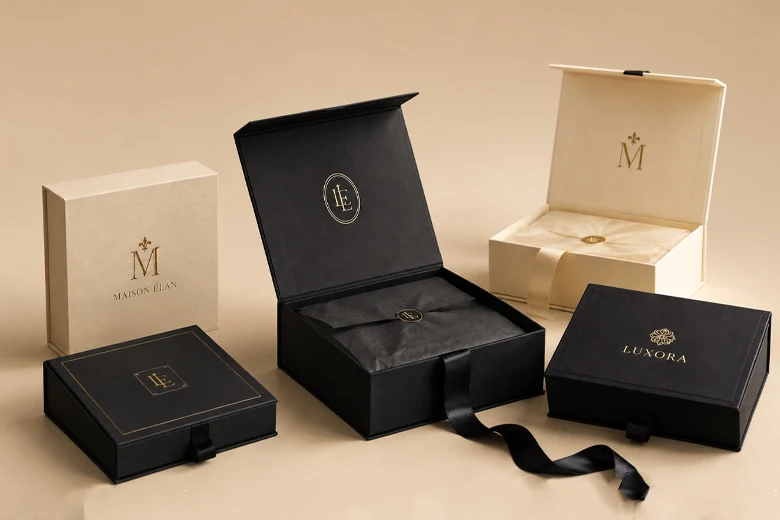
Magnetic boxes are premium containers featuring hidden magnets embedded in the layers. When the lid closes over the front base tray, the magnets snap together with a satisfying, high-end “click.”
Magnetic boxes can come in two main structural forms: pre-assembled or collapsible (flat-pack options that assemble via adhesive strips).
Book Style Boxes vs Magnetic Boxes: Know All the Differences
The core difference between book style boxes and magnetic boxes lies in their structural spine.
A book-style box has an integrated outer cover that wraps entirely around an inner tray and opens like a book. A magnetic box focuses primarily on the closing flap, where a front lid folds down over the front wall to lock with magnetic force.
While both types fall under the category of luxury rigid boxes, they serve different design aesthetics and functional needs.
Let’s know the factors that make these two box styles different.
Structural Design
The process of designing a rigid box starts with the structural elements: its materials, layout, and opening mechanisms. How about book style and magnetic boxes?
- Core Materials
Core Materials & Wraps
Both boxes use a heavy-duty greyboard base (1000gsm to 1400gsm) for maximum stiffness. However, a book style box requires a more flexible, expertly creased outer wrap material along the spine to prevent cracking over time.
Meanwhile, a magnetic box focuses heavily on the exact alignment of the board panels so the hidden magnets align perfectly.
- Layout
Book style boxes present an asymmetric, elongated layout that rests horizontally or vertically on a shelf like a book. On the other hand, magnetic boxes feature a symmetrical, traditional gift-box layout with a top-down opening.
- Opening Mechanisms
A book-style box opens from right to left (or bottom to top) along a fixed hinge. It can be held closed by ribbons, custom sleeves, or magnets.
A magnetic rigid box opens from the front flap upward, relying entirely on the magnetic snap mechanism to seal it.
Product Protection
All rigid box types are unique and attractive. However, a beautiful box means nothing if it cannot provide ultimate product protection.
Book style boxes are highly secure. The outer “book jacket” adds an extra layer of impact defense around the internal base.
And magnetic rigid boxes? They provide excellent protection against impact and dust during shipping. Yet, the collapsible versions might offer slightly less rigidity at the corners than pre-assembled ones.
Customer Experience
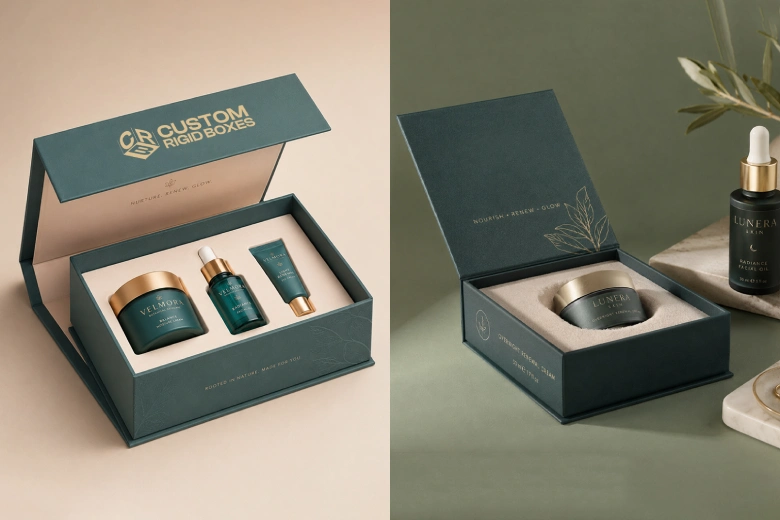
Many industries prefer rigid boxes because they deliver memorable customer experiences.
What type of experience do book-style rigid boxes offer?
These boxes convey a sense of storytelling, discovery, and tradition. Every unboxing will feel like opening a secret journal.
What about magnetic rigid boxes?
These boxes deliver instant gratification. The tactile and acoustic “snap” of the magnet creates a modern, high-tech luxury feel on every unboxing.
The Reusability Factor
Rigid boxes with their reusability are among the luxury packaging trends this year. And speaking of book style boxes, customers often keep them on bookshelves to store jewelry, letters, or small keepsakes.
Meanwhile, magnetic boxes feature an easy snap-to-shut feature that makes them a favorite for daily storage in closets or offices.
Applications
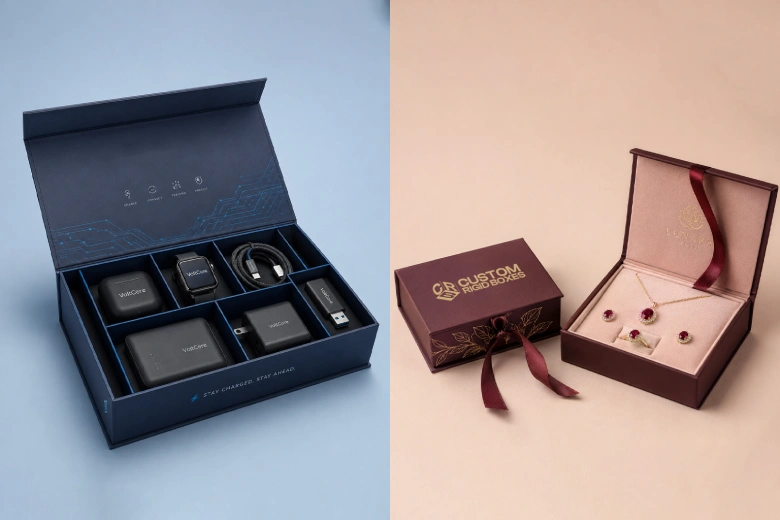
Now let’s find out where these two boxes stand out.
The book-style layout is perfect for:
- Influencer boxes
- PR packages
- Luxury jewelry boxes
- Limited-edition books packaging
On the other hand, the magnetic design is ideal for:
Costs
It’s time to talk about the numbers.
When it comes to cost consideration, book style boxes are generally more expensive due to the intricate assembly of the spine cover and inner tray.
And magnetic boxes? They offer a wider price range, and the collapsible magnetic box versions significantly lower shipping and storage expenses.
Pros and Cons
Considering all the features each box style offers, we can define its pros and cons.
Book Style Rigid Boxes
Pros:
- Unique storytelling aesthetic
- Incredible shelf presence
- Highly durable
Cons:
- Higher manufacturing costs
- Take up significant storage space as they cannot be flattened
Magnetic Boxes
Pros:
- Highly satisfying unboxing click
- Available in space-saving collapsible options
- Very flexible
Cons:
- Magnets add to production costs
- Alignment issues can occasionally weaken the magnetic seal
The Finishing Options
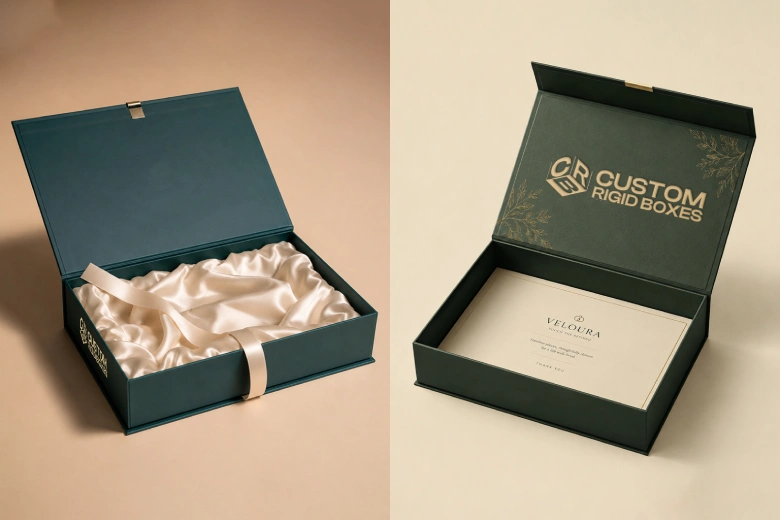
Both are premium and customizable, offering a range of finishes for luxury packaging.
Here are the options:
- Soft-Touch Lamination: Creates a velvety, suede-like texture that customers want to hold, instantly signaling luxury.
- Foil Stamping: Adds metallic accents (gold, silver, rose gold) to your brand’s logo or borders, providing an eye-catching contrast.
- Embossing & Debossing: Give your design a three-dimensional feel, allowing customers to trace your logo or patterns physically.
- Spot UV Coating: Applies a high-gloss finish to specific elements, making them stand out against a matte background.
- Custom Interiors: Pairs perfectly with molded EVA foam, velvet, or satin linings to securely present your products.
Book Style Boxes vs Magnetic Boxes: Comparison Table
| Feature | Book Style Boxes | Magnetic Boxes |
| Materials | Greyboard (1000gsm to 1400gsm) | Greyboard (1000gsm to 1400gsm) |
| Opening Mechanisms | Opens like a hardcover book | Opens with hidden magnets |
| Product Protection | Highly secure, an extra layer of impact defense | Excellent protection against impact and dust |
| Customer Experience | A sense of storytelling, discovery, and tradition | A modern, high-tech luxury feel on every unboxing |
| Reusability | Reusable to store jewelry, letters, or small keepsakes | Reusable for daily storage in closets or offices |
| Applications |
|
|
| Costs | More expensive | Wide price range |
Book Style Boxes vs Magnetic Boxes: The Checklist to Help You Choose
Still unsure which style fits your exclusive products? Walk through this quick four-point checklist to find your perfect match.
Product’s Weight & Characteristics
Choose the book style if your product is heavy, sits flat, or benefits from a vertical presentation, such as a premium bottle or a book collection.
Choose magnetic boxes for classic retail items, cosmetics, or lightweight luxury goods that look best presented flat.
Shipping & Storage Considerations
Choose book style if you have ample warehouse space and want a box that arrives 100% pre-assembled and ready to pack.
Choose magnetic boxes (collapsible) if you want to save money on freight shipping and store your packaging flat until needed.
Unboxing Experience
Choose book style if your brand relies on mystery, nostalgia, heritage, or a slow, intentional reveal.
Choose magnetic boxes if your brand is modern, sleek, tech-focused, and relies on clean lines and instant tactile feedback.
Brand’s Identity
Traditional, artisan, historical, or literary brand? Go with the book style.
Minimalist, contemporary, high-tech, or high-fashion brand? Go with magnetic.
Final Words
Undoubtedly, both book-style boxes and magnetic boxes will instantly elevate your brand above the competition. If your goal is a classic, timeless narrative experience, invest in the craftsmanship of a book style box. If you want a sleek, modern, and highly functional luxury experience, a magnetic box is your winner.
FAQs
What are book style rigid boxes?
Book style boxes open like a hardcover book and feature a three-sided or four-sided rigid outer cover attached to an inner tray.
What are magnetic boxes?
Magnetic boxes are premium containers featuring hidden magnets embedded in the layers.
What’s the difference between book stile boxes vs magnetic boxes?
A book-style box has an integrated outer cover that wraps entirely around an inner tray, opening like a book. A magnetic box focuses primarily on the closing flap, where a front lid folds down over the front wall to lock with magnetic force.
How to choose between book-style boxes and magnetic rigid boxes?
If your goal is a classic, timeless narrative experience, invest in the craftsmanship of a book style box. If you want a sleek, modern, and highly functional luxury experience, a magnetic box is your winner.