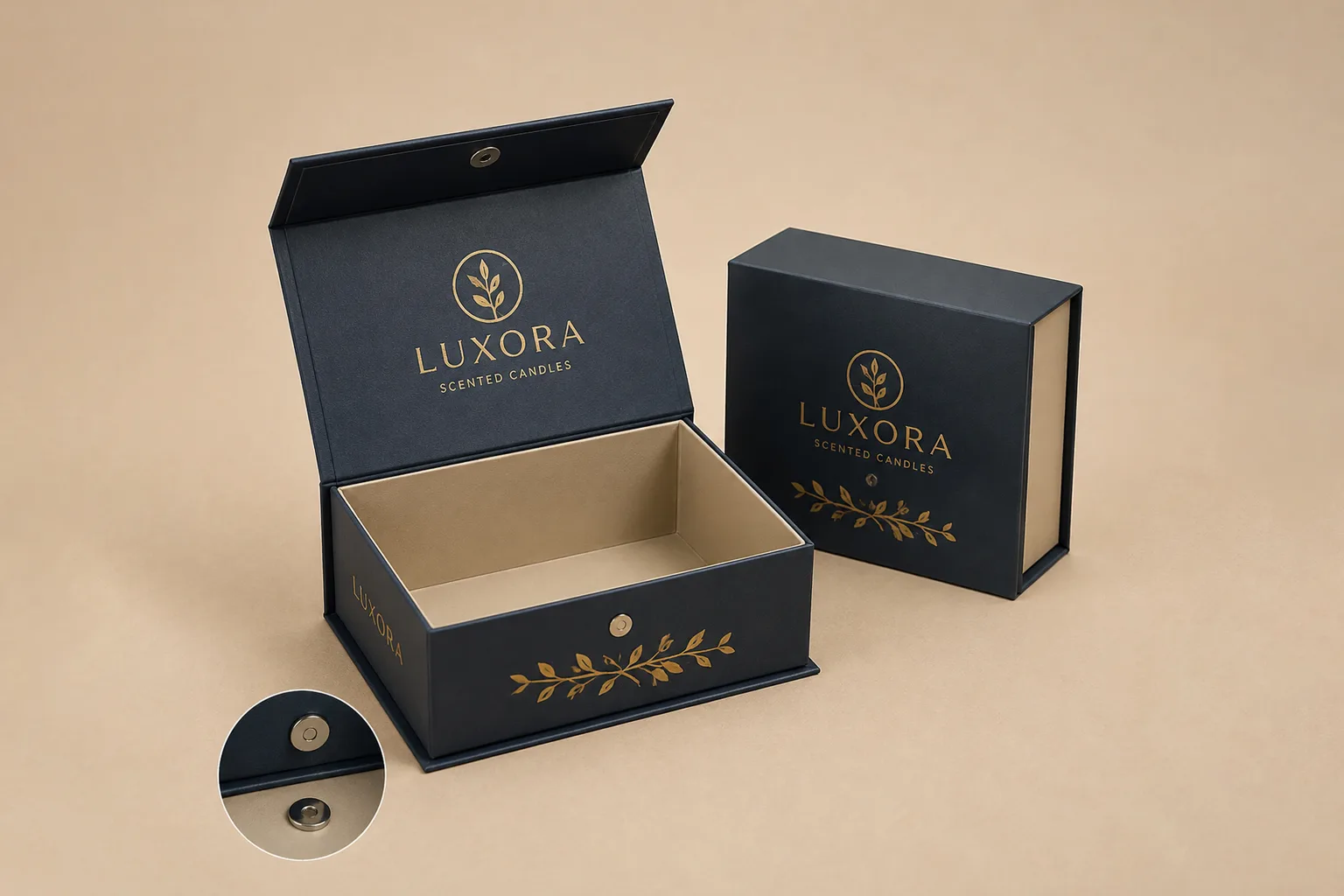
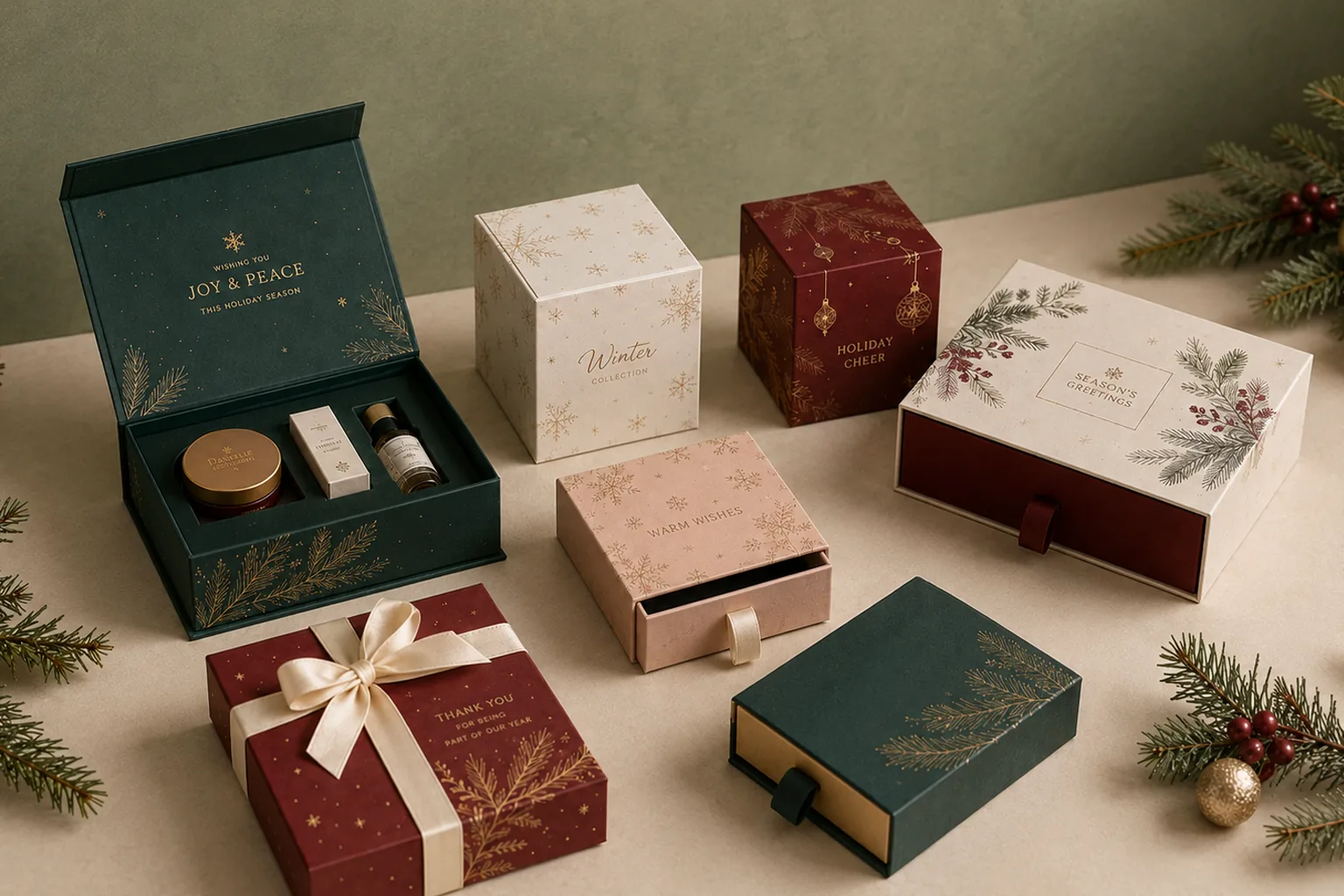
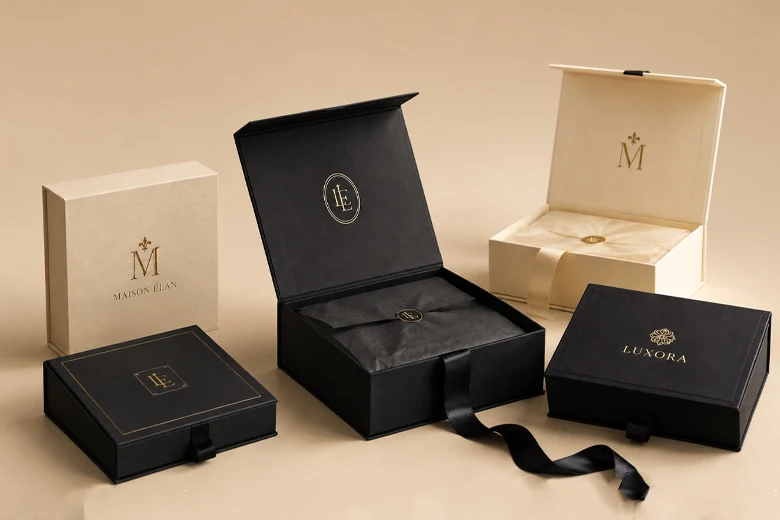
Rigid boxes—we know them for their durability and premium appeal. They are, indeed, the gold standard in luxury packaging. But what truly makes them look appealing is printing. The right printing method turns a plain box into a powerful branding tool that communicates quality, creativity, and trust.
But do you know that rigid box printing is different from other types of boxes? Yes, it is.
Let’s explore every aspect of rigid box printing—from techniques and inks to finishes and materials.
Rigid Box Printing Methods
Rigid boxes are unique because they’re not printed directly on the board. Instead, designs are applied to wraps that cover the box. This requires precision and specialized methods.
What are the most common, widely used rigid box printing methods?
Offset Printing
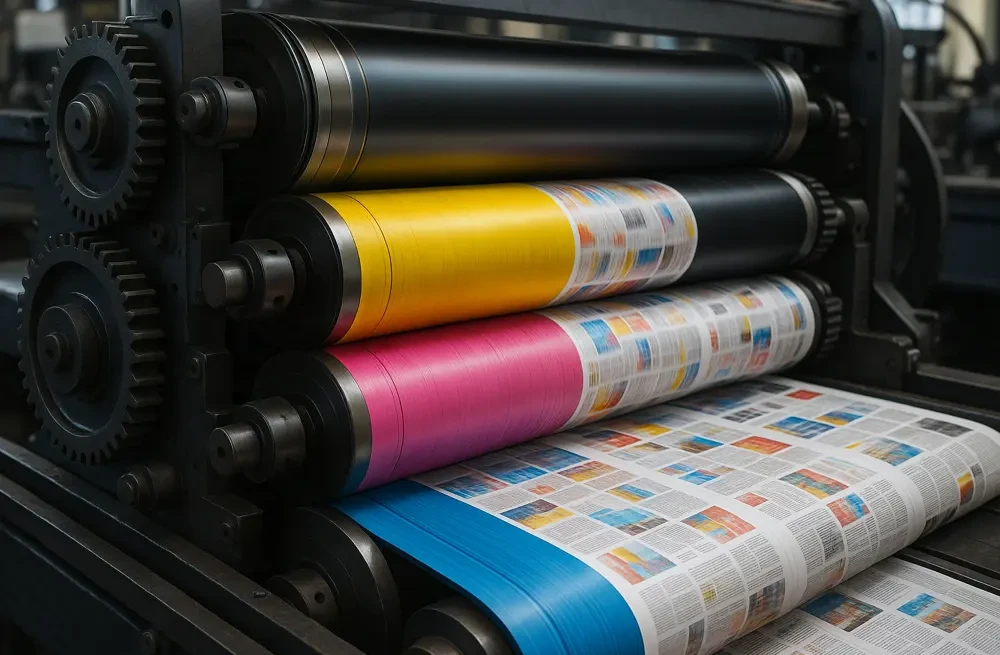
Offset printing is the industry standard for high‑volume packaging. It uses plates and ink transfer to deliver sharp, consistent images.
Advantages:
- Perfect for detailed graphics, logos, and brand colors.
- Produces uniform results across thousands of boxes.
Best Use:
- Large production runs where consistency is critical.
- Luxury packaging that relies on offset for its professional finish.
Digital Printing
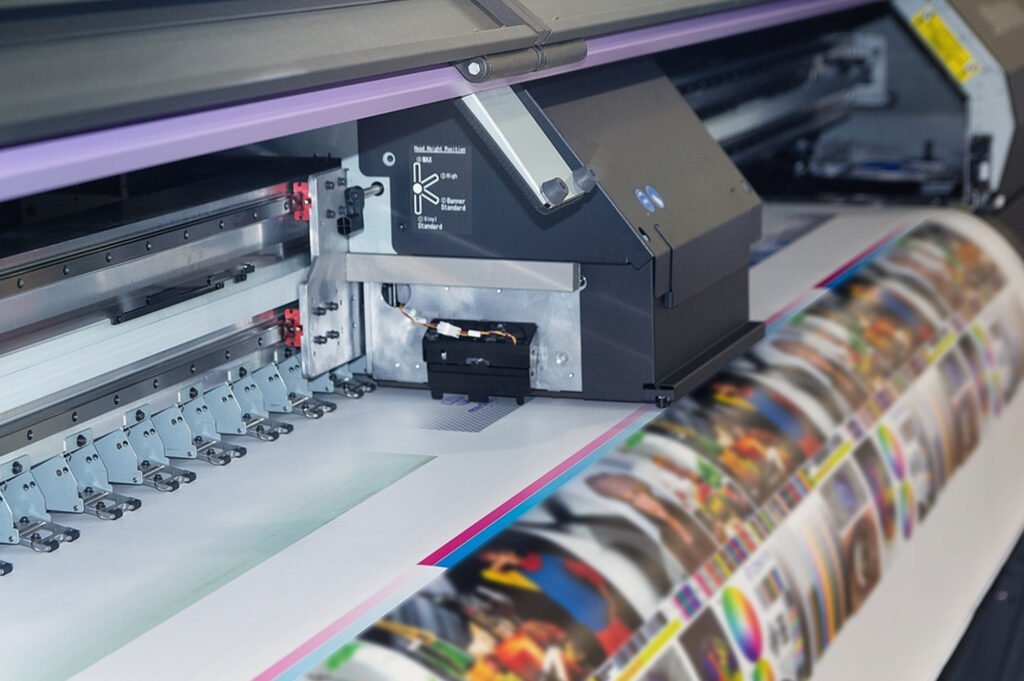
Unlike offset printing, digital printing does not use plates. Instead, it prints straight from your digital files.
Advantages:
- Fast production, for short print runs
- Designing and checking prototypes
- Quick changes and vibrant results without setup costs
Best Use:
- Individual, special printed units
- Short production runs
Screen Printing
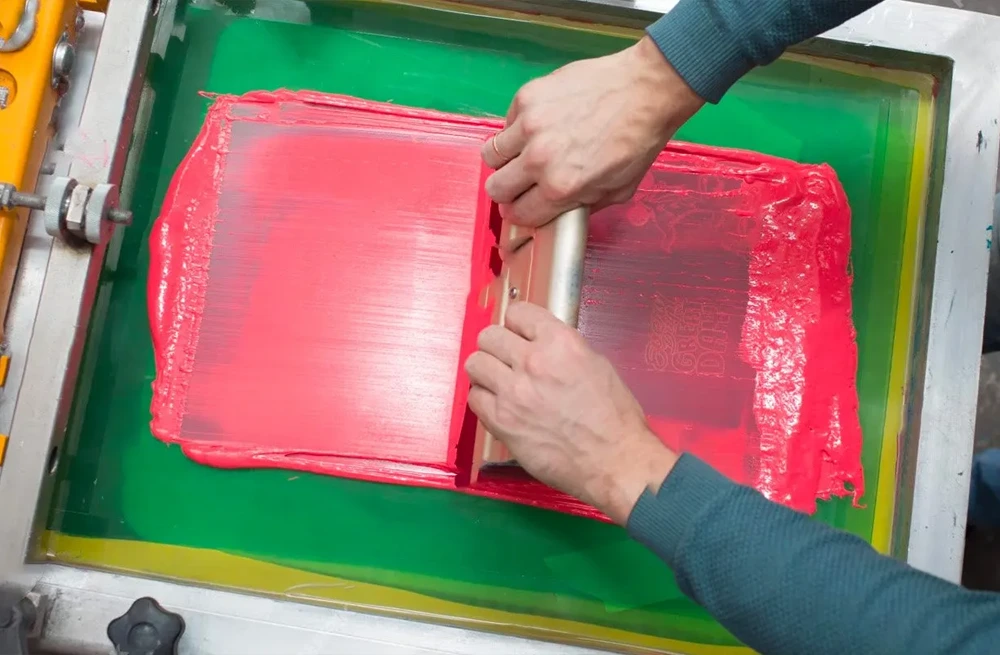
Screen printing uses ink that is pushed through a mesh stencil with a blade or sill to print the design.
Advantages:
- The colors are rich and deep
- The possibility to use metallic colors
- Allows for textures and raised areas to be printed
Best Use:
- Creating logos, graphics, and special finishes
- Printing raised and textured surfaces
Quick Comparison: Offset vs Digital vs Screen Printing for Rigid Boxes
| Feature/Aspect | Offset Printing | Digital Printing | Screen Printing |
| Print Quality | Extremely sharp, consistent, professional | High quality but slightly less sharp for fine details | Bold, vibrant colors with strong saturation |
| Durability | Very durable, consistent across thousands of boxes | Good durability, but less resistant than offset | Excellent durability, especially with thick inks |
| Special Effects | Works well with coatings, embossing, foil stamping | Supports variable data printing (names, QR codes) | Allows metallic inks, raised textures, tactile finishes |
| Flexibility | Limited flexibility once plates are made | Highly flexible, easy to change designs | Flexible for specialty inks and textures |
| Cost Efficiency | Economical for high volumes, expensive for small runs | Cost‑effective for small runs, no plate setup | Moderate cost, depends on design complexity |
| Turnaround Time | Longer setup, slower for small batches | Fast turnaround, ideal for quick campaigns | Moderate speed, slower for multi‑color designs |
| Best For | Large production runs, detailed graphics, brand colors | Short runs, prototypes, personalized designs | Logos, solid graphics, specialty finishes |
Ink Options for Rigid Packaging Boxes
The most important aspect of the printing method itself is the choice of ink. It can have a huge impact on the print, on the environment, and on the longevity of your packaging.
Here are the ink options used in rigid packaging boxes.
Solvent‑Based Inks
- Strong adhesion and resistance to moisture.
- Common in industrial packaging but less eco‑friendly.
- Best for boxes exposed to tough conditions, such as luxury mailer boxes.
Water‑Based Inks
- Eco‑friendly and safer for workers.
- Softer tones but excellent for sustainable branding.
- Increasingly popular with eco‑conscious brands.
UV‑Curable Inks
- Cured instantly under UV light.
- High gloss, scratch‑resistant, and durable.
- Perfect for premium packaging that needs longevity, like luxury jewelry boxes or premium watch boxes.
Specialty Inks
- Metallic, fluorescent, and thermochromic inks.
- Create unique effects like color‑changing designs.
- Ideal for cosmetic boxes and electronic packaging.
Surface Finishes and Coatings for Custom Printed Rigid Boxes
Finishes and coatings add the soul to rigid boxes and give them a shine, texture, and protection. Better yet, they ensure that every box feels premium, with the final push to become complete packaging products.
Here are some finishing options to make your rigid boxes irresistible.
- Aqueous Coating: Eco‑friendly, quick‑dry protection that adds subtle gloss.
- UV Coating: A high-gloss coating that is very scratch-resistant, ideal for printing bright colors and images.
- Soft‑Touch Coating: Velvety feel that communicates luxury.
- Varnish: Matte or gloss options for subtle protection.
- Lamination: An additional layer of protection for your packaging. It also adds a premium look to your rigid boxes.
- Foil Stamping: Adds metallic accents to a logo or text for extra attention.
- Embossing & Debossing: Create a strong 3D effect on your rigid boxes that represents high-end quality and a unique tactile experience.
Why Printing on Rigid Boxes is Different?
When it comes to rigid box printing, you must note that you are printing on the outer wraps, not directly on the box itself. Thus, special attention is needed for exact color reproduction as well as for integrating finishes into the process.
Here’s the detailed explanation.
- Printing on Wraps
When you print on wraps, you are printing on the paper that will be used as the wrap for your rigid box. Hence, you need to align the design and print on the paper wrap.
- The High-Quality Focus
A single line out of place will ruin the look of what is intended to be luxury packaging.
- Finishing
The printed design must be integrated with varnishes, embossing, and foil stamping.
Overall, rigid box printing, indeed, requires specialized expertise
Materials That Shape Rigid Box Printing
The material beneath the print is the backbone of your box. Choosing the right board is like choosing the canvas for a masterpiece: it determines durability, sustainability, and luxury appeal.
What are the materials used for custom rigid boxes?
- Greyboard: A very hard-wearing, eco-friendly material that comes in a natural grey color.
- Chipboard: This material has a smooth finish and works well with a variety of coatings and laminations.
Preparing Rigid Boxes for Printing
It’s always a great idea to prepare before the ink hits the press. A small mistake in design files or wrong placement of your brand’s logo can be very costly.
Here’s how to prepare your rigid boxes before printing.
- Artwork Preparation
Make sure you use high-quality files, such as high-resolution image files and vector graphics, and allow space for bleed on the dieline.
- Color Management
Manage the colors of your print run so you can be sure your brand colors are always printed correctly and consistently, even across different print runs.
- Branding Placement
Ensure that your brand logo and graphics on the packaging are clear, front, and visible.
Tips for Best Printing Results on Custom Rigid Boxes
Rigid box printing is an investment, and the results should reflect your brand’s value. To get the best outcomes, you need more than just the right method—you need smart practices.
Here are some effective tips for the best printed rigid boxes.
- Match Method to Volume: Go with offset for large runs, opt for digital for short runs.
- Combine Inks and Finishes: Combine the right inks and finishes. For example, UV inks with foil stamping can create premium effects.
- See the Result: Always print on your sample box to check alignment and color accuracy before bulk ordering
- Think Sustainability: Use water‑based inks and recyclable coatings for sustainable rigid box packaging.
- Balance Your Design: No need to overcrowd your design—luxury packaging thrives on simplicity.
The Takeaway
No doubt, printing on rigid boxes is an art and science in itself. There are various rigid box printing methods, and every method can create a different impression.
When choosing printing, colors, and finishes for rigid boxes, remember that you are creating premium packaging that has to protect but also impress customers.
With the right combination of printing techniques, colors, and finishes, you can transform a rigid box into a powerful branding masterpiece.
FAQs
What are the best printing methods for rigid boxes?
The best printing methods for rigid boxes are offset, digital, and screen printing.
Why is printing on rigid boxes different?
When it comes to rigid box printing, you are printing on the outer wraps, not directly on the box itself. Thus, special attention is needed for exact color reproduction and for integrating finishes into the process.
What are ink options for rigid packaging boxes?
The ink options for rigid boxes include solvent‑based inks, water‑based inks, UV‑curable inks, and specialty inks.
How to prepare rigid boxes before printing?
To prepare rigid boxes before printing, use high-quality files such as high-resolution image files, manage colors, and ensure your brand logo and graphics on the packaging are visible.