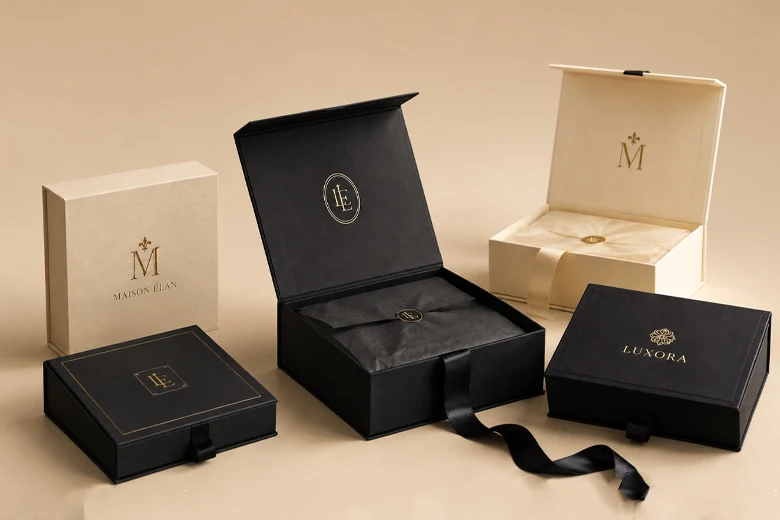
In the luxury market, product presentation matters. Accordingly, your product packaging tells your brand story before the customer even sees the product inside. But choosing the right box can feel overwhelming.
Two of the most popular premium options in the luxury market are two piece boxes and shoulder neck boxes. Both offer a high-end feel, but they serve very different purposes.
Should you go with a classic two-piece design? Or does your product demand the multi-layered luxury of a shoulder-neck box? Let’s break down all the differences to help you choose the perfect fit for your brand, budget, and product.
What is a Two Piece Box?
A two piece box consists of a top lid and a bottom base. The lid can either cover the base entirely (full-telescope) or partially (partial-telescope). It is a simple yet timeless design used across countless industries.
What is a Shoulder Neck Box?
A shoulder neck box features an inner tray (the neck) glued to the base. This neck extends upward past the top edge of the base. When the lid is placed on top, it rests against this inner neck, creating a highly structured, multi-layered look.
Two Piece Boxes vs Shoulder Neck Boxes: The Differences Explained
Understanding the basic anatomy of these two packaging styles is the first step to making an informed decision. While both two piece and shoulder neck boxes fall under the category of rigid boxes, their form and function differ significantly.
The main difference lies in how the lid and base interact.
A two-piece box relies on a lid that slides directly over a base. Meanwhile, a shoulder-neck box introduces a third internal element—a “neck”—that bridges the lid and base, often leaving a visible gap or “shoulder.”
But there is more to discuss. Have a look at the differences between the two in detail.
Construction and Structure
The way a box is engineered defines its strength, weight, and visual appeal.
Here is how the manufacturing and structural design stack up.
- Two Piece Boxes
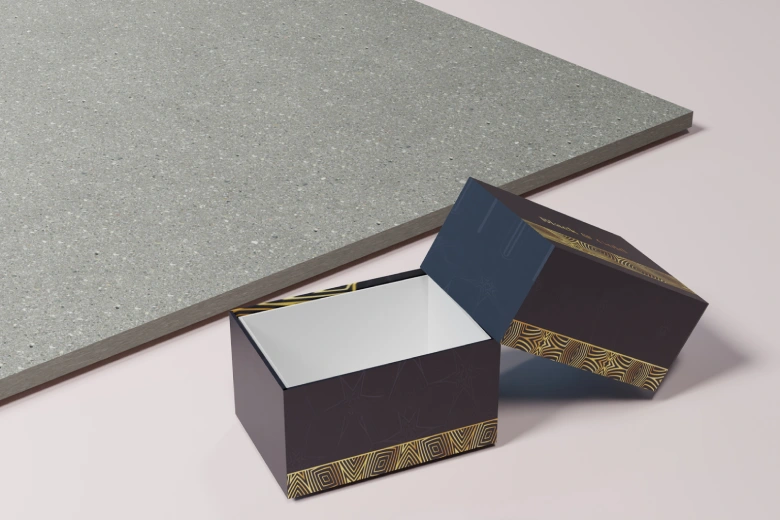
These boxes are made from thick greyboard wrapped in custom-printed paper. The structure is simple: four walls on the base and four walls on the lid. Because the lid slips over the base, the tolerances must be precise to prevent the box from being too tight or too loose.
- Shoulder Neck Boxes
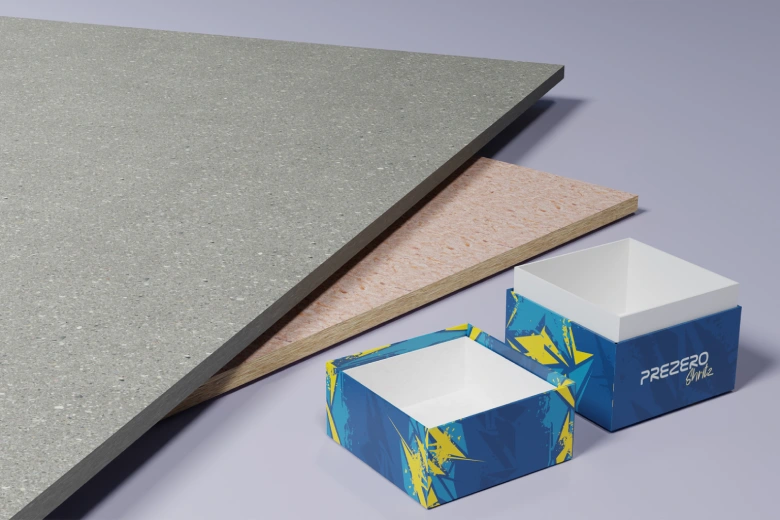
Also made of greyboard or chipboard, this box design features a three-piece construction process: the lid, the base, and the internal neck. The neck adds an extra layer of thick board along the interior side. Better yet, the unique construction can be designed so that the lid and base meet flush, or with a deliberate gap that exposes a contrasting-colored neck.
Durability and Protection
When designing a rigid box, it must look great and survive the supply chain. Protecting your product from damage during transit is non-negotiable.
A two piece box offers excellent, dependable protection for standard retail items. When the lid is fully closed, the double-wall thickness on the sides provides good resistance against crushing and impact during shipping.
On the other hand, thanks to the internal neck, a shoulder neck box offers superior structural integrity. The neck serves as an internal skeletal support, making the box highly durable and crush-resistant. It is the gold standard for protecting heavy, fragile, or high-value luxury goods.
The Unboxing Experience
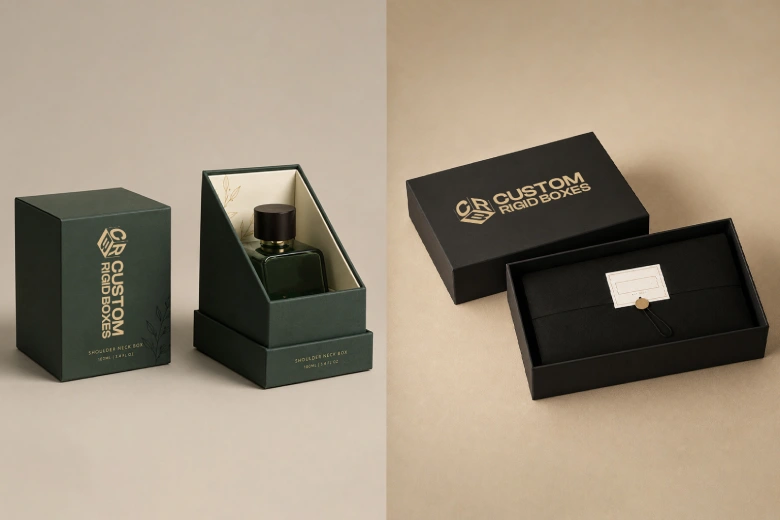
Luxury packaging is a marketing tool. And a memorable unboxing experience can turn a simple purchase into a viral social media moment.
- Two Piece Boxes
Expect a classic, satisfying unboxing experience. It often relies on a “slow friction release,” in which the base slowly slides out from under the lid due to gravity and air resistance. This type of unboxing builds anticipation but keeps the focus entirely on your product reveal.
- Shoulder Neck Boxes
This style elevates the unboxing experience into an art. If designed with an exposed shoulder, the contrasting color creates stunning visual interest. Imagine the multi-step reveal of lifting the lid to see the neck, then finally the product. Your customers will surely have a premium, deliberate, and theatrical unboxing experience.
Industry Applications
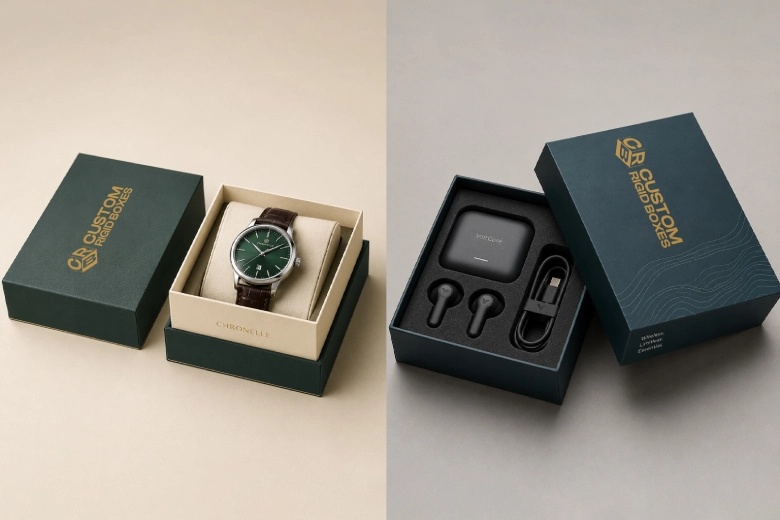
Many industries choose rigid boxes to present their products. But, of course, industries require different packaging vibes. Here is where you will most frequently spot these two box styles.
Two Piece Boxes
You see them everywhere because they are incredibly versatile.
Here’s how different industries use a two-piece packaging layout:
- Apparel boxes and shoes packaging.
- Board game boxes and puzzle containers.
- Electronic boxes and tech accessories packaging.
- Confectionery packaging and artisanal chocolate boxes.
Shoulder Neck Boxes
This style is reserved for markets where luxury positioning justifies the extra flair.
Here are box examples that will be great in a shoulder-neck design:
- High-end jewelry packaging and watch boxes.
- Premium cosmetic boxes and skincare serums packaging.
- Luxury perfume boxes and colognes packaging.
Production Cost

Now it’s time to talk about the numbers. Your packaging budget plays a massive role in your final decision. As we know, a rigid box costs more than the standard option because it offers a high Return on Investment (ROI).
And speaking of two piece boxes vs shoulder neck boxes, the extra structural steps will impact your bottom line.
- Two Piece Boxes
Two piece boxes are highly cost-effective to manufacture. They require less raw material, less manufacturing scrap, and easier automated assembly lines. If your business is scaling up production, this style offers the best balance of premium feel and affordability.
- Shoulder Neck Boxes
Shoulder neck boxes sit at a higher price point. The three-piece assembly process requires more greyboard/chipboard, additional wrap paper, and more complex manual or semi-automated labor to align the inner neck perfectly.
Storage & Shipping Considerations
Logistics can make or break your profit margins. And these both types of rigid boxes do not ship flat. Hence, the storage space is an essential factor to consider.
- Two Piece Boxes
Because they are rigid, they take up significant warehouse space. However, the lids can often be nested within the bases or stacked efficiently. This means that two piece boxes offer slightly better space utilization during fulfillment line staging than more complex shapes do.
- Shoulder Neck Boxes
These boxes require the most warehouse footprint. Shoulder neck boxes must be shipped and stored fully assembled to protect the internal neck from warping or crushing. If you have limited warehouse space, the bulkiness of these boxes is something you must plan for.
Let’s recap them for a quick understanding!
| Feature | Two Piece Boxes | Shoulder Neck Boxes |
| Construction & Structure | Four walls on the base and four walls on the lid | A three-piece construction process: a lid, base, and internal neck |
| Durability & Protection | Double-wall thickness and impact resistance during shipping | Highly durable and crush-resistant for heavy, fragile, or high-value luxury goods |
| Unboxing Experience | A classic, satisfying unboxing experience with “slow friction release” | A premium, deliberate, and theatrical unboxing experience |
| Industry Applications |
|
|
| Production Cost | Cost-effective | Higher price point |
| Storage & Shipping | Better space utilization | Bulk space requirement |
How to Choose Between Two Piece Boxes and Shoulder Neck Boxes?
Alright, now the big question: How to choose the right rigid box your product and brand needs?
Choose two piece rigid boxes when you:
- Need a premium rigid box on a tighter budget.
- Seek for packaging standard-weight retail items like clothing, shoes, or games.
- Want a clean, minimalist aesthetic with ample real estate for custom printing.
- Require fast, efficient product loading on your fulfillment line.
Choose shoulder neck boxes when you:
- Sell high-ticket, luxury items that require a “wow” factor.
- Want to use contrasting colors or textures on the box exterior vs. the inner neck.
- Need maximum structural rigidity to protect fragile, heavy, or delicate goods.
- Aim to position your brand at the top tier of the luxury market.
Are Two Piece Boxes Better Than Shoulder Neck Boxes?
There is no single winner in the battle of two piece boxes vs shoulder neck boxes.
If efficiency, classic presentation, and cost-effectiveness are your priorities, a two-piece box is an unbeatable choice. However, if you are launching a luxury item where the unboxing experience defines the product’s perceived value, a shoulder-neck box is well worth the investment.
The Takeaway
Undoubtedly, two of the most popular premium options in the luxury market are two piece boxes and shoulder neck boxes. Both offer a high-end feel, but they serve very different purposes.
The main difference between twopiece boxes vs shoulder neck boxes lies in how the lid and base interact. A two-piece box relies on a lid that slides directly over a base. Meanwhile, a shoulder-neck box introduces a third internal element—a “neck”—that bridges the lid and base, often leaving a visible gap or “shoulder.”
When choosing between the two, consider each option’s construction, durability, unboxing experience, industry applications, production cost, and storage & shipping considerations.
FAQs
What is a two piece box?
A two-piece box consists of a top lid and a bottom base. The lid can either cover the base entirely (full-telescope) or partially (partial-telescope).
What is a shoulder neck box?
A shoulder-neck box features an inner tray (the neck) glued inside the bottom base. This neck extends upward past the top edge of the base.
Which one is more costly, a two piece box or a shoulder neck box?
Two piece boxes are highly cost-effective to manufacture than shoulder neck boxes.
How to choose between two piece boxes and shoulder neck boxes?
If efficiency, classic presentation, and cost-effectiveness are your priorities, a two-piece box is an unbeatable choice. However, if you are launching a luxury item where the unboxing experience defines the product’s perceived value, a shoulder-neck box is well worth the investment.