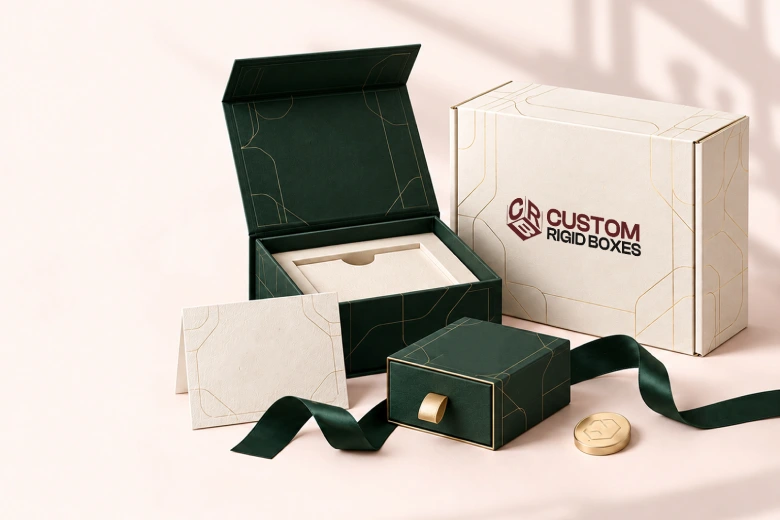
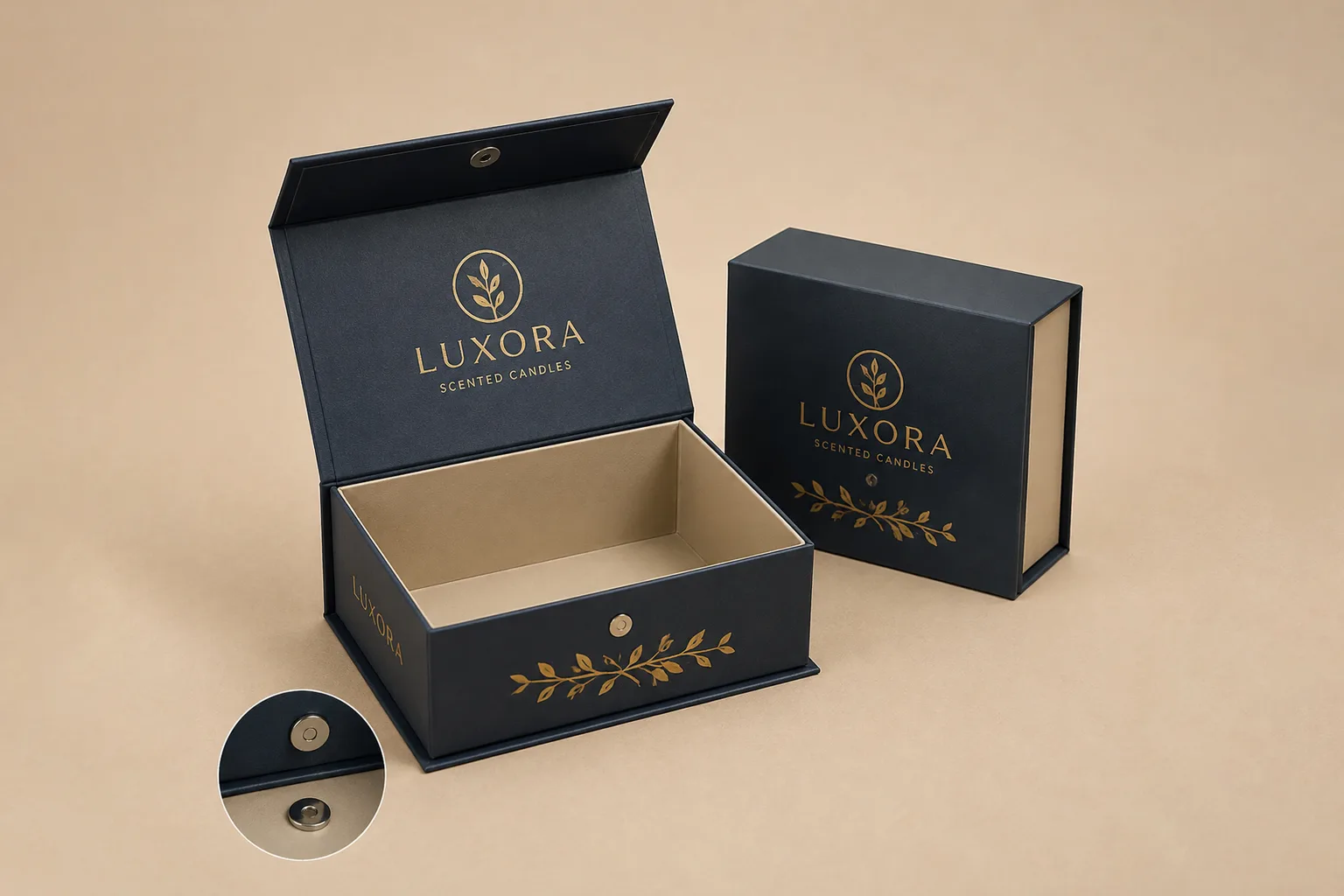
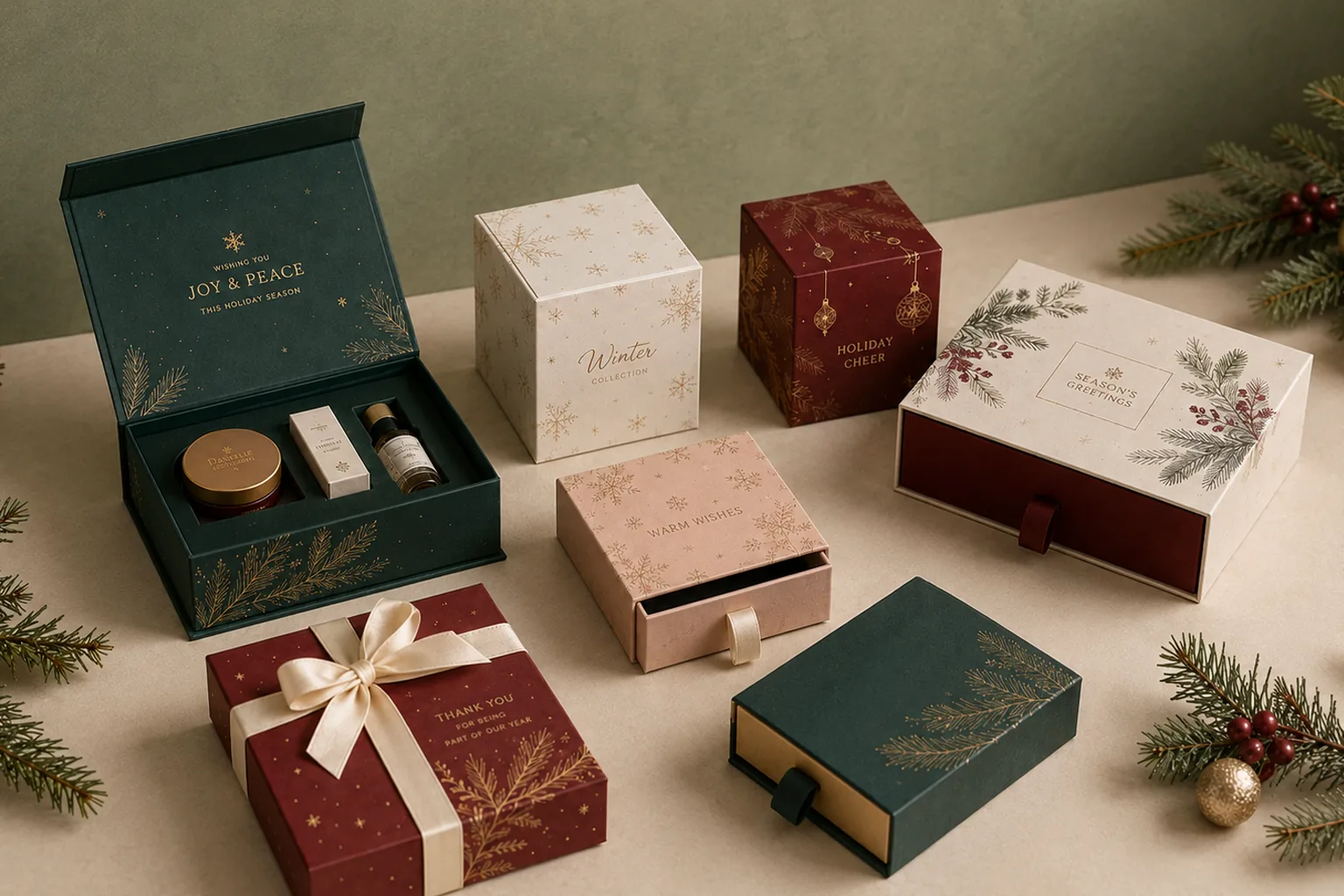
Have you ever touched a box that feels sleek and smooth? It surely has made a memorable impression before you even open the product inside, right?
First impressions happen in the hands, not just in the eyes. When a customer picks up your product, the box’s texture instantly communicates your brand value. If you want that high-end feel that screams “luxury,” you’ve likely come across two popular options: soft touch lamination and aqueous coating.
Both finishes might look similar at a distance. However, choosing the wrong one for your packaging needs can lead to cracked edges, scuffed surfaces, or a budget blowout.
Let’s break down the differences between soft touch lamination vs aqueous coating to help you choose the perfect finish for your product packaging.
Soft Touch Lamination vs Aquoeus Coating: What’s the Difference?
While both finishes aim to reduce glare from high-gloss paper and add a “soft” feel, they are fundamentally different techniques.
The main difference lies in the material and application. Soft touch lamination is a plastic film bonded to the packaging material. Meanwhile, aqueous coating is a water-based liquid applied like ink. Moreover, lamination provides structural strength, whereas coating provides surface protection.
Here’s a detailed explanation to differentiate them.
What is Soft Touch Lamination?
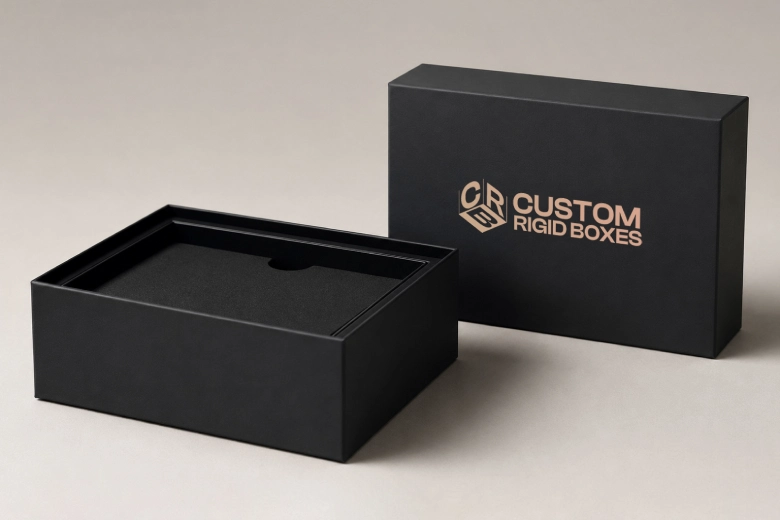
In brief, soft touch lamination is a premium finishing process where a thin layer of plastic film is heat-bonded to the surface of your packaging. It’s the industry standard for creating a “velvet” texture that resists fingerprints. Plus, the texture it offers can add significant heft to your box.
- The Process
After your packaging is printed, the sheets are fed through a laminating machine. It uses heated rollers to melt a dry adhesive onto the film. This way, it permanently bonds the lamination to your packaging material.
- The Composition
The film is usually made of BOPP (Biaxially Oriented Polypropylene) or PET (Polyester). These plastics are treated with a specialized matte topcoat that creates the unique friction-based “soft” sensation.
What is Aqueous Coating?
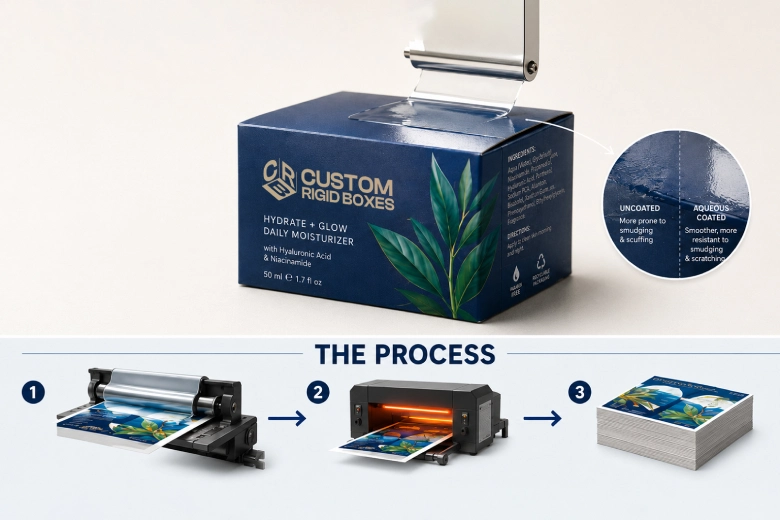
Aqueous coating (AQ) is a clear, fast-drying, water-based coating. It is much thinner than laminate. Therefore, this coating is used primarily to protect the ink on the box from smudging or scratching during assembly and shipping.
- The Process
As your packaging moves through the printing press, the final station applies the liquid coating. It then passes through an infrared dryer. This means that the sheets are dry and ready for die-cutting immediately.
Compatible Materials
Your choice of finish often depends on the thickness of the paperboard you are using for your boxes.
Compatible materials for soft touch lamination include:
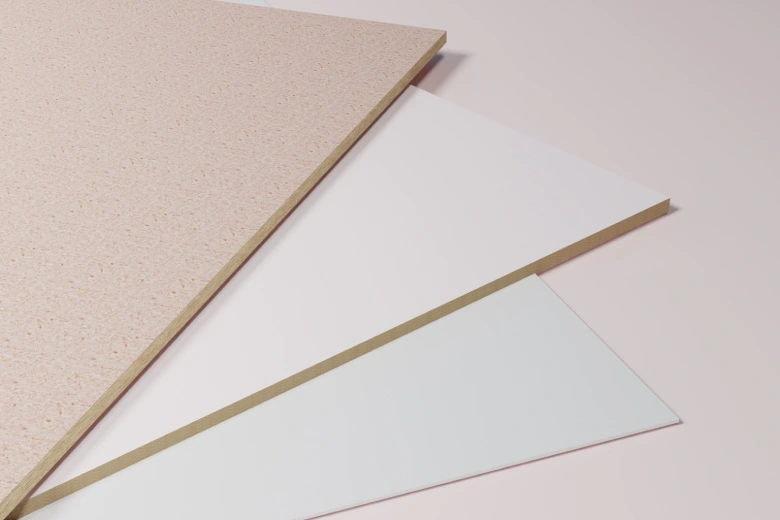
- Paperboard/Cardboard: Standard folding cartons and retail packaging.
- Rigid Stock: Greyboard or chipboard with soft touch lamination makes your box look more exclusive.
- Specialty Paper: Paper bags, marketing brochures, and high-quality printed materials.
Compatible materials for aqueous coating include:
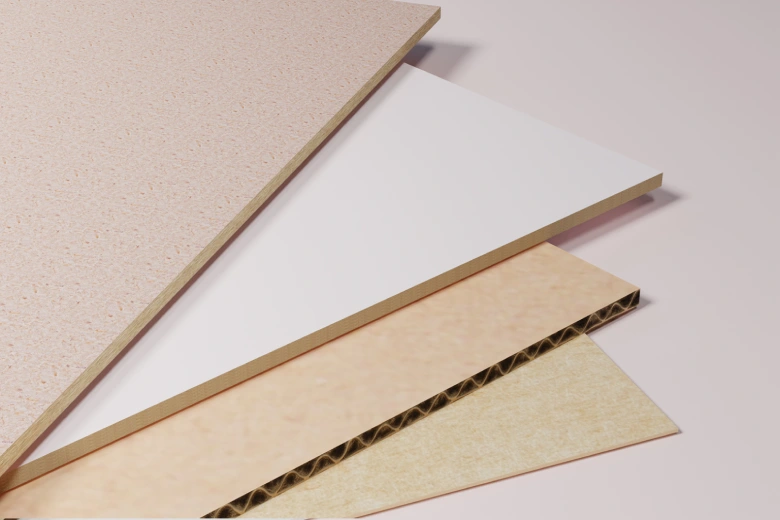
- Coated Paperboard: Coated papers offer the best results for a high-quality finish.
- Corrugated Board: Ideal for E flute corrugated material.
- Kraft Paper: Kraft boxes and mailers are compatible with AQ coating in providing a sustainable look.
- Rigid Board: Commonly used for exceptional cosmetic and high-end perfume boxes.
- Specialty Paperboards: High-barrier, aqueous-coated paperboard is effective for food-grade packaging and eco-friendly takeaway.
Types of Soft Touch Lamination and AQ Coating
Not all finishes are created equal. Depending on whether you’re designing luxury rigid boxes or heavy-duty shipping boxes, the type of finish you choose matters.
Let’s take a look at the types of soft-touch lamination and AQ coating available.
Types of Soft Touch Lamination
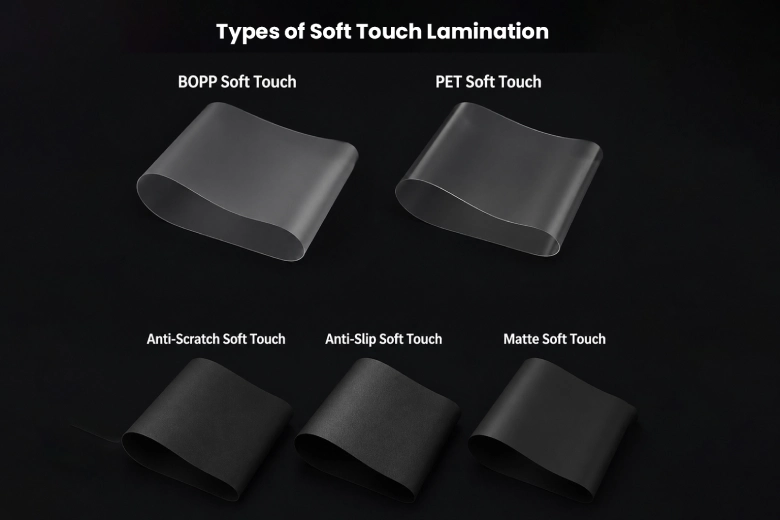
- BOPP Soft Touch: Thin, flexible, and it prevents the box from cracking at the folds; ideal for durable electronic boxes.
- PET Soft Touch: More sturdy and heat-resistant; perfect for premium gift boxes and luxury packaging.
- Anti-Scratch Soft Touch: Prevents the “shiny” scuffs that often ruin exclusive mailer boxes.
- Anti-Slip Soft Touch: Designed for stacked retail packaging to prevent multiple boxes from sliding off shelves.
- Matte Soft Touch: A non-glare, velvety finish; perfect for jewelry packaging and watch boxes.
Types of Aqueous Coating
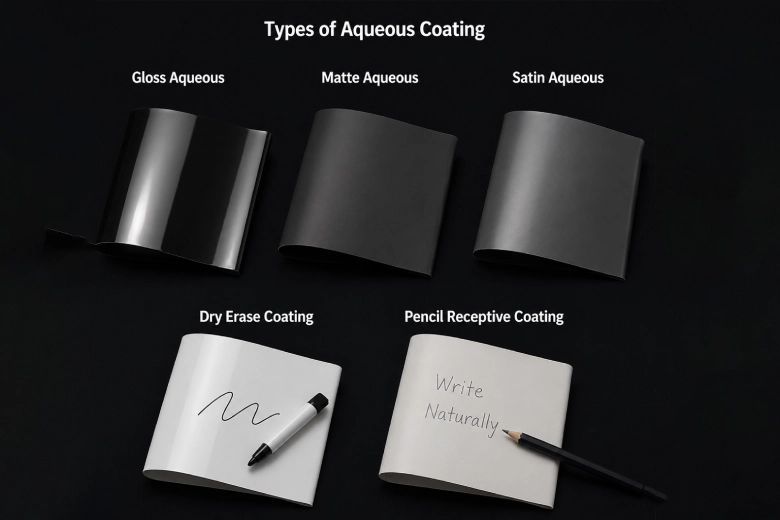
- Gloss Aqueous: High-reflectivity; makes colors “pop”; the best option for specialized items in subscription boxes.
- Matte Aqueous: Provides a flat finish and a slight “softness,” the go-to choice for elegant cosmetic boxes.
- Satin Aqueous: A “semi-matte” look that offers a balance of soft feel and color clarity; perfect for retail product packaging.
- Dry Erase Coating: Often used for promotional PR packaging.
- Pencil Receptive Coating: Useful for hangtags or specialized mailers.
Appearance
Soft touch lamination gives your packaging a consistent, deep matte look that can make dark colors appear richer. However, because it’s a plastic film, it can slightly shift the color shade.
Meanwhile, the aqueous coating is thinner and more “transparent.” It preserves the ink’s original color accuracy more effectively.
Durability
Speaking of durability, soft touch lamination is the clear winner. Because it is a plastic layer, it prevents the paper from cracking at the score lines (the box’s corners). It is also water-resistant.
Aqueous coating mainly protects against light scuffs. But it will not stop a box corner from tearing or water from soaking into the fibers.
Speed and Efficiency
Aqueous coating is much faster. Since it’s applied during the print run, it eliminates the extra time for a secondary lamination process. If you have a tight deadline for a product launch, AQ is your best choice.
Sustainability
AQ is generally considered more eco-friendly. It is water-based and doesn’t interfere with the pulping process during recycling.
Meanwhile, soft-touch lamination involves bonding plastic to paper. This means that your box can be harder to recycle, depending on the facility.
Cost
Aqueous coating is significantly more cost-effective for large-scale production. Thus, if you are printing 50,000 rigid boxes, the savings can be a lot compared to soft-touch lamination.
Quick Comparison of Soft Touch Lamination vs Aquoeus Coating
| Feature | Soft Touch Lamination | Aquoeus Coating |
| Compatible Materials |
|
|
| Types |
|
|
| Appearance | A consistent, deep matte look and velvety look | Transparent and effective color accuracy |
| Durability |
| Protects against light scuffs |
| Speed & Efficiency | Slow | Fast |
| Sustainability | Hard to recycle | Water-based, eco-friendly |
| Cost | High | Cost-effective |
Soft Touch Lamination vs Aquoeus Coating: Pros and Cons
Every packaging finish offers perks and drawbacks, from tactile luxury to bottom-line impact.
Here are the pros and cons of both soft-touch lamination and AQ coating.
Soft Touch Lamination
Pros:
- Ultimate “luxury” feel
- Pevents ink cracking on folds
- Waterproof
- Extremely durable
Cons:
- Higher price point
- Slower production
- Plastic-based (less eco-friendly)
Aqueous Coating
Pros:
- Affordable
- Fast production
- Recyclable
- Protects ink from smearing
Cons:
- Less durable
- No moisture protection
- It doesn’t prevent paper cracking
- Less “velvety” feel
When to Choose Which?
To choose the right finish (soft-touch lamination vs. AQ) for your packaging, consider the essential factors below.
Product Weight & Value
If you are selling a luxury item, use soft-touch lamination, as it will make your product look more expensive.
Structural Needs
Which box styles are ideal for soft-touch lamination?
If your box has many folds or sharp corners, soft touch lamination highlights precise edges and provides a luxurious texture.
For example:
- Shoulder Neck Boxes: This style offers multiple sharp edges where the lid, base, and shoulder meet. Soft-touch lamination makes the difference between these parts feel exclusive.
- Magnetic Closure Boxes: The folding nature and sharp magnetic closure, combined with a velvety feel, will enhance the premium experience.
- Drawer-Style Boxes: The sliding motion feels smoother with soft-touch lamination.
Which box styles are ideal with AQ?
Because it is applied inline, AQ works best with box styles that require high-friction durability.
For example:
- Two-Piece Boxes: The flat lid surface provides a large canvas for a seamless, consistent coating, enhancing color vibrancy.
- Hinged Lid Boxes: The hinged-lid style relies on a high-end aqueous coating to enhance branding.
Volume & Budget
For high-volume consumer goods (like retail and bakery items), aqueous coating provides the protection you need without the “premium” tax.
On the other hand, for brands seeking luxury packaging, soft-touch lamination is the way to achieve a sophisticated look and feel.
Sustainability
If your brand identity is built on being “plastic-free,” stick with aqueous coating. Meanwhile, if you focus on delivering an exclusive, unique look, go with soft-touch lamination.
In Summary
Undoubtedly, both soft-touch lamination and aqueous coating have their pros and cons. If you want the absolute best in durability and a true suede feel, soft touch lamination is the way to go. If you need a fast, budget-friendly, and recyclable way to protect your design, aqueous coating is the smarter business move.
FAQs
What is soft touch lamination?
Soft touch lamination is a premium finishing process where a thin layer of plastic film is heat-bonded to the surface of product packaging.
What is aqueous coating?
Aqueous coating (AQ) is a clear, fast-drying, water-based coating.
What’s the difference between soft touch lamination and aqueous coating?
Soft touch lamination is a plastic film bonded to the packaging material. Meanwhile, aqueous coating is a water-based liquid applied like ink.
When to choose between soft-touch lamination vs aqueous coating?
When choosing between soft-touch lamination and AQ, consider essential factors, such as product weight & value, structural needs, volume & budget, and sustainability.